The Latest from Benicia Community Gardens

By Maggie Kolk, Avant Garden co-manager, Sustainable Solano Board of Directors chair, and happy gardener at Avant

There’s a lot going on with Benicia Community Gardens, the flagship program that started Sustainable Solano more than 20 years and continues to serve the Benicia community through two community gardens and a community orchard. Here, Maggie shares an update on BCG’s many summer activities and garden bounty. Interested in a garden plot? Learn more and fill out an application here.
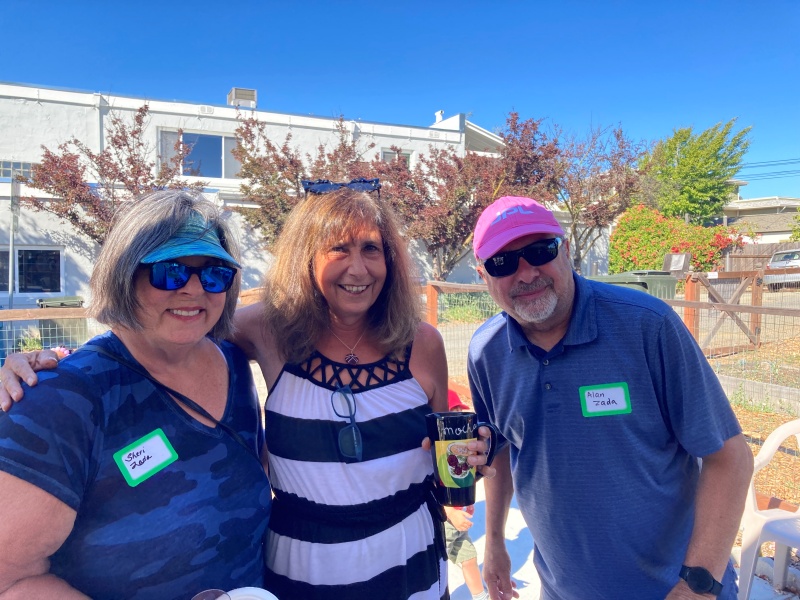
Torchlight Parade BBQ attendees (from left) Sheri Zada, Randi Scott and Alan Zada

Torchlight Parade BBQ

The annual Benicia Torchlight Parade BBQ in Avant Garden on July 3 kicked off the summer gardening season with a fun-filled party enjoyed by garden members and their special guests. Delicious dishes creatively prepared by the Avant and Swenson gardeners were enjoyed along with the usual hamburgers, hot dogs, chicken and vegetarian BBQ fare. Several of the Avant Garden members were cheered as they marched up First Street and some of our own Benicia city officials joined in the festivities at Avant after riding the parade route. As usual, a good time was enjoyed by everyone attending our small-town Benicia Independence Day celebration. Kudos to those garden members who racked up volunteer hours pulling weeds and spreading woodchips, which resulted in Avant looking like the crown jewel of First Street that it has become.

The Share Plot
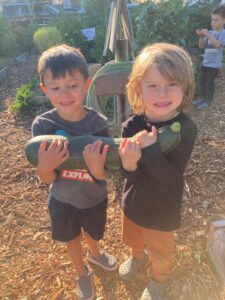
Enzo and Slater hold a 6-pound zucchini at Avant Garden

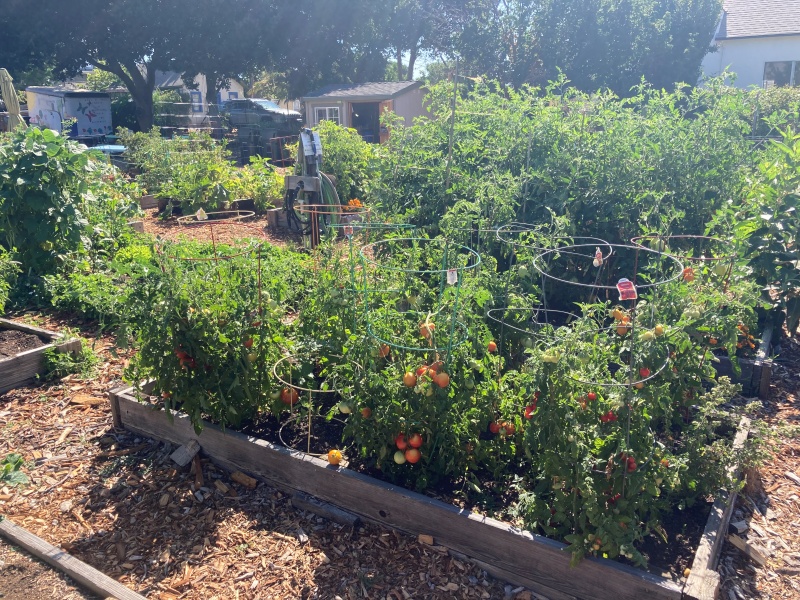
Zucchini, sometimes the size of small baseball bats (how many five-year-old boys does it take to carry an Avant zucchini?), kale, onions and tomatoes are growing in abundance in the Avant Share Plot. The Benicia Community Action Council (CAC), St. Paul’s Episcopal Church’s twice weekly free dinner program and several Food is Free Bay Area stands are the beneficiaries of our fresh, organically grown Benicia produce. The cooks at CAC, which provides daily free lunches to Benicia seniors, created the most delicious zucchini bread along with a fresh zucchini casserole. Benicia seniors are eating well!

Monarchs at Avant

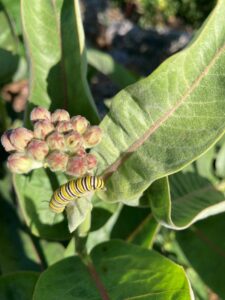
Monarch caterpillars at Avant Garden

After planting showy milkweed last year in one raised bed and in the children’s tomato bed, several monarch caterpillars were observed during the first few weeks in July. Children visiting the garden find these little gems fascinating and learn about the stages of the monarch life cycle (egg, caterpillar, pupa or chrysalis then the final transformation into the adult butterfly). The metamorphosis typically is completed within 30 days. We are convinced that every monarch butterfly we see at Avant is a result of their munching on our milkweed during the caterpillar stage. As the caterpillar eats the milkweed it ingests a toxic substance called cardiac glycoside, which makes the monarch poisonous to most creatures that would want to eat them, like birds! Monarchs are so brightly colored to deter their predators. Once the early summer monarch butterfly emerges and spreads its wings, it flies off to find a mate and then lays eggs on other (or the same) milkweed plants to produce more butterflies. The butterflies that emerge in the late summer and early fall, rather than search out a mate, fly to Mexico where they spend a warm winter vacation before returning north to find a mate, lay eggs and start the cycle all over again. Nature at its most majestic.

Upcoming Garden Events

Stay tuned for upcoming garden events by checking out our calendar. Gardeners are eagerly awaiting their tomato, pepper and cucumber harvests. We are planning a cooking demonstration for August, date TBD. Our Harvest Festival will take place in late September or early October.

Please stop by an enjoy Avant Garden on First and D streets or Swenson Garden at the Heritage Presbyterian Church on the corner of East Second and Military East. Both gardens are serene spaces bursting with fresh vegetables, herbs and flowers. Remember to look but not touch or take. Each of the garden beds are lovingly cared for and owned by individual gardeners who are growing for their personal use.

Happy gardening!
Gift of the Generations

By Alana Mirror, creator of This Wonderful World: a musical reality-show where love for ourselves, each other, and the Earth become one

We introduced Alana and her This Wonderful World project when she attended the Pollinator Pathway garden installation and created a series of three songs from that experience. Since then, she’s done a series of songs about the installation of Peace of Eden community garden at City Church Fairfield, and a series inspired by the Vallejo People’s Garden. This is her reflection and the last song in her spring series — it highlights community gardens through SuSol’s Solano Gardens program. We appreciate reposting it here with her permission.

I’ve never felt like I had much of a green thumb. Though I’ve always known that growing a garden is a staple of sustainable living, I never really felt capable. Growing up, we didn’t have a garden. Other than the tomatoes that my grandpa grew, or my great-grandma’s home-dried oregano, I just thought food came from the store.

It wasn’t until I found Sustainable Solano that things began changing. I remember the first time I went to one of their community events — such diversity! All ages, shapes, colors and sizes were represented. There were people who seemed super experienced in the garden, and then there were folks (like me) who found the courage to show up as amateurs.

No one embarrassed us. No one rolled their eyes. Tips were shared with kindness and patience. I felt embraced and appreciated just for showing up. There seemed to be a shared understanding: we’ve all grown up in a culture that’s been disconnected from the source, and we’re all still finding our way home.

Before the rise of industrial agriculture, participating in the cultivation of food has been a human staple. But my great-grandma’s generation tended not to pass it on. Why would she? The Great Depression was hard and the supermarkets were miraculous. All it took was one generation for that long line of ancestral wisdom to disappear.

Fortunately, it wasn’t lost completely, which is evident in the fact that there’s enormous efforts being put forth to help reestablish our most basic connection with Earth: food. For non-home owners (like me — and 44% of California), just having a place to practice gardening is a gift. But when you add education and community to that, the roots really start to grow back. Recently the Surgeon General, Vivek Murthy, declared loneliness an epidemic where 60% of us feel a desperate hunger for belonging. His solution: social connection.

The garden not only offers a place to connect, but a way to connect. Metaphors of the earth remind us of our shared human condition where we all know what it’s like to be vulnerable when we sprout and withered when we’re spent. We all know the frustration from pesky weeds and the exhilaration of fruit that’s sweetening. The garden gives us language to connect in where we all belong, through the seasons, in the bird song. Here we are reminded that it’s OK to need each other. Witnessing the bees pollinating, the fungi decomposing, the compost nourishing, we are reassured that everything needs each other, and everything has something to give. We are reminded of the abundance that comes when we work together — how precious the fruit is when our love has nurtured it.

It may sound a bit woo-woo, but it’s true: there’s a vibration that’s inherent. As one of the program managers for Solano Gardens, Jazzmin Ballou, confidently confirmed: “all I need to do is touch the Earth to tune in, and quiet my mind, to give me a glorious sense of sacred belonging.”

It’s truly a gift. As someone who has struggled with my fair share of loneliness, I hardly recognize myself after spending these last few months in community gardening. As much as self-help strategies have served me, there’s been no greater cure than serving. Of course I’m still learning a lot, but I’m not as embarrassed about it anymore. The confidence and connection that comes from growing together has sent ripples through my whole life. It’s an overflow that’s yearning to be shared, a gift begging to be given, a joy to pass on (as our ancestors did not so long ago) to a world that, every day, is rediscovering our beauty.

Thank you for reminding me.

This Wonderful World is the latest production from Alana’s greater work, called The Living Mirror Project, a creative practice that generates peace by seeing ourselves in everything.

Learn more about This Wonderful World here
Watch the whole series here
Sign up for Alana’s newsletter here
Contact Alana at thelivingmirrorproject@gmail.com if there are any service events that you think should be celebrated in this series, or for more info on booking a live musical show.

Jamaican Vegan Fried Mushroom ‘Chicken’

Photo Credit: Unsplash

Recipes from Chef Chantoll Williams of Rasta Mama’s Kitchen in Vacaville.

Ingredients:

1 pound Oyster Mushrooms
1 tsp. Curry powder
1 tsp. Garlic powder
1 tsp. Onion powder
½ tsp. ground Cumin
½ tsp. dried Thyme
¼ tsp. Black pepper
¼ tsp Paprika
1 tsp. Veggie bouillon
a couple pinches of salt
Fresh ginger juice (grate about 2 inches of fresh ginger to get the juice)
2 Tbsp. Chickpea flour
Avocado oil, as needed

Rub the mushrooms clean with a towel; do not use water.

Cut off the mushroom cap and leave it to the side.

Take the body/stem of the mushroom and run a fork through ¾ of it to shred it (leave one end intact so the layers stay together.)

Put the ginger juice on the mushrooms (caps and stems) and mix to coat them with the juice.

In a small bowl, combine all the spices (excluding the chickpea flour) and then add the spices to the mushrooms and toss to coat them in the spices.

Once mixed well, dip the seasoned mushrooms in the chickpea flour.

Heat pan with avocado oil over medium-high heat. Shallow fry the mushrooms until golden, flipping to cook both sides.

When done, drain on paper towels for a bit, then serve.

Chef’s Note: If you would like more flavor and a bit of a kick, double the spices and add 1/4 tsp scotch bonnet pepper. If that’s not available, add cayenne pepper.

Download a printable version of the recipe here.

Fellowship Focuses on Environmental Justice, Supports Pollinators in Vacaville

By Patrick Murphy, Program Manager

As part of Sustainable Solano’s Environmental Justice Leadership Fellowship, seven students from multiple Solano County cities undertook a research and green infrastructure project in Vacaville. Students focused on the Markham neighborhood, a community grappling with several environmental challenges, and explored possible solutions, including walkability, available green spaces, and usable wildlife habitats.

Students engaged with the local community, spending time within the neighborhood, assessing the severity of each issue and researching possible mitigation approaches.

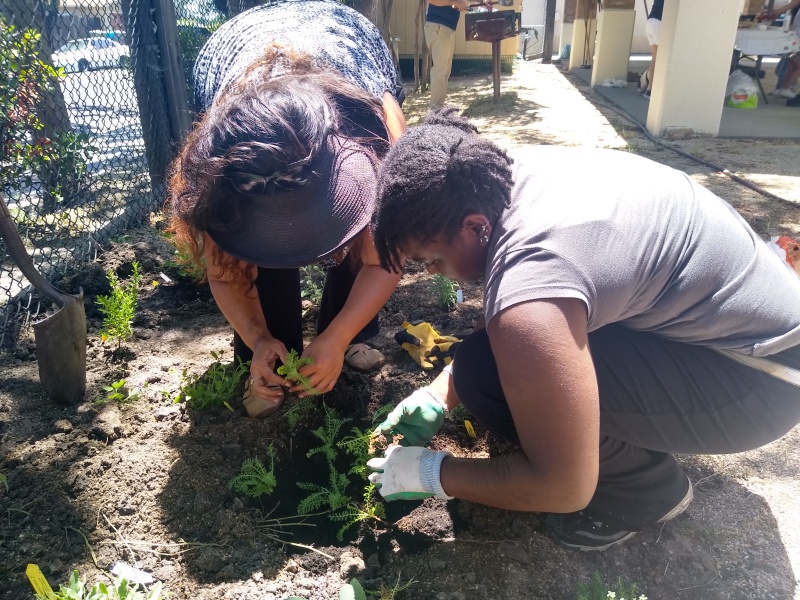
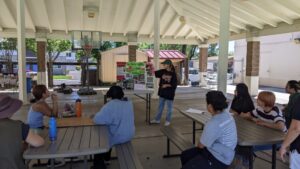
Pollinator garden installation at the Vacaville Boys and Girls Club (above) and student presentations (below)

Each student then delivered public presentations at various locations around Vacaville, including the Rocky Hill Trail, the Town Square library, and an Earth Day event in Andrews Park. The culmination of their efforts was the installation of a much-anticipated pollinator garden at the Vacaville Boys and Girls Club, where the students also presented their research findings. Situated right in the heart of the Markham neighborhood, the local community had been seeking a native pollinator garden since 2018.
Permaculture Designer Scott Dodson was able to design a compact and attractive native pollinator garden space at the Boys and Girls Club, which was installed by the EJLF students, Boys and Girls Club members and community volunteers during a public installation day hosted by Sustainable Solano. The garden’s design prioritized water conservation while creating an extensive habitat for the region’s pollinators. Additional pollinator plants are being raised in beds owned by Solano Unity Network across the street at the Vacaville People’s Garden. Educational signage was placed throughout the gardens, providing valuable information about the native California pollinator species for residents.

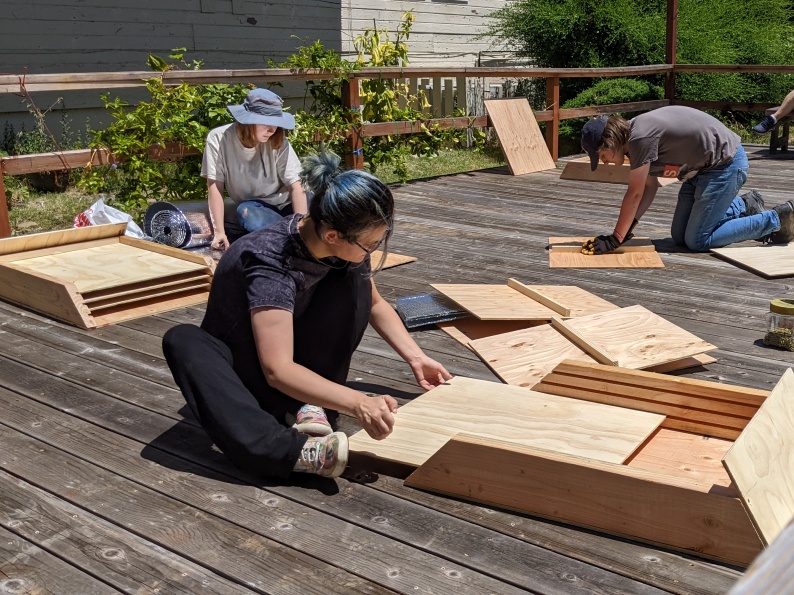
A volunteer from Rio Vista was able to produce five large-capacity bat boxes with student support for the pollinator garden and surrounding Markham community. “Bat boxes” are nesting boxes for bats to raise their young. Bats are known for their pest control capabilities. Each bat consumes vast numbers of insects each night, reducing the need for harmful pesticides and keeping the local ecological niche competitive. They and many pollinators are keystone species, and have a disproportionately large impact on the ecosystem.

Additional bat boxes are available to community members in the Markham area who would like to help strengthen the local bat population. If you live within 3 miles of Holly Lane and are interested in hosting a bat box on your property, please contact us here.

This ambitious project demonstrated the power of collective action in addressing environmental justice and promoting biodiversity. With the installation of these vibrant green spaces, the local community now has the opportunity to interact with and appreciate the importance of coexisting with nature. As the pollinator garden at the Boys and Girls Club continues to flourish, it promises to act as a sign post, promoting environmental consciousness in the Markham neighborhood.

Bat Boxes

Live in the Markham community and want to host a bat box on your property?
Reach us here

Interested in building a bat box for your own property?
Find instructions here

Sustainable Gardening Intern Reflections

The Sustainable Gardening internship was an opportunity for high school students to learn basic permaculture principles with a focus on waterwise gardening, and engage with community members while supporting community gardens. They were led in their garden activities by SuSol Program Coordinator Jazzmin Ballou and often worked with designer Scott Dodson. These three interns shared their reflections on the program with us, and we are excited to share them with you here with their permission.

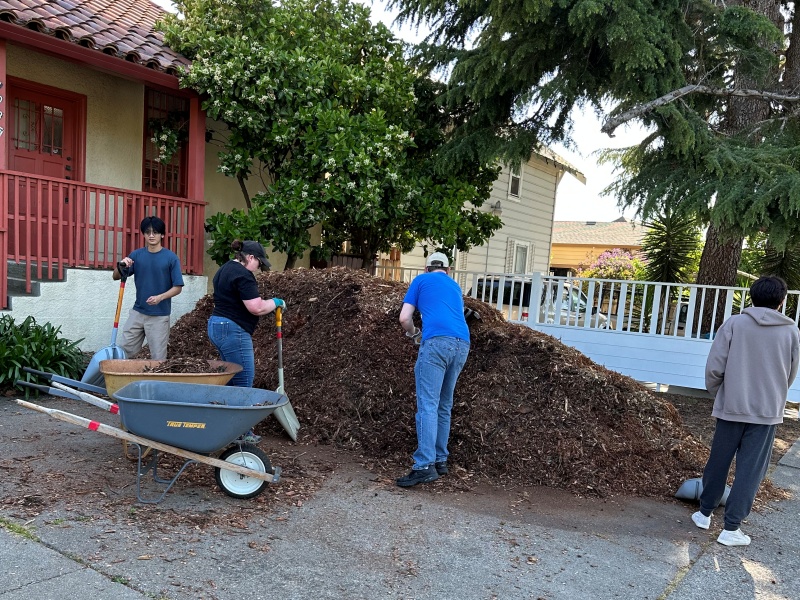
Sustainable Gardening interns move woodchips for the First Christian Church garden in Vallejo

Scooping the Wood Chips

By Aldo Michel

This was technically my first official work day with my fellow co-workers. It was on a Friday; I came there running from school ready to get the work done. I get there a little late but I get caught up on what we are doing. We need to scoop up a huge mountain of woodchips, put them in wheelbarrows and then go dump them somewhere in the garden. It was really quiet at first, only the sound of the shovels hitting the ground and the wheelbarrows being rolled out. I knew [fellow intern] Vincent, but he was on the other side of the mountain so I couldn’t talk to him, so I just continued with my work.

As the time passes by I notice that this young fellow with blond-ish hair is working really hard. I mean it’s his first day, I’m sure he wants to make a good impression and he is sure succeeding. After a while I decided to take a little break, drink some water and check out those granola bars. Once there I see that Vincent is also taking a break — perfect now we can talk. We greet each other and start talking about our day. A couple laughs later, the same blond-ish guy comes and takes a sip of water. Once he leaves me and Vincent started talking about him, we want to start a conversation with him, he seems nice and it’s never a bad idea to make new friends. We weren’t sure about his name so we weren’t into our email to check an email that Jazz has sent us. We checked the recipients and our questions were answered, his name is Liam.

We go back to the wood chips and greet him. Our suspicions were correct; he was a nice guy. We mostly talked about school and college and whatnot, not the most interesting topic but I still had fun. I even managed to fit in a couple jokes and for the most part it was accompanied by laughter. I had lots of fun that day just talking with my new friends. I’m very glad we decided to start a conversation and that we got the work done as well, although I was very sore the next day.

Meaningful Work in the Garden

By Liam McGee

I think the most meaningful time in this internship for me was our last work day at the Faith Food Fridays Garden. While it started off a bit sad with Jazzmin and a few of the interns gone, it quickly turned around. I first walked around the garden and accustomed myself with the diverse crops they had growing there.

A Haiku for the Gardening Internship

Shovel the wood chips
Tiring work for my body
Yet I feel fulfilled

-Liam McGee

One thing that especially caught my eye (or more so my nose I suppose) were the chamomile plants planted in multiple beds. They smelled delightful and I’d never seen what the plant looked like before, only the tea in the past. Once a few more people started arriving and a helper from Faith Food Fridays led us through an opening circle, Scott took us into what we’d be doing that day.

For some reason, one of the beds had lots of wood chips in it instead of soil. These chips don’t supply lots of nutrients for the plants unless they are broken down into soil so we had to painstakingly remove all of the chips and replace them with soil. While at first it reminded me of the wood chip shoveling we did at the church in Vallejo, it slowly turned into a more fun experience.

More and more people began showing up, someone started playing music on a bluetooth speaker, and the entire atmosphere changed. One thing that was especially cool to see was the number of kids present. Even if their parents just dragged them there to help, they were eager in planting and watering the entire garden. It was awesome to see how young children were already being inspired to get into growing their own plants, for a more sustainable and healthy lifestyle. It warmed my heart seeing them get to experience the joy of gardening. After a few hours with lots of volunteer help, we finished the once-wood-chip-filled bed and had transformed it into a thriving environment for the new plants. To end the working session, we picked some of the chamomile buds to bring home and dry out for tea. It was a perfect treat to end a fulfilling and effective work day in the garden.

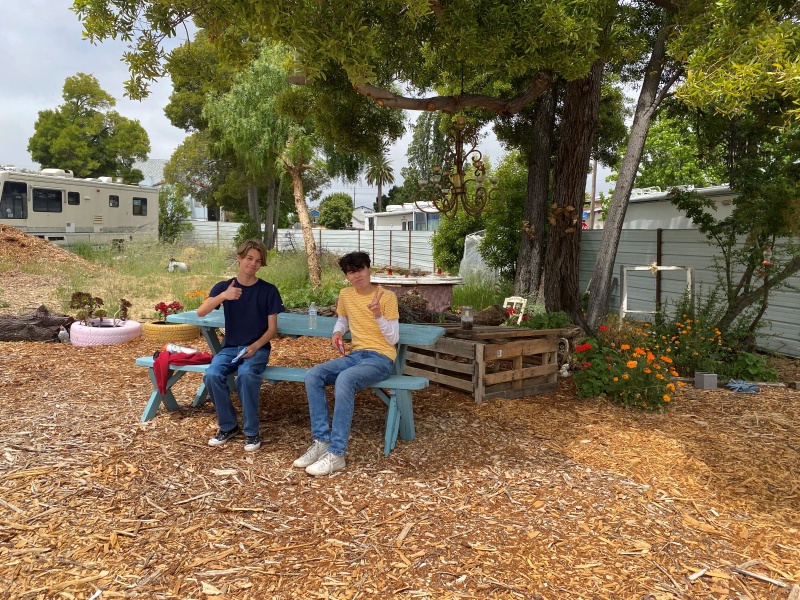
Liam McGee and Aldo Michel rest while working at the Faith Food Fridays garden in Vallejo

My Experience with the Gardening Internship

By Charlie Castillo

Although I had joined this internship a bit late, I was welcomed kindly by the people who run Sustainable Solano. Prior to the internship, we first had to go through certification, which consisted of meetings held with youth from multiple different internships. There, I got to meet a wide variety of people with different dreams of the future and different reasons to do their internships. The most common reason that I’d found with all the kids I’ve met from the certification process was because they had a vision to shape the world into a place that was green and has clean air.

My favorite highlight of this internship was the workday at First Christian Church. I liked this day a lot because I was able to meet all of the other interns and talk about school and hobbies. I found that they were all exceptionally brilliant, some of them holding down several AP classes and athletics, and even attending community college classes too. Although we had only spent a few hours of the day together, I know that the garden at First Christian Church was created with love and compassion from me and friends from Sustainable Solano.

The people of the church were also very friendly in making sure that we did not push ourselves too hard to get things done, and their lighthearted conversations made the mood of the day very calming and peaceful. I also appreciate every time that someone has taken the time out of their day to express their gratitude for us helping with the garden every now and then.

I enjoyed raking and shoveling in this garden a lot and I hope to find an opportunity to do it again someday. Overall, if there is one thing that I learned with this gardening internship, it is that teamwork creates beautiful gardens.


This intership was offered as a collaboration between SuSol’s Solano Sustainable Backyards and Solano Gardens programs. Solano Sustainable Backyards is funded by the Solano County Water Agency, and Solano Gardens is funded by Solano Public Health. We are grateful to both funders for supporting our work with youth.