Reflections from an SSC Fellow
By Manpreet Singh, Public Education Coordinator Fellow
Manpreet joined SuSol in February as our Public Education Coordinator Fellow through the Sustainability Service Corps. Here, she shares about her experience. It has been such a positive experience for the organization that we are honored to be a host site again this year for the September 2026-July 2027 Fellowship.
Are you interested in bringing change while growing as a sustainability leader? Learn more and apply here: https://www.sustainabilityservicecorps.org/fellowships
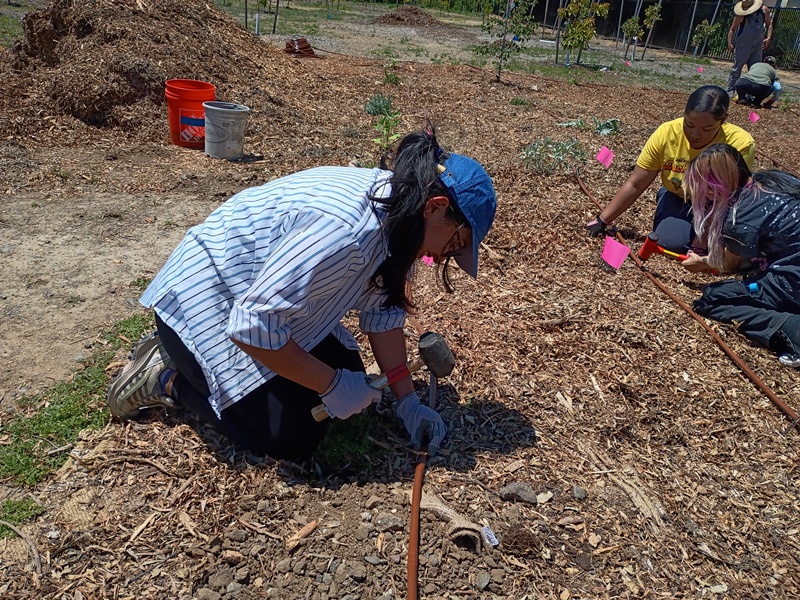
Manpreet works alongside community members at the Prosperity Park resilient garden installation in Suisun City
When I joined Sustainable Solano as a Sustainability Services Corp (SSC) Fellow, I hadn’t fully anticipated how deeply fulfilling this work would be, both personally and professionally.
During my graduate program at Boston University, I became passionate about addressing the intersection of climate change and social vulnerabilities. As I was navigating career goals and potential pathways for public service, I was driven to take climate action that addresses environmental injustices, empowers communities to speak up and take action, and plant the seeds for systemic change for regenerative, just and resilient communities.
I was drawn to join the AmeriCorps Fellow Program as a 2026 SSC Fellow due to their mission to support community-based climate change solutions. As Sustainable Solano’s Public Education Coordinator Fellow,I not only get to actualize the organization’s mission to build an ecologically regenerative, economically and socially just world through programs that empower communities to take climate action, but I also get to serve my community in Solano County where I was born and raised.
Although it’s only been a few months, I’ve had the opportunity to support a range of work that resonates with my core values and goals — particularly focusing on community-led localized action and addressing urgent and current issues impacting Solano County. Some key projects that I’ve supported include
- Drafting the Rio Vista Community Air Quality Action Plan, a strategic document that centers community voices at the forefront of city decisions that affect air quality and resiliency.
- Collaborating with community members and local government representatives to assess sea level risks in Solano County, raise awareness of sea level rise and how it can impact environmental justice and frontline communities throughout Solano County, and ensure that community input is heard and implemented in the development of a Regional Shoreline Action Plan as part of the Bayshore Resiliency Project
- Developing the vision for a new program focused on a just transition in Benicia and Vallejo to set the stage for the shift away from a fossil fuel-based economy to a regenerative economy through youth and community empowerment, education, and workforce development.
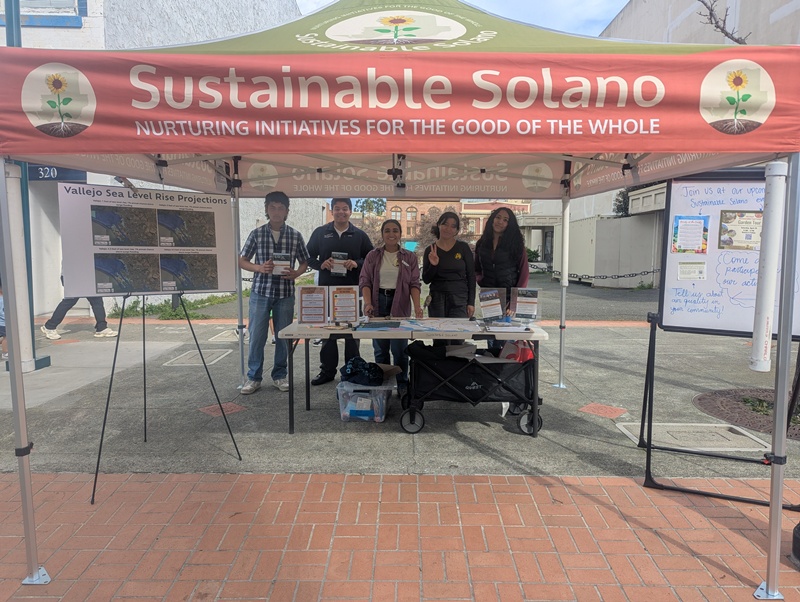
Manpreet (center) conducts community asset mapping for flood resilience along with Vallejo Environmental Leadership Fellowship interns at the Vallejo Farmers Market
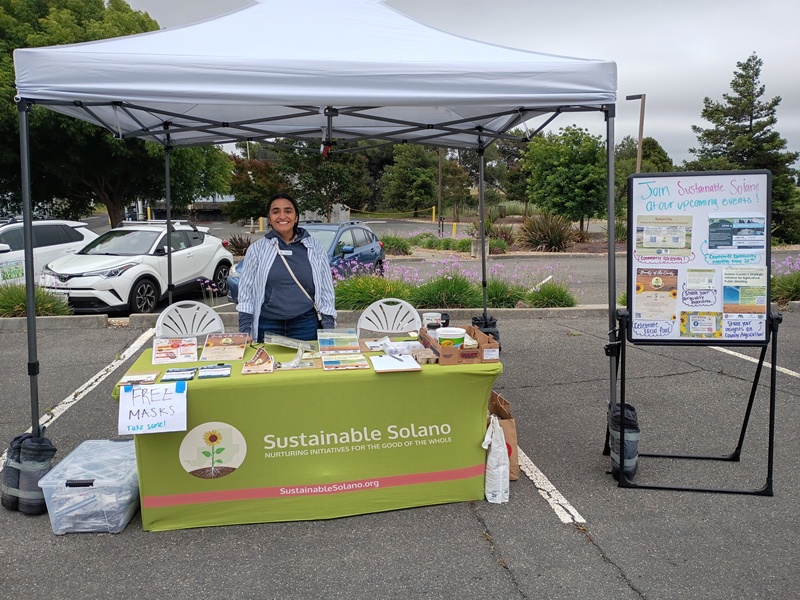
Setting up for tabling at Fairfield-Suisun Sewer District’s 75th anniversary event
Reflecting on my work over the past months, the moments I found most fulfilling were when I was engaging with people and the environment. I’m supporting community-engaged adaptation planning that puts community members’ voices at the forefront of addressing critical issues — a mission that I am passionate about pursuing.
At tabling events, workshops and garden installations, I’m not just sharing my knowledge, but I’m also listening and learning from community member’s lived experiences. Additionally, supporting classes for high schoolers in the Youth Air Protectors and Vallejo Environmental Leadership Fellows programs gives me the opportunity to connect with youth leaders and help shape the next generation of sustainability leaders. Actively engaging with residents and government leaders has provided me with pathways to pursue deeper connections within my community and help me hone my role as someone who can help my community grow.
A key goal of my going into this fellowship was to grow both professionally and personally. This means strengthening my policy analysis skills, communication skills, and confidence so that I can be the leader that I want to be. Sustainable Solano and SSC are actively making efforts to help me grow by shaping opportunities that align with my goals and providing mentorship that acts as the cornerstone of my career development.
At Sustainable Solano, I’m part of a team dedicated to empowering residents to take action at home and within their communities to address critical climate and environmental issues. This role has proven to be much more than just a job; it’s providing unexpected opportunities to make a real difference and grow. I‘m driven to leverage my experience as an SSC Fellow to champion community-driven policy in my public service career and ensure that community voices are central to policy development.
I encourage anyone interested in taking climate action through building systemic change and collaboration with communities to apply to serve as an SSC Fellow with Sustainable Solano.
Please feel free to reach out and connect with me on LinkedIn if you want to learn more or have any questions!
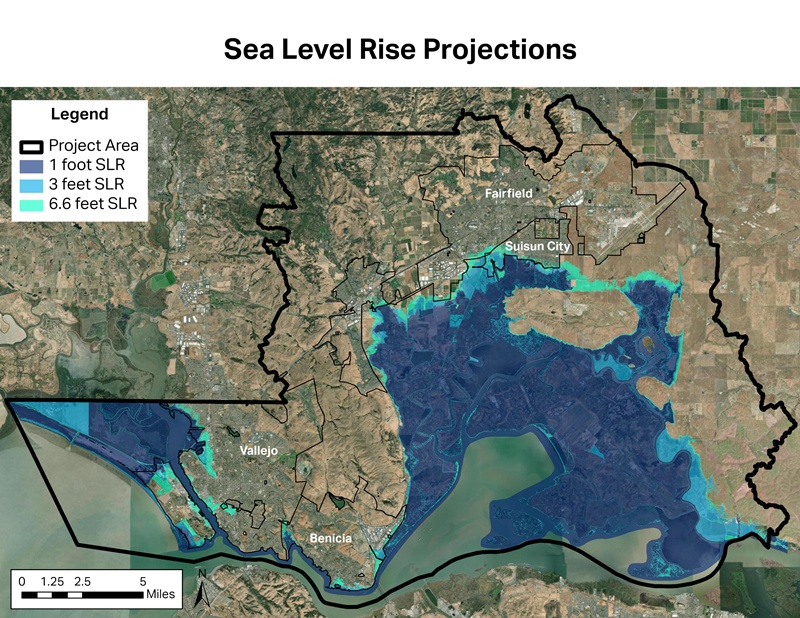
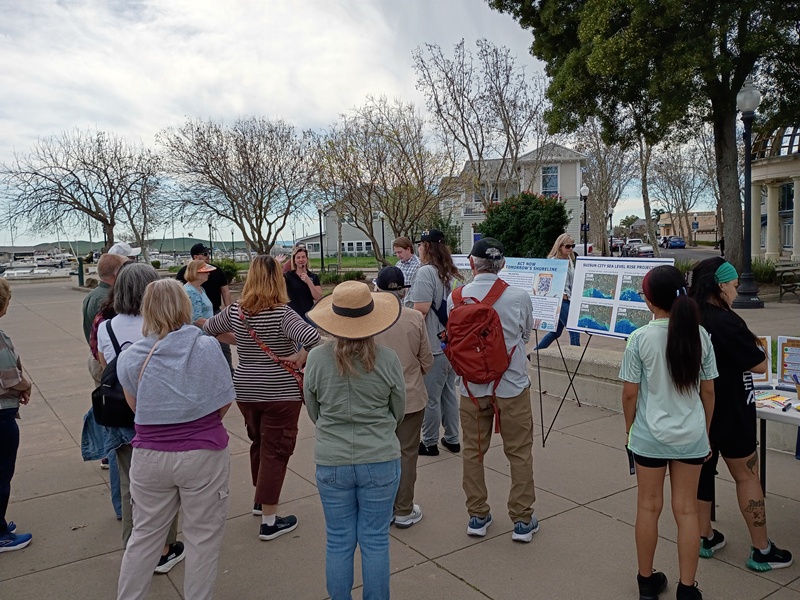
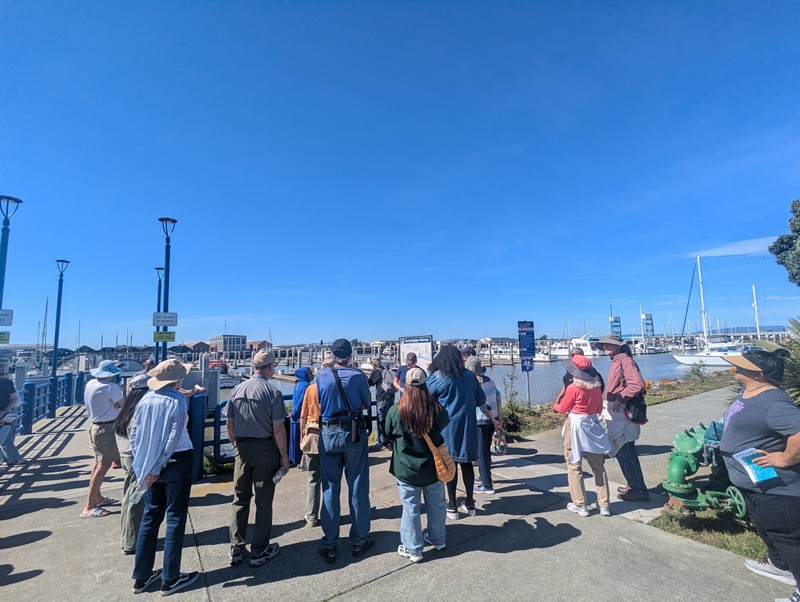
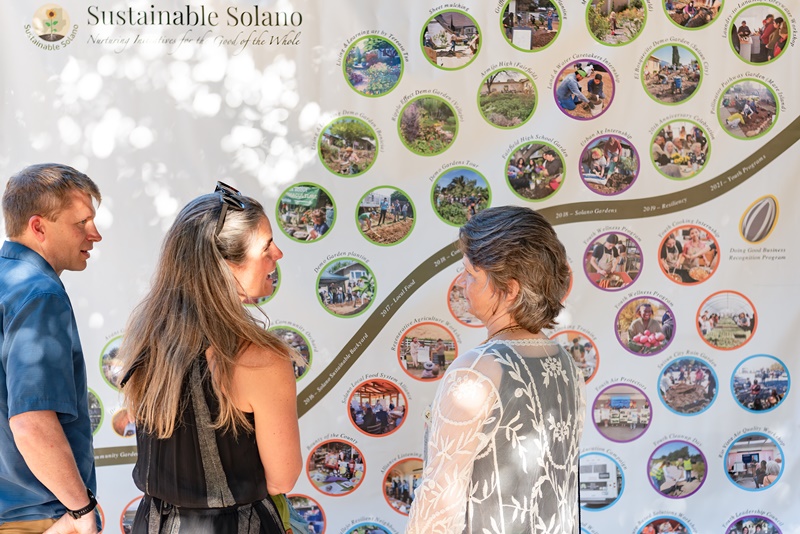
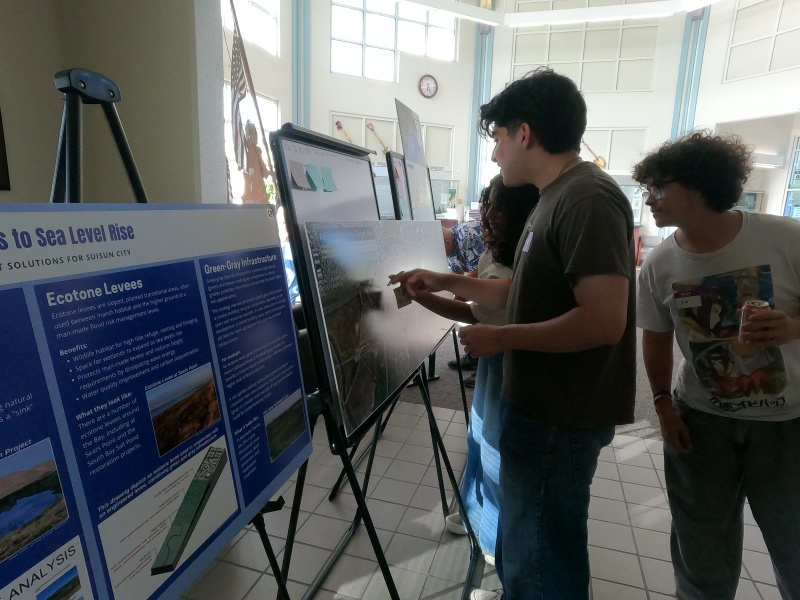
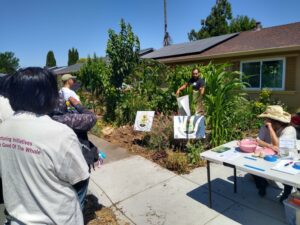 Outside of Raley’s we helped hand out flyers to people in hopes that they would attend a workshop and get information about flooding and sea level rise in Suisun. The workshop was an event people could attend and learn about sea rise levels, ask questions if they had any concerns and share their perspectives. I also attended a garden walk where people went to get information on how to make a good garden for the environment which uses rain and rainwater. It also helps prevent floods if enough people do it.