Jul 17, 2018
[Click here for full Daily Republic article]
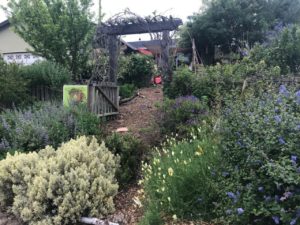
Sustainable Solano is a grassroots, county-wide movement uniting people and their initiatives aiming to serve the future of Solano County, to promote ecologically sustainable, economically and socially just communities. The organization had been expanding its mission of sustainable gardening since 2011 to include all forms of sustainable local food production (urban agriculture, permaculture, wise water landscape practices, Community Supported Agriculture partnerships and public education). Benicia Community Gardens changed its named to Sustainable Solano in 2016 to reflect its current scope and growing reach to actively engage all of Solano County. Sustainable Solano provides opportunities to local community members across the county to participate in four main initiatives: sustainable landscaping, local food movement, a community conversations speaker series and a sustainable neighborhoods pilot expanding on the sustainability framework to include renewable energy and shared small local solutions. Since 2016, its programs have extended to Vallejo, Fairfield and Suisun City.
Sustainable Solano will be launching its Sustainable Backyard program in Vacaville this August bringing educational, hands-on learning opportunities for residents interested in sustainable landscaping and wise water landscape practices to feed a landscape. This program focuses on transforming lawns and unproductive landscapes into lush, food-producing gardens fed primarily by secondary water sources (laundry-to-landscape greywater system and rainwater) and also brings inspiring talks on sustainable landscape design and permaculture principles.
The Vacaville Sustainable Backyard program will launch on August 11, 2018, with a talk by the permaculture expert Lydia Neilsen at Morningsun Herb Farm in Vacaville. The application period will be open to Vacaville homeowners and community public spaces to apply to become “food forest keepers” and have their yard transformed into a demonstration food forest garden. Highly visible, front-yard lawns are preferred but other types of landscapes (up to 2,000 square feet) are welcome to apply. Details about this expansion and a downloadable application will be available on the website homepage from August 11-September 21st.
Sites are assessed and chosen by Sustainable Solano’s Advisory Board made up of dedicated residents aiming to raise sustainability awareness in Solano County. Site selections are based on criteria such as: yard access, greywater feasibility, sun orientation and a commitment to community education.
There is no financial cost to Vacaville homeowners interested in being a part of this community-building project. The program will offer a series of free, hands-on public educational workshops where locals can learn about permaculture design and be part of the installation of these edible ecosystems fed by secondary water sources. There will be an annual tour of these demonstration food forest gardens.
The Sustainable Backyard program has successfully completed 15 demonstration food forests on both private and public land since the initial launch in 2015. Names given to these gardens are a reflection of the hopes and aspirations of the homeowner as part of their vision for the world they want to live in. Suisun City homeowner and food forest keeper of “A Growing Future” demonstration garden, Cassandra, had her lawn replaced with what she calls “a secure source of local food for my family with a surplus to share with the community”. For food forest keepers in Solano County, these gardens are a source of inspiration, resiliency and connection with neighbors. For Benicia food forest keeper Nam, the garden provided something else aside from birds, bees, flowers, fruits and vegetables. “This garden provided a place for meditation and a peaceful space during difficult times for our family.”
This project is made possible by the funding and support of the Solano County Water Agency.
The Sustainable Backyard will expand to Dixon and Rio Vista in 2019. Visit www.sustainablesolano.org and www.facebook.com/sustainablesolano for updates and details about this expansion.
In addition to self-sustaining, water-efficient landscapes, Sustainable Solano also envisions an environmentally and economically sustainable local food system. In September of 2017, it was awarded a planning grant by the USDA to begin developing a business plan for Community Food Centers in all seven cities. These food centers will serve as a hub for local food activities: CSA deliveries, cooking classes, and community education increasing access to seasonal, locally-produced food, better health for residents county-wide and a stronger local food economy.
[Click here for full article]
Jun 13, 2018
 By: Nicole Newell, Sustainable Backyard Program Manager
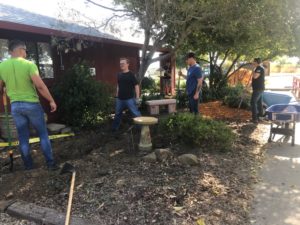
The work at Suisun Wildlife Center was the most interesting and busiest installation yet! As we were learning, working, and getting to know each other, the raptors and a one-eyed coyote were watching us. Volunteers stopped by to get bottles for the baby squirrels and raccoons that are receiving in-home care and wounded baby possums, squirrels, raccoons and birds arrived as we installed the pollinator food forest. We saw first-hand the service that Suisun Wildlife Center provides to California native wildlife. Throughout the three days, city council members, board members, and community members interested in water-efficiency and wildlife visited us.
Andrew Torres, a student from the Airman Leadership School Globemaster class contacted me a few days prior to the installation and asked if we had a community service project available for the class to join. This healthy crew of young men and women studying to be sergeants delivered 15 yards of tree chips and dug 60 feet of swales in only two hours! Each year 35, 263 gallons of water will be diverted from the roof to the swales. Suisun City Vice Mayor, Lori Wilson, coordinated lunch with local eateries and McDonalds donated chicken salads (yes they were tasty!). At lunchtime, we spoke to the Globemaster class and learned about the important role that community service plays in becoming sergeants. The foundation of this garden was completed and the class learned how to harvest water in-ground and build soil by adding tree chips.
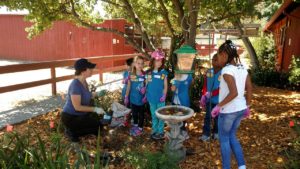 The next day, we did not have the help of the Globemaster class, but we did have a few solid participants that have been to our previous workshops ready to wrap up this project. Kevin brought his nifty drill that helped dig the holes and made planting in clay soil effortless. We planted over 30 different types of plants to attract pollinators. Rose from Morningsun Herb Farm recommended Newleaze Coral. This plant blooms from spring to fall and attracts many different types of bees including native bees. After we had our pizza lunch donated from Mountain Mikes, the Daisy Girl Scouts arrived to work on their honeybee award. The girls worked as a team to plant Russian Salvia; this plant attracts butterflies, hover flies and bees. Then they sprinkled laughter, joy and pollinator seeds all over the garden. Thank you to everyone that helped get this pollinator food forest installed at Suisun Wildlife Center. Vice Mayor Wilson supported the Suisun City Sustainable Backyard program from the beginning by introducing us to local organizations, launching our program at Denise Rushing’s speaker event and serving on the Advisory Board to help select both the private and public site in Suisun City.
This demonstration pollinator food forest at Suisun Wildlife Center is a public project funded by the Solano County Water Agency. The garden will serve as a community asset where people can learn simple techniques to design a resilient, water-wise landscape.
May 31, 2018
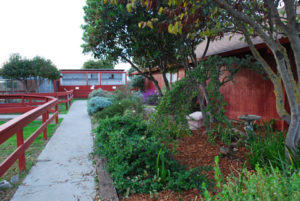 Sustainable Solano’s Sustainable Backyard program expanded to Suisun City earlier this spring and is now celebrating the completion of a public demonstration food forest garden at a private Suisun residence. The program offers informative workshops and inspiring talks on sustainable landscape design, community resilience and permaculture.
On Saturday, June 9th and Sunday, June 10th, community members are invited to help create a thriving ecosystem for pollinators, such as birds, bees, and butterflies, at Suisun Wildlife Center (SWC). This custom demonstration garden will focus on year-round pollinator plants and habitat for wildlife and will be fed primarily through secondary water sources such as roofwater diverted to swales. SWC is a non-profit volunteer organization dedicated to the rescue of native California wildlife to ensure that birds and animals receive the best possible care.
Attendees will have the opportunity to learn hands-on how to build a proper foundation for a permaculture food forest, how to increase water-holding capacity in the ground, tips for building healthy soil in the garden and basic permaculture design principles that can be applied at home for self-sustaining, food-producing gardens all year-round.
Thank you to Vice Mayor, Lori Wilson, for coordinating lunch with local eateries on both days.
Workshop Dates:
Saturday, June 9th (Installation Day 1:) Laying the foundation: digging on contour swales, making berms and diverting the roof water to the landscape. Register here.
Sunday, June 10th (Installation Day 2): Creating habitat. Register here.
- Planting a community of pollinator plants with multiple functions that support a healthy, diverse ecosystem.
- Surface drip irrigation installation: Adding irrigation for young plants and water conservation.
- Covering the food forest with free woodchips (mulch) to prevent water evaporation and improve soil health.
There will be yearly ongoing workshops and tours of these demonstration food forest gardens on private and public land in each city. This project is made possible by funding and support of the Solano County Water Agency
Mar 30, 2018
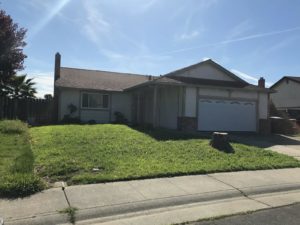 One private yard in Suisun City has been selected for the installation of a demonstration food forest garden as part of Sustainable Solano’s Sustainable Backyard program offering informative workshops and inspiring talks on sustainable landscape design, community resilience, permaculture, and local food systems. The first of three public installation workshops will be held on Saturday, April 7th, at a private Suisun residence, where community members can help create the foundation of an edible ecosystem fed by secondary water sources such as greywater (laundry-to-landscape system) and roofwater. This workshop will focus on digging swales, making birms, diverting roofwater and planting fruit trees to increase water-holding capacity and building healthy soil in the garden.
Selected homeowner, Cassandra, a resident of Suisun City for over 21 years and passionate about growing food and healthy eating, was looking to replace her lawn with a more sustainable landscape that her family could eat from. This led her to apply to have her yard transformed into a steady, water-retaining food source that would not only increase resilience but catch the attention of lawn owners lining her neighborhood streets. “This project will help secure a source of local food for my family with a surplus to share with the community”, Cassandra said. The family has named the garden, “A Growing Future”.
Through this project, she will be joining a growing family of “food forest keepers” in Solano County that have committed to opening their demonstration food forest gardens for the public to learn about simple sustainable landscape techniques and ways to use water more wisely to grow food.
Her yard was selected among four other Suisun City homeowner applicants. The selection process for these sites are based on criteria such as yard access, greywater feasibility and sun orientation. Sites are assessed and selected by Sustainable Solano’s Sustainable Landscaping Advisory Board made up of dedicated Solano County residents aiming to raise sustainability awareness in Solano County.
The garden will take three full days to complete and all installation events are free and open to the community. There will be yearly ongoing workshops and tours of these demonstration food forest gardens on private and public land in each city. This project is made possible by funding and support of the Solano County Water Agency.
Registration is required for these FREE hands-on workshops. Visit our calendar to register.
The Sustainable Backyard and Conversations program will expand to Vacaville in the fall of 2018. Visit www.sustainablesolano.org and www.facebook.com/sustainablesolano for updates and details about this expansion.
Feb 22, 2018
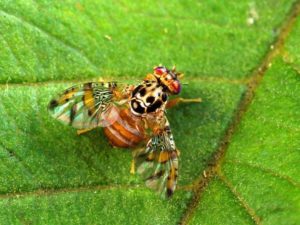
In case you haven’t heard, Solano County is the latest area to establish a quarantine for the Mediterranean fruit fly also known as the Medfly. The quarantine started last fall and will continue until officials are sure the threat to the local orchards and farms has passed. Commercial growers are most impacted by this quarantine, but homeowners with fruits and vegetables in their home gardens also need to be aware of the regulations and impact of this action.
For those wishing to gather more information, click here.
California Exotic Fruit Fly Project: Frequently Asked Questions Regarding Exotic Fruit Fly Quarantines
Feb 10, 2018
SUISUN CITY — If you live in Suisun City and want to turn your yard into a thriving, edible ecosystem, Sustainable Solano would like to hear from you.
The grassroots local nonprofit that started in Benicia is expanding its work to Suisun City and is looking for homeowners interested in creating demonstration “seed plot” food forests in their backyards.
Sustainable Solano will be taking applications through March 16 and will visit each applicant’s site before making a selection sometime in late March.
What is called a permaculture food forest would include using rainwater and gray water from the laundry, a drip irrigation system and sheet mulch. The plants would include fruit trees, berries and plants that are beneficial to insects.
Both the owner and a cadre of volunteers would spend four weekends putting in the food forest whose layout would be cooperatively designed by the homeowner and Sustainable Solano.
The goal is to create between an 1,800- and 2,000-square-foot “oasis of productivity and beauty to nourish you and inspire others,” according to the application that’s available online.
In return for Sustainable Solano helping set up the food forest, the homeowners would be expected to make a five-year commitment to take care of it and open it to the public twice a year as part of an annual garden tour.
“You definitely have to have a green thumb,” Sustainable Solano Executive Director Elena Karoulina said.
Sustainable Solano started in 2016 when supporters of Benicia Community Gardens changed the name as part of its goal to inspire and help the rest of the county to locally grow, regionally source, cook and enjoy healthy food.
The group set up two private gardens and a public one in Vallejo in 2017 and more recently started gardens in Fairfield at Mission Solano, Suisun Valley Elementary School and a private home. They are now looking for one public and one private location in Suisun City and plan to start a similar effort in Vacaville and Dixon later this year.
The group hosted a forum Saturday with author and permaculture expert Denise Rushing and plans a sustainable landscape class at 6 p.m. Thursday at The Salvation Army’s Kroc Center at 586 E. Wigeon Way.
For more information and the application, go to www.SustainableSolano.org.