By Manpreet Singh, Public Education Coordinator Fellow
Interested in learning more about marketing local food? Join the Solano Local Food System Alliance’s online forum from 4-5:30 pm Sept. 17 to hear what the research says and learn marketing approaches.
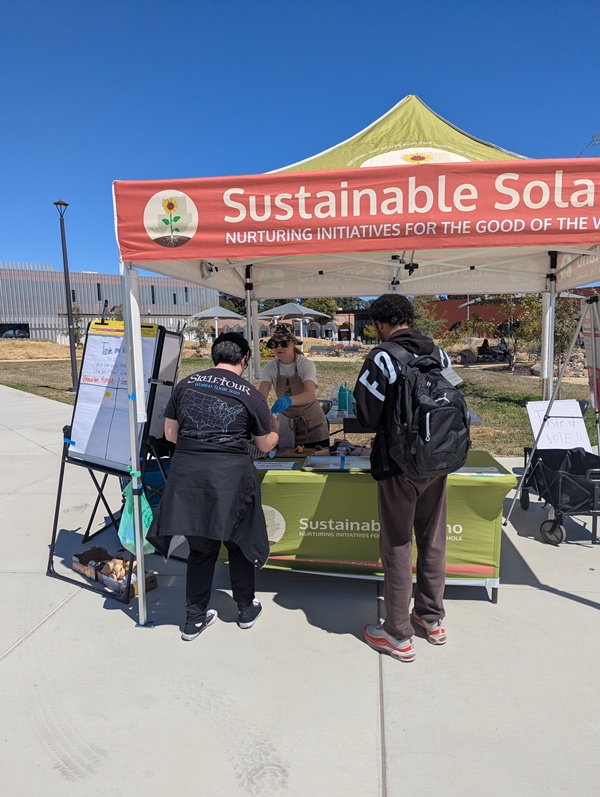
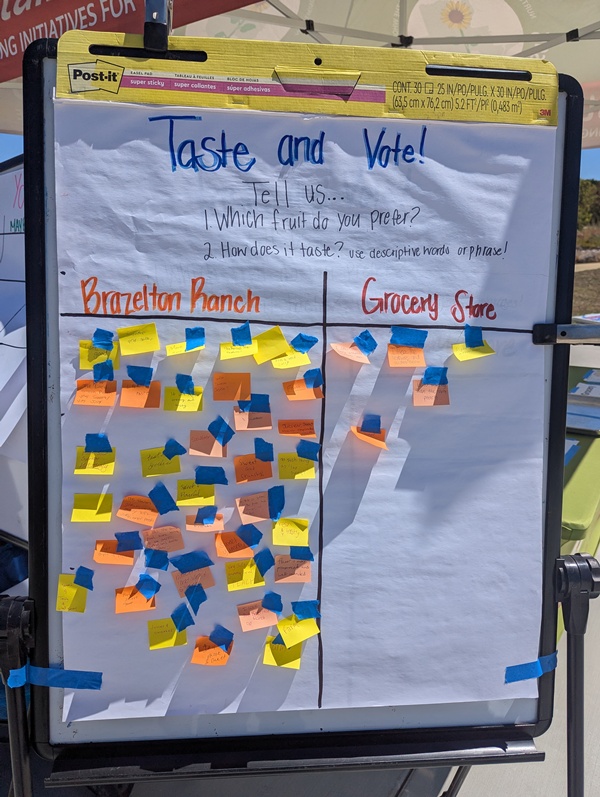
A shining sun, clear blue sky, and a busy quad. Around a table, Solano Community College students sampled peaches from a local farm and a grocery store, voted on which they liked better, and answered questions to help us understand their perspective on local food in Solano County. Additionally, they had the opportunity to learn about local food in Solano County and provide feedback to help raise awareness of products that are locally sourced.
When taste testing the peaches, students identified a significant difference in taste between the peach from the local farmer and the grocery store. There was an overwhelming preference for the peach from the local farm with students believing it tasted much “juicier” and “richer”, was “softer” and “sweeter”, and they could “taste the love”. This event provided meaningful insight into what attracts these students and other members of Gen Z to local food.
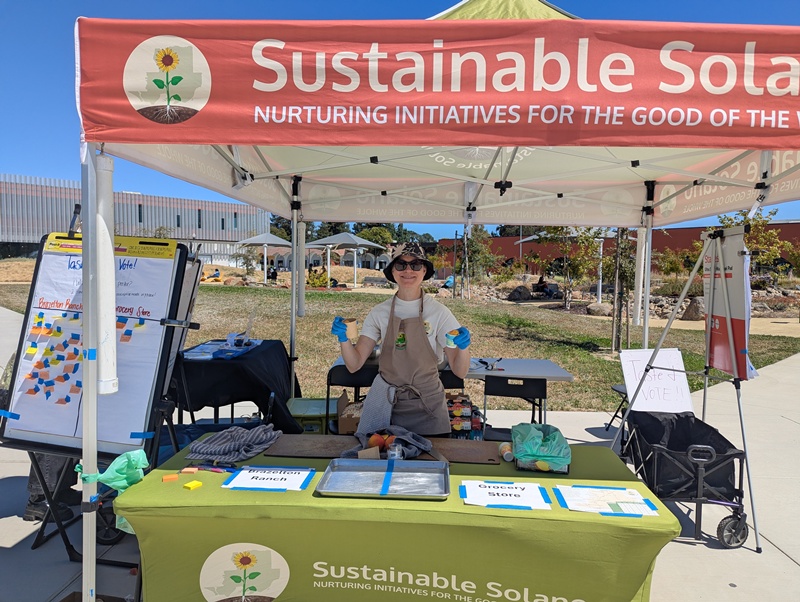
SuSol Local Food Program Manager Stephanie Oelsligle Jordan cut fresh samples of farm and store-bought peaches on demand for SCC students to taste test
Solano County is rooted in agriculture with over 700 farms growing produce such as almonds, walnuts, and tomatoes. Many of these farms produce large quantities of these products for national and international markets, with little remaining in the county. Solano is also home to a number of smaller family-run farms that are trying to serve the local market, as well as farms in the broader region that can offer fresh, seasonal products to local buyers. Past research has shown an established need to build awareness of the importance of locally grown food and the local food system to build the demand needed to support those farms and shift from an unsustainable system to one that is better for the environment and people’s health.
Gen Z — individuals born between 1997 to 2012 — is joining the active global workforce and wield significant purchasing power that can shape global food systems and future food markets. This generation has grown up experiencing the extreme impacts of climate change and is the first digital generation — getting their information primarily from social media and online news outlets. Solano County has a growing Gen Z population that can play a significant role in growing our local food system and strengthen our communities.
Gen Z values sustainability, quality, and transparency and are one of the key groups that are on the frontline of advancing climate action and demand for sustainable practices. Through the power of social media, they have been exposed to videos about chemicals and additives added to their food and harmful practices in the supply chain from unsustainable agriculture practices to animal and human rights abuses. This has shaped desire and demand for more environmentally friendly sourced food, product integrity, and transparency about where food is coming from and what is in it. With Gen Z, there is a shift towards a moralized market. It’s not only about economic exchange, it is relational and ideological exchange around how food is produced in a way that aligns with their personal values.
Promoting locally grown food is a critical opportunity to shape the future of the food system and advance environmental, social, and economic sustainability benefits. This includes:
- Reduced food miles: fewer emissions are released as vehicles travel shorter distances.
- Health and taste: locally grown crops are often picked at peak ripeness, which means more nutritional value and taste is retained as nutrients and flavor are not lost during long distance transport.
- Less risk of contamination: fewer steps between the farm and consumers and more transparency on where the crops are sourced from and practices used to grow them
- Local economy: creates jobs and keeps money in the local community
- Resilient food supply: communities are more resilient to challenges in the global food supply and price fluctuations.
- Environment and biodiversity: smaller farms often use regenerative, organic, or sustainable practices that are beneficial to soil quality, open spaces in the community, and protect biodiversity of our region.
- Community: Trust and community bonds strengthen by connecting consumers directly to the individuals who grow their food
Opportunities exist to engage Gen Z in boosting local food systems that build long-term community health, support regional economies, create a sense of community and belonging, and ensure sustainable food systems — especially in the face of growing threats to our food supply. According to a 2025 survey, 72% of Gen Z consumers reported feeling strongly about buying locally grown produce when available, but only 45% reported actually buying more local produce. This highlights that there is already interest, but accessibility may be an issue.The interest for local produce was echoed with Solano Community College students indicating overwhelming interest in advocating for the local farmers’ peaches to be served in their cafeteria and an interest in traveling to the local farm to purchase these fruits.
Local food messaging is a critical method that connects consumers to products. For Gen Z, local food messaging needs to connect with their values. At Solano Community College, we tested 4 local food marketing messages:
- If you try it, you’ll buy it!
- Taste the difference!
- One bite changes everything!
- Taste local! Love local!
Of these 4 messages, the one that resonated the most with students was “Taste local! Love local!”. When asked why, students emphasized the inclusion of the word “local” because it resonated with their desires and values to support their local community.
Messaging helps promote locally sourced food by communicating the product’s value and building consumer interest. Based on insights from the Solano Community College taste test, messaging should not only emphasize the environmental, economic, and health benefits of purchasing locally sourced food but also reflect the local and community aspect. Emphasizing that product came from the local community, along with all the benefits, ensures that the product resonates with their values while helping Gen Z consumers understand the benefits of their actions when they purchase locally sourced food.
A critical method to reach Gen Z is through using social media. This group is the first digital generation, as they have been deeply shaped by the rise and constant presence of online digital connections and utilize social media for access to information, the newest trends, and connections. Social media plays a significant role in shaping their consumer behavior by exposing them to the newest trends via influencers and videos about what is happening in different areas.
Another method to reach Gen Z is to build and strengthen those community connections. This means being a constant presence at locations such as farmers markets or community events. Local farmers can hear from Gen Z what they want and build trust and community connections that can have a far reaching impact on the local food system.
Food has the power to bring the people together, and in a region like Solano County where community is emphasized, supporting locally grown food can make us stronger.
You know what they say: “Taste local! Love local!