Goodbye Grass

By Tereasa Christopherson-Tso

Tereasa is a Solano County-based artist who is working with Arts Benicia on an “artivism” exhibit focused on water conservation. Tereasa reached out to SuSol about visiting one of the demonstration food forests established through our Solano Sustainable Backyards program, and visited “Living and Learning” in Benicia, where she beautifully captured the garden in spring. She has given us permission to share her painting and artist statement, which we feel encapsulates why these gardens are so important.

You can visit “Living and Learning” and other demonstration food forest gardens during our annual Benicia & Vallejo garden tour on April 27. Learn more and register here!

Keep an eye out for a special exhibition that brings together Arts Benicia and Vallejo Center for the Arts for “Stewarding our Water Resources: Solano Artists Create, Collaborate & Educate” from May 25 through June 23.
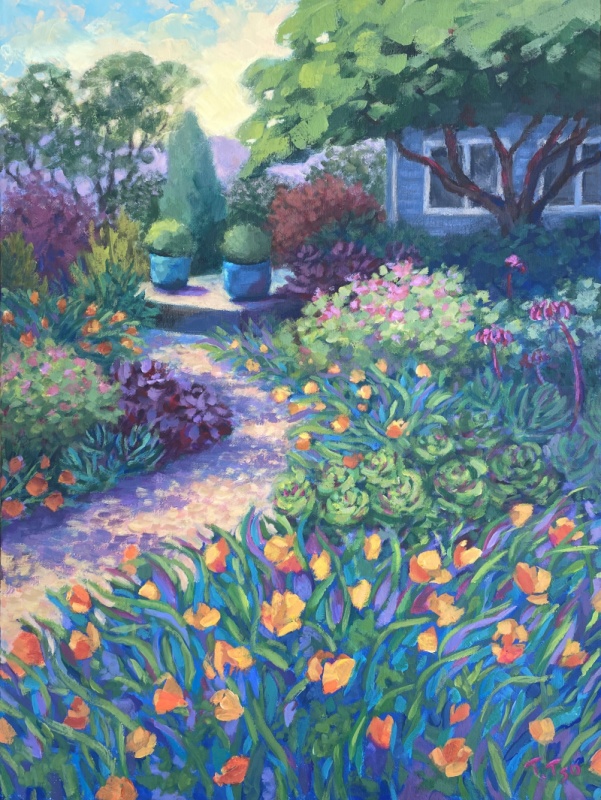
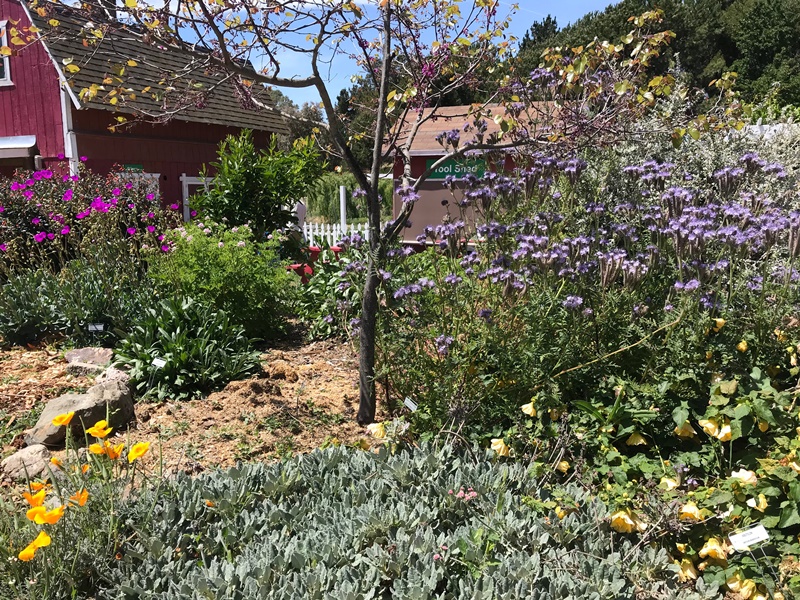
Goodbye Grass, Acrylic, 18”x24”

I have always been a lover of pure nature where I find joy in exploring landscapes in their wildest forms and where nature alone stewards the land. The arresting beauty of the forest and the awesome vastness of the ocean have never ceased to stir my soul with creative inspiration. This past year, however, I began exploring what it means to not only be an admirer of plants and bodies of water but how to better steward them. I began attending numerous workshops held by Sustainable Solano and touring gardens they had installed for people’s yards and community gardens. This inspired my garden efforts this year and the desire to create a garden as Monet did to inspire his paintings but also one that takes into account the high value of water as a limited resource here in northern California.

I found inspiration for this painting from a front yard garden in Benecia that Sustainable Solano installed. I had the pleasure of working with their Program Manager Nicole [Newell] to tour gardens I was interested in painting for this project. Here drought tolerant plants are seen throughout the landscape, a pathway of wood mulch provides a protective layer over the dirt, and native golden poppies have sprouted up in all their super-bloom glory. By excluding grass and using more sustainable garden practices this yard requires very little water yet does not sacrifice beauty.
-Tereasa Christopherson-Tso
Take a tour of the “Living and Learning” garden in this video, and join us for the Benicia & Vallejo Demonstration Food Forest Garden Tour on April 27!

Grow Your Gardens and Knowledge Through Our Compost Classes

By Jazzmin Ballou, Program Manager

Compost happens all around us in real time. We see leaves, branches, and fallen fruit decompose back into the soil. In the winter the Earth’s energy is focused on breaking down that which is no longer alive or of use to plants, so that in the spring our soil can be nutrient-rich, and ready to use those nutrients to support the biggest production season of the year.

Soil health is a big focus for Sustainable Solano this year. This March through May, we’ll be offering classes for all levels of composting to build healthy soil. This series will consist of three classes, with a beginners composting class in March, an intermediate class in April and an advanced composting class in May. You are invited to attend the class of your choice or join us for all three to build your composting knowledge and connect with the different gardens where each class will be held.
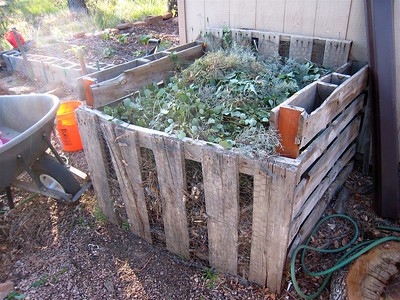
Composting 101 – A Beginners Guide to Composting will be held at the Peace of Eden Community Garden at City Church in Fairfield. A brand-new three-bin system has just been built as an addition to this community garden, so this class is for folks who may want to compost but don’t know where to start. We’ll learn about composting basics: green waste vs. brown waste, what food scraps are compost-friendly and which aren’t, turning your pile, etc. Depending on time, we may weed or harvest from the garden so that participants can contribute to the compost bin. This class will be led by Lori Caldwell, who is not only a very experienced gardener and composter, but a very experienced teacher on those topics as well!

Composting 101 will be followed by Intermediate Compost Skills – An Introduction to Worm Composting, also taught by Lori Caldwell. This class will go over compost mishaps and how to troubleshoot bin repair, pests, etc. The time will also be used to introduce worm composting, discussing the benefits of worms, worm castings, and this compost method that is very friendly for those who want to compost but have less space to work with. The Vallejo Project Unity Garden will be hosting this class, with a worm bin and a three-bin compost system that has been paused due to pest issues and repair needs. This class will be interactive and potentially hands on, as we hope to show examples of bin repairs and give their compost system a bit of TLC.
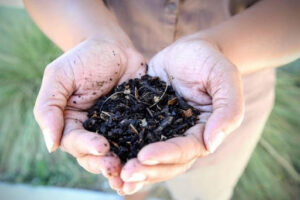
Our final class of this series will be an Introduction to Advanced Composting Methods- Thermophilic Composting at the Vallejo People’s Garden on Mare Island. Michael Wedgley, owner of Soilogical, will teach this class, using his advanced understanding of soil biology to cover the thermophilic method of composting. As a more maintenance-intensive compost method, thermophilic composting creates an end product that is much higher in nutrients than traditional compost, as the goal is to heat up every inch of the organic matter being composted to a much higher temperature than we normally see for compost. This means it is turned much more intentionally and often, which is why after hosting this class, we will be offering opportunities for people to come back and support with the maintenance of this pile for the entire duration of time that it takes for it to break down (about six weeks).

We look forward to this ongoing process of learning about soil health and compost with you and encourage you to come ready to learn but also ready to teach! Every question asked, idea shared, comment made, in these open learning spaces feeds our own internal soils for when we are ready to harvest that knowledge and offer it back into the world, be that in our own backyard compost bins, or during a volunteer workday at a local community garden.

Sustainable Landscaping, Lawn Removal on Water-Efficient Rebate Budget

Thanks to everyone who came to our class in January with Alana Mirror about how she transformed her lawn into an edible and native landscape, all within the budget of the Water-Efficient Rebate Program from the Solano County Water Agency. You can read her previous blog about this project here.

For resources on how you can make a sustainable transformation in your own backyard (and on a budget!), below are individual videos covering topics from the water-efficient rebate program to DIY sustainable landscape design (or you can watch the playlist of all the videos here). You can view a PDF of the slides from Alana’s presentation here. Within these, you’ll find even more links to resources that can help you on your journey.

Sustainable Yard Transformations: Why Transform Your Lawn?


Sustainable Yard Transformation: Water-Efficient Landscape Rebate Program


Sustainable Lawn Removal: How and Why to Sheet Mulch


DIY Sustainable Landscape Design


Permaculture Principles for Sustainable Landscaping


Installing, Maintaining and Enjoying Your Sustainable Yard


You can learn more about Solano County Water Agency’s Water-Efficient Rebate Program here.

To learn how Alana’s sustainable yard transformation also transformed her life, check out her musical blog where she shares original songs, stories, and videos of her transformation at thelivingmirrorproject.org/blog

If you’d like to be part of Alana’s growing community of creative gardeners and environmental stewards, she’s offering a free online introduction to her upcoming group: HeArt of the Garden.

Whether you’re a seasoned gardener or just starting out, Alana’s introductory HeArt of the Garden two-hour, interactive Zoom event on March 23 is perfect for anyone who wants to

  • develop foundations that serve and connect with the natural world;
  • harness the wisdom of nature;
  • grow trust in your inner-compass through journaling;
  • cultivate confidence in your most honest expression; and
  • make peace with yourself, others and the world around you.

Heart of the Garden is a private online community with monthly Zoom meetings to share creative reflections, build confidence and grow connections.

For the free March 23 introductory event, you can sign up here.

Learn more about Alana’s peacemaking project at thelivingmirrorproject.org

Help us Shape Our New Doing Good Business Awards Program!

By Sustainable Solano

We know that there are Solano County-based businesses that make a difference in their communities, and this year, Sustainable Solano plans to launch an awards program to recognize those businesses that stand out in their efforts to support people and planet.

And we’d like your help!

The Inspiration

Sustainable Solano has spent 25 years working to strengthen our communities through urban agriculture and community gardens, supporting the local food system, building community conversations and action around environmental and climate resilience, and youth engagement and empowerment.

Our work is informed by the practice of permaculture, which at its base level applies to creating environments that support a healthy, thriving ecosystem. This can apply to landscapes, but also to people, communities and businesses.

We are inspired to recognize businesses that, in their own ways, embrace the three ethics of permaculture: Earth Care, People Care, and Fair Share.

For businesses, we see these ethics materializing in different ways:

  • Earth Care — A dedication to authentic sustainability practices that comes from direct intent, rather than greenwashing or government mandate
  • People Care — A dedication to outstanding treatment of employees, both in policy and in action.
  • Fair Share — A dedication to giving back to employees or the community.

How You Can Help

We want an advisory committee that will help to guide what this program looks like in our community. We want input from business leaders on how to define meaningful efforts in these three areas, and how to judge which nominees are head and shoulders above the rest. Ultimately, an advisory board will review and select the recipients. 

Help us to envision and shape a program that recognizes, celebrates and supports Solano County businesses that are striving to do good!

Want to help? Contact us at info@sustainablesolano.org. We will start the planning process in early March.

Garden Design Templates Simplify How To Start Your Sustainable Garden

By Sustainable Solano

Want to learn how to apply a waterwise garden template in your own yard? Join Heath Griffith of Grow with the Flow for a Waterwise Garden Design Lab from 10 am-1 pm Saturday, Feb. 24, in Benicia. Learn more and register here.

Creating your ideal garden space can be daunting. Even with piles of garden books, maps of hardiness zones, seasonal planting charts and catalogs spread out on the table, it can take an expert eye to know where certain plants will thrive and how they will work together.

A template can be that little lift needed to get you started on reshaping your yard into something beautiful. (And the perfect activity for this time of the year when cold, rainy days staring out of the window give us an opportunity to think of spring!)

That’s why we reached out to Joshua Burman Thayer with Native Sun Gardens. Joshua is a local landscape designer and horticulture consultant who creates ecological landscape designs, has done extensive work with native plants and organic farming, and community-based work around plants and food. He wrote Food Forests for First Timers, an introductory guide to permaculture in the garden.

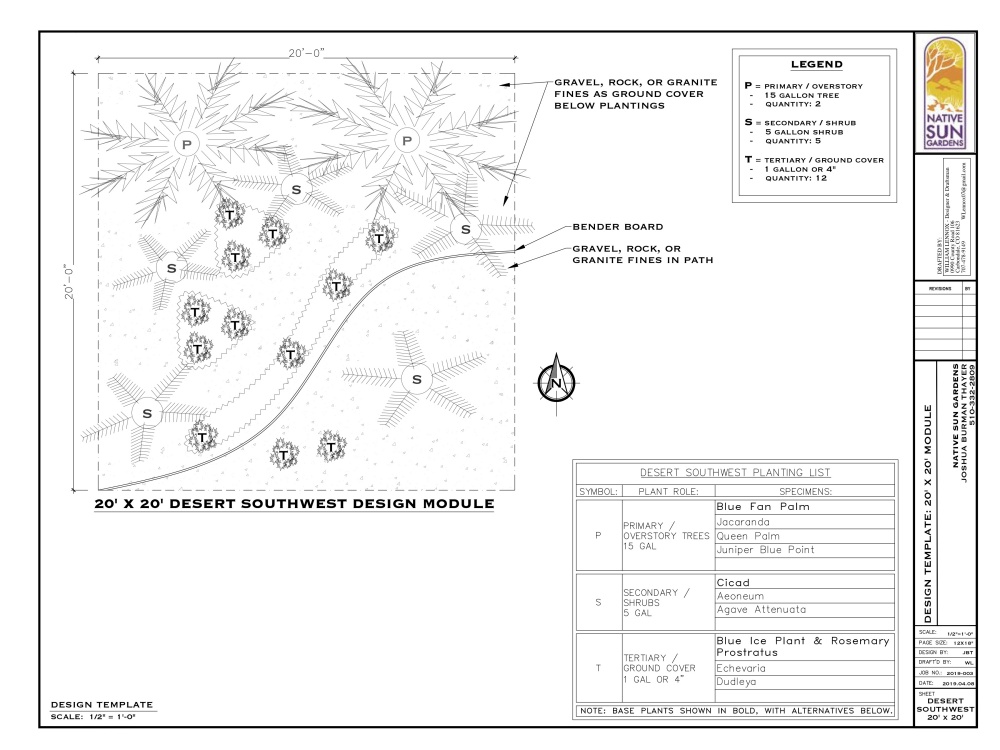
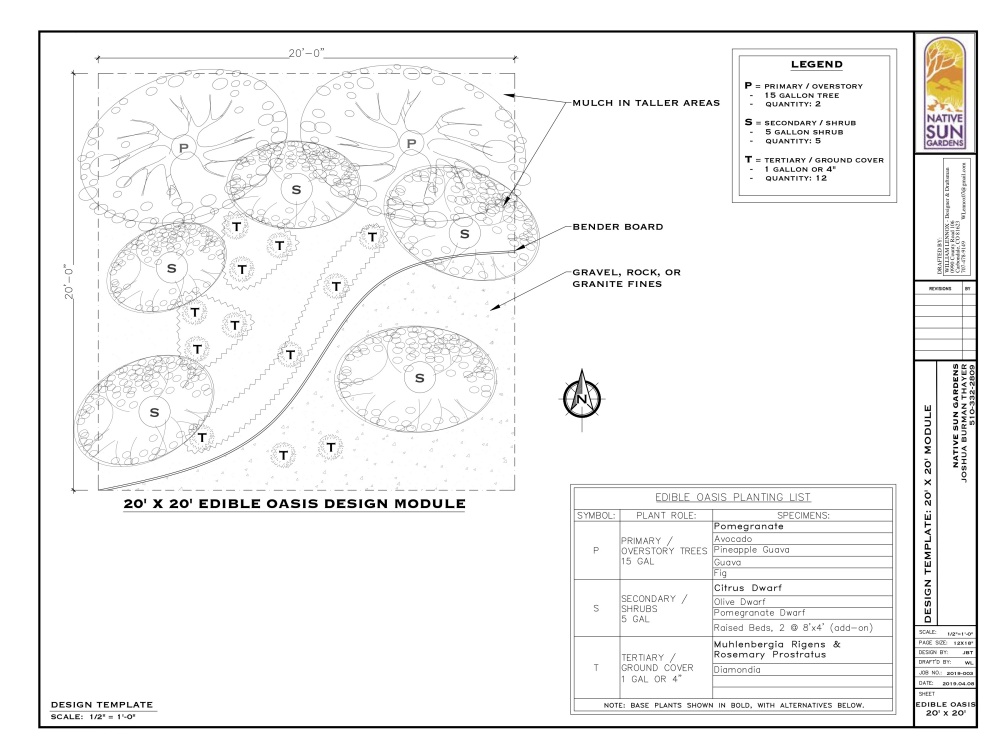
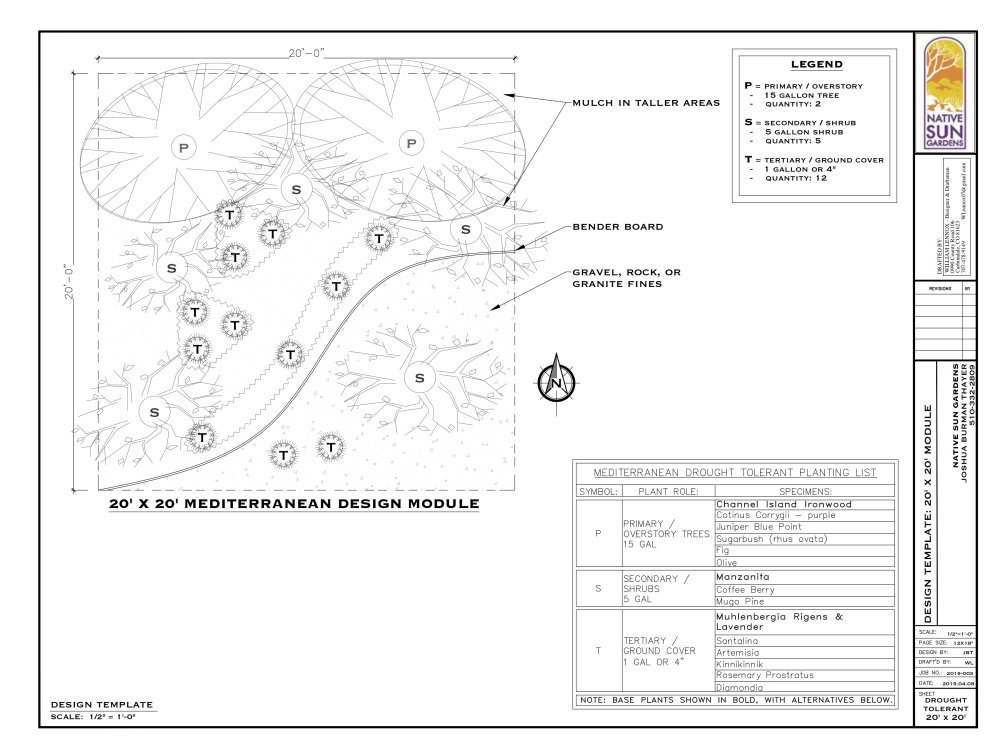
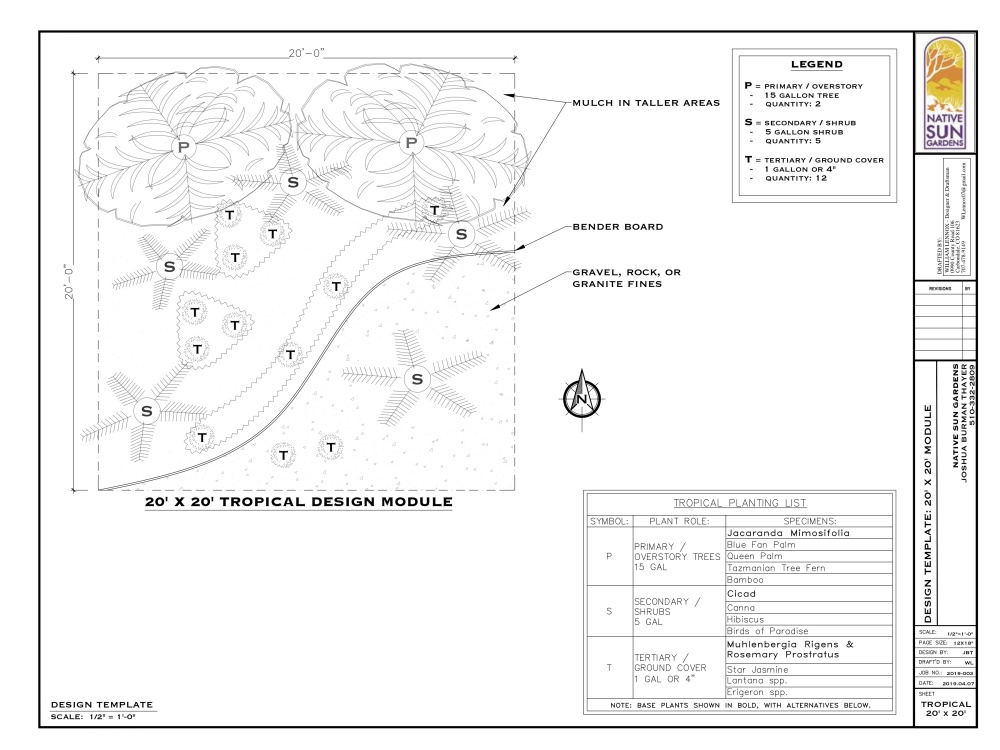
Joshua shared these four templates, which we are sharing with you in this blog and will include in our plant resources. These free templates give you a quick way to get started, with the basic layout and selection of appropriate plants for each design.

The templates are designed in 100-square-foot “tiles” that can be combined in various ways to create a larger design.

Joshua shared four approaches: desert, edible, Mediterranean and tropical. The desert and Mediterranean designs are waterwise and drought-tolerant, which is appropriate for Solano County summers. Below each design, Joshua offers a brief description of each as well as where in the county these options could thrive best.

Desert

Desert: For those gardeners wanting to try their luck with only minimal hand watering and no weekly irrigation, desert plants can provide a robust plant palette. These plants can acclimate in 2-3 years and then get by on 1-2 waterings by hand per month in the dry season by year 3. Desert plants evolved to withstand great solar intensity and can thrive in sunny parts of Solano County. (Vacaville, Dixon).

Edible

Edible: If you wish to maximize food production in your urban lot, the edible template will show you how to prioritize food for humans at each level of the food forest. This system takes a good amount of water and care, but can also reward with the most food per acre if water is not an issue. (All of Solano County).

Mediterranean

Mediterranean: Mediterranean plants generally do rather well here, because both the Mediterranean region as well as California are between 32 and 38 degrees N latitude and have similar marine-influenced climates. As such, expect many of the Mediterranean edibles to thrive with the seasonality of California’s wet and dry seasons. (All of Solano County).

Tropical

Tropical: Solano County residents near sea level have the blessing of being able to grow food frost-free 12 months of the year. Some winters do test that ability, but generally low lying areas near bodies of water will allow for a microclimate perfect for growing tropical crops. Try the tropical template for fun varieties to your garden. (Suisun City, Benicia, Vallejo, Rio Vista, Fairfield).

If you are interested in learning how to apply a waterwise template to your own yard, join us for the Waterwise Garden Design Lab taught by Heath Griffith of Grow with the Flow on Feb. 24 in Benicia. Registration is free, but seats are limited.
Heath got their Permaculture Design Certificate with Vital Cycles Permaculture, through a course sponsored by Sustainable Solano. Since then, they have worked with Soilogical BioSolutions and Designs, become a Qualified Water Efficient Landscaper, and earned a nationally recognized certificate in Water Harvesting. Heath is driven by a deep passion for reconnecting humans with the landscapes that live and breathe all around us, beginning with water harvesting and sustainable water use.

There are other templates out there. For native plants, we recommend the California Native Plant Society’s Regional Guides, which include plant lists and design templates. You can download the one that suits your environment here.

Have a template you’ve used? Share it with us at info@sustainablesolano.org so we can add it to our list of resources!

Building Backyards (and Front Yards) of Hope

Sustainable Landscaping Steps to Transform a Lawn and Life

By Alana Mirror, The Living Mirror Project

You may have met Alana at one of SuSol’s events and workshops, or seen some of her music videos or blog posts from those experiences. Here, she shares with us about her journey and talks about transforming her lawn to a sustainable landscape within the budget of the lawn conversion rebate she received. Learn more about that process during her free online talk on Jan. 23. You can register here.

Alana’s finished lawn-to-sustainable landscape project

Over the last year, I single-handedly transformed my entire front lawn into a native plant habitat and edible garden — all for less than $1,000 out-of-pocket! With financial support from the Water-Efficient Landscape Rebate program from the Solano County Water Agency for converting a lawn to a waterwise landscape and educational support from Sustainable Solano, not only have I been able to save water, support the ecosystem, and grow my own food, but I’ve also grown a tremendous sense of purpose, empowerment and hope. My mental and physical health have never been better. My heart has never been fuller. Indeed, transforming my lawn has transformed my life.

This blog is an invitation for you to join me in the great joy of serving the Earth within the intimate comfort of our own homes. You don’t have to be an expert. You don’t have to go into debt. I’m here to prove that a thriving world is right at our fingertips.

But, before I dive into the story of how that came to be, I want to acknowledge you. If you’re reading this blog, there’s a few things that I already know about you:

  1. You care deeply about the Earth.
  2. You are bravely willing to take responsibility for your part in creating thriving communities.
  3. You still have hope for what’s to come.

With that in mind, I hope my story will nourish the seeds that you have already planted within your own heart. Whether you’ve already begun making changes to your home and lifestyle, or you’re brand new to sustainable living, this blog is your affirmation: We can make a big impact in our own backyards; anyone can do it; and it’s an absolute joy.

Let me take you back to a time when I wasn’t so optimistic: I was a junior in college when An Inconvenient Truth shook the world with its warning that if we don’t change our ways, the world as we know it will come to a tragic end. It was a rough way to enter adulthood, to say the least. So rough, in fact, that I tried to sweep it under the rug. I tried to keep it all at bay: “It’s far away,” I would say.

But when the drought began to dry up our state, and the fires began to rage, it became clear that the future had arrived. It’s been three years since the day that the sun didn’t rise (remember that smoke-filled, eerie orange morning, summer 2020?). Now, after years of debilitating depression and anxiety, I’m happy to say: I finally found some natural lighting.

It all started with a podcast I was listening to by Greg Sarris (chairman of the Federated Indians of Graton Rancheria) with Obi Kaufmann (author of the California Field Atlas). They were discussing different ways that folks can support indigenous people’s environmental efforts and one of the suggestions was to transform your yard. “Claiming a space as home means being responsible to it by doing things like taking out your lawn and learning indigenous plants,” Obi said.

A bell rang. Chills moved through my veins. I didn’t know how I’d do it, but I’d find a way. I’d turn my lawn into a sustainable landscape.

First I talked to my uncle who had recently transformed his yard to be drought-resistant. He told me about the Water-Efficient Landscape Rebate Program that offers a rebate of $1.50 per square foot up to $1,500 for sustainable yard transformations. But, he had hired a landscaper who charged him $25,000! I didn’t have that kind of money! I would have to find a way to do it myself.

This was a tall order! I didn’t know anything about landscaping at all! So, I started by volunteering with the Putah Creek Council, a local nonprofit that does habitat restoration and protection of our watershed. There I learned about native plants. Eventually I even did an internship with them. But how would I translate all that to home?

That’s when I found Sustainable Solano, whose backyard program teaches folks how to incorporate elements of habitat restoration in their own backyards! By volunteering with Sustainable Solano, I started to learn the basics of the transformation:

  • taking out your lawn with sheet mulching
  • permaculture principles of design
  • sustainable gardening
  • and harvesting and storing rainwater in the ground!

In talking to one of the program managers, Nicole Newell, about my intention to transform my yard as close to the budget of the rebate program as possible, I expressed an interest in paving the path for others to be able to do the same. Being environmental stewards in our homes is something that should be accessible to everyone! In that spirit, she and I collaborated with sustainable designer Joshua Burman Thayer of Native Sun Designs to create a design template that any Solano County resident can use as a starting point for their own yard transformation.

Designer: Joshua Burman Thayer, Native Sun Designs

Through applying the principles that were modeled to me in the Sustainable Solano volunteer days, and by using the design template we created, in less than two hours a week, I was successfully able to transform my entire lawn into a native plant landscape and vegetable garden all within the $1,000 offered by the rebate program. The project took a year, and I bought most of my plants from El Rancho Nursery in Vacaville. This summer, 90% of my veggies came from my garden.

It felt like a miracle! Prior to this project, I had hidden my black-thumb and was embarrassed to try to grow herbs in pots! Now I was sharing surplus veggies!

The benefits went far beyond what I had expected: the garden was a magnet for all kinds of goodness: Neighbors would stop and chat. Lonely meals were supplemented by the satisfaction of knowing that I played a part in growing something so delicious. Plus, the wisdom of the Earth and the peace of the garden ended up being a tremendous companion while processing the grief of having recently lost my grandmother.

There was a hole being filled that I hadn’t known needed filling: For the first time in my life, I found my belonging. Hands in the soil, I reclaimed my place in the ecosystem.

And the more I learned, the more my hope grew! Did you know that 26% of greenhouse gases come from growing and transporting food? 70% of freshwater is used for food production? 50% of habitable land is used for agriculture? 78% of nutrient-overloaded water pollution (called eutrophication) is from farms?

Just imagine how the world would heal if we could grow, at a minimum, our own veggies!

It wasn’t long ago that most people had kitchen gardens right outside their front door. Before the mid-1800s, home gardens and wild food cultivation were a staple of human survival. Though gardens became more of a leisure activity as lawns took center stage and folks started moving into urban areas for manufacturing jobs, during World War II, “victory gardens” made a major comeback to fight food shortages, producing 40% of American produce in 1943. That means that there’s still people living today who remember what it was like to make a mass effort to grow our own food in a short period of time. If our grandparents could do it, so can we.

With 40,000 acres of land being used for lawns (that’s about half the total acreage of all the national parks), just imagine how our world would change if we simply made the switch from water-hungry and pesticide-prone green blankets to native flowers, trees, fruits and veggies?

With just a little help from each other, it’s all within reach. That’s why I’m here.

You can read my blog where I wrote original songs and told stories about how the process of installing the garden helped me to not only serve the Earth, but to make peace within me at The Living Mirror Project.

Then join me on Jan. 23 for Sustainable Yard Transformation on a Budget, a free online class with Sustainable Solano. I’ll share more of the nuts and bolts of what I learned in my journey of transforming my lawn, and how you can grow joy and hope with home sustainability. You can register here.