CSA Farm Spotlight: Be Love Farm
By Sustainable Solano
This is an ongoing series profiling local farms that have Community Supported Agriculture (CSAs) available in Solano County. CSAs create a way for community members to buy a share of the harvest directly from local farmers. Customers pay a set amount and receive a box of seasonal produce or other farm products in return. Such arrangements help farmers receive a greater share of the money paid, bring customers fresh, local produce and promote health, community and the local economy.
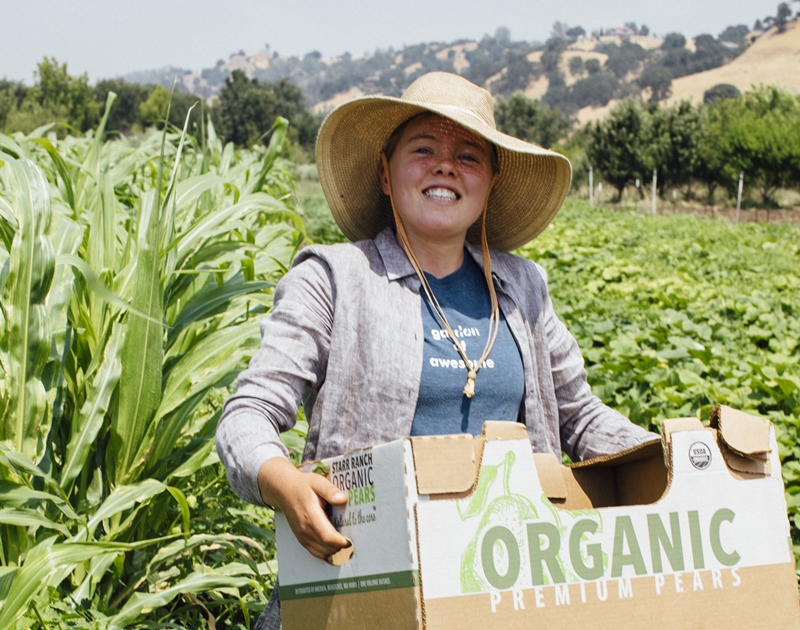
Emma Dotta in the fields at Be Love Farm, where she lives and works
Matthew and Terces Engelhart started Be Love Farm more than a decade ago with a dedication to regenerative farming. The family-owned farm is supported by plants and animals working together to grow healthy food in a way that emulates natural systems. Fields that produce annuals one year are then returned to perennial grasses for cows and chickens for at least two years.
Terces said she and Matthew started the farm to provide food for the restaurants they own and themselves, but also to nurture young upcoming farmers and provide a space where their grandchildren could roam freely and learn about food and animals.
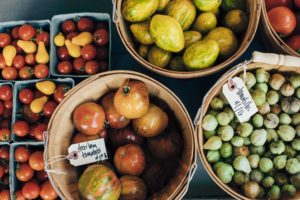
The farm produces fruit, vegetables and nuts and a variety of other goods, including wine. Be Love Farm has a farm stand on-site for everything from nuts and produce to pizza, sauces and other value-add products and is now introducing a CSA for pickup at the farm. Packed in baskets, the CSA could include seasonal produce, eggs, olive oil, wine, nuts and bread.
Below is a Q&A with Terces about Be Love Farm:
- Be Love Farm
- Vacaville
- 21 acres
- Established 2008
When did you start offering a CSA? Why was it important to offer?
This is our first CSA offering. We want to make food available for our local community.
What’s something that makes your farm stand out?
I suppose the diversification. We do everything from wine to nuts and sourdough.
Anything exciting on the horizon? What do you see happening and what do you want to see happen with interest in local food?
We love sharing our farm and what it produces with others. It has been a 12-year project of love to develop our small family farm. Eating local and fresh food is one of the healthiest choices a person can make.
Anything else you’d like to add?
Contact belovefarm@gmail.com for additional information.
Be Love Farm has the CSA available for pickup at the farm. Learn more about signing up through contacting them at belovefarm@gmail.com
Find out more about local CSAs here.