A Toxic Facility in Your Neighborhood? It Could Happen with Changes to State Law

By Bonnie Hamilton, M.D.

Bonnie Hamilton is a SuSol board member, a pediatrician, member of Climate Health Now and Physicians for Social Responsibility, and facilitates a Solano Climate Policy Action Team through the Bay Area Chapter of the Climate Reality Project. She spoke, along with Gabriel Tolson, an environmental policy associate with the Planning & Conservation League, about the changes to the California Environmental Quality Act (CEQA) in an online community conversation April 22. You can watch the video of that presentation below, and read her original blog.

Imagine waking up to find a manufacturing facility being built in your community, one that may release arsenic, lead, PFAS, hexavalent chromium, and other toxic chemicals into your air and water. If you live near industrial-zoned land anywhere in California, this can now happen without your receiving notice of the project’s construction or its associated health risks.

That’s because last year the California State Legislature passed Senate Bill 131, which was signed into law by the governor. SB 131 was introduced and passed in conjunction with AB 130, a bill that was intended to make building affordable housing faster and easier. AB 130 exempts housing projects that already fit into a city’s housing plan from environmental review under the California Environmental Quality Act (CEQA) — California’s foundational environmental law.

SB 131, however, goes much further, allowing projects to move forward without environmental review in a number of circumstances, including exempting nearly every category of industrial manufacturing from review.

For more than 50 years, CEQA has been California’s strongest environmental justice and conservation law. CEQA required that developers disclose and mitigate public health and environmental impacts of proposed projects such as new factories, freeways, and refineries. CEQA has given residents a voice in land use decisions, empowering local communities, most notably communities that are marginalized. While SB 131 helps rectify delays in the creation of housing, which CEQA has been criticized for, its final form had significant unintended consequences of exempting “advanced manufacturing” from CEQA.

Until last year, CEQA required public agencies to review and publicly disclose the environmental and public health damage a proposed manufacturing facility may cause. The law also required public agencies to adopt feasible ways to prevent harm, and — unique among California’s laws — required disclosure and reduction of greenhouse gas (GHG) emissions. Now, if a project qualifies for this new “advanced manufacturing” exemption, none of these protections apply.

The “advanced” label does not mean these industrial projects are clean. This exemption covers more than 75 categories of heavy industry, including strip mining, pesticide manufacturing, waste incineration, plastic and metal fabrication, defense and aerospace manufacturing, and many others. Pollution from these facilities can cause cancer and birth defects, aggravate other health problems like asthma, and can travel miles through the air or groundwater, contaminating communities for generations. The exemption can be used even by facilities that are located near homes, schools and daycare centers.

The exemption is also a major threat to our open space lands. This raises particular concern in Solano County, where the county’s open space protection through the Orderly Growth Initiative is set to expire in 2028 and will need to be renewed as part of the county’s General Plan update.

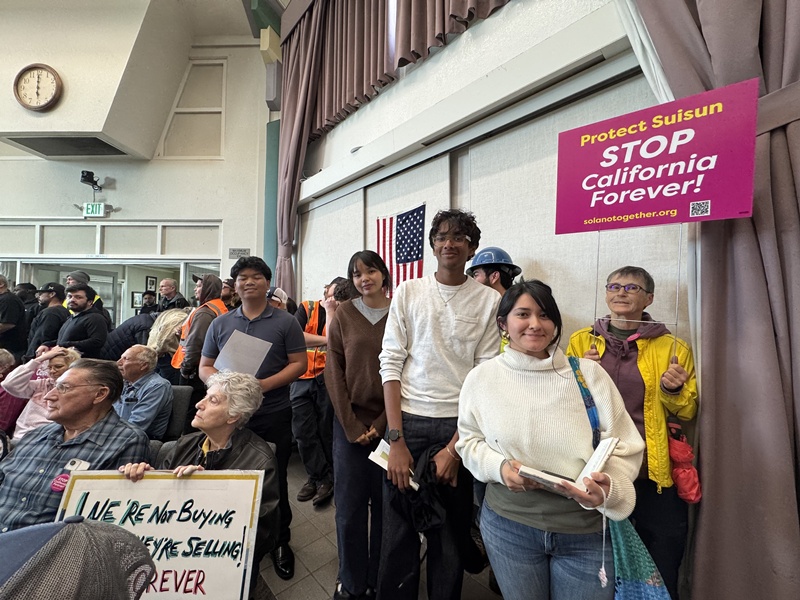
This could have a direct impact on California Forever’s proposed project in eastern Solano, which would sit within the sensitive Bay-Delta watershed, adjacent to the Suisun Marsh, and could significantly impact surrounding ecosystems and strain local resources. Projects on private land can qualify for this exemption and threaten habitat and endangered species without CEQA review. There is a real risk that the developers could claim this exemption applies to substantial portions of the massive project.

State Sen. Catherine Blakespear has authored Senate Bill 954, which would restore key protections and residents’ right to know about the risks industrial projects could pose to their families, communities, and the environment. Community members interested in seeing CEQA protections restored are encouraged to attend the community conversation, learn more and reach out to their legislators.

Resources

For more information on CEQA, visit CEQAWorks.org

Read the text of SB 131 and SB 954

Find your legislator here.

Dixon Youth Air Protectors Reflect on Program

SuSol launched our Air Quality program in 2022. The program is centered around Youth Air Protectors — high school students and young adults who learn about air quality challenges that affect their cities and seek ways to educate the community about those challenges and possible solutions while working on hands-on projects. In 2025, we were fortunate to receive funding from the Yolo-Solano Air Quality Management District to bring the Youth Air Protectors program to Dixon. Here are reflections from two students in the program, which will conclude by May.

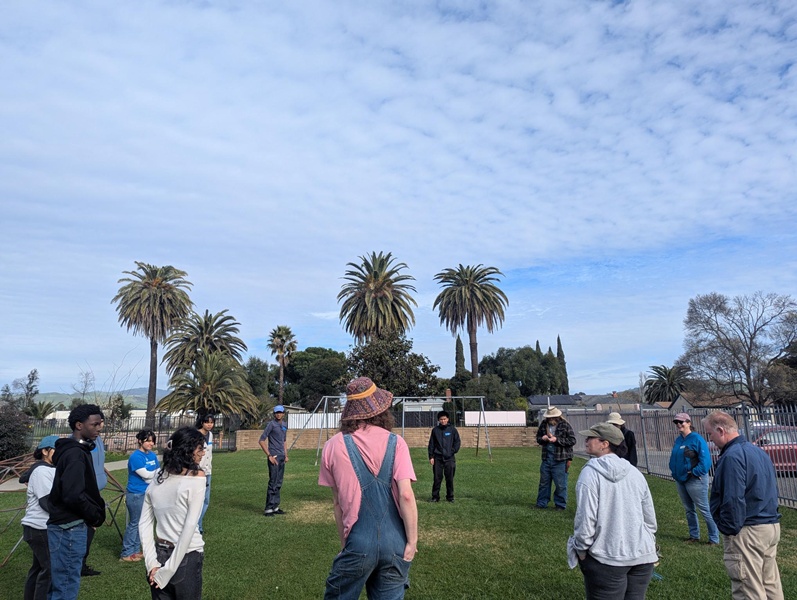
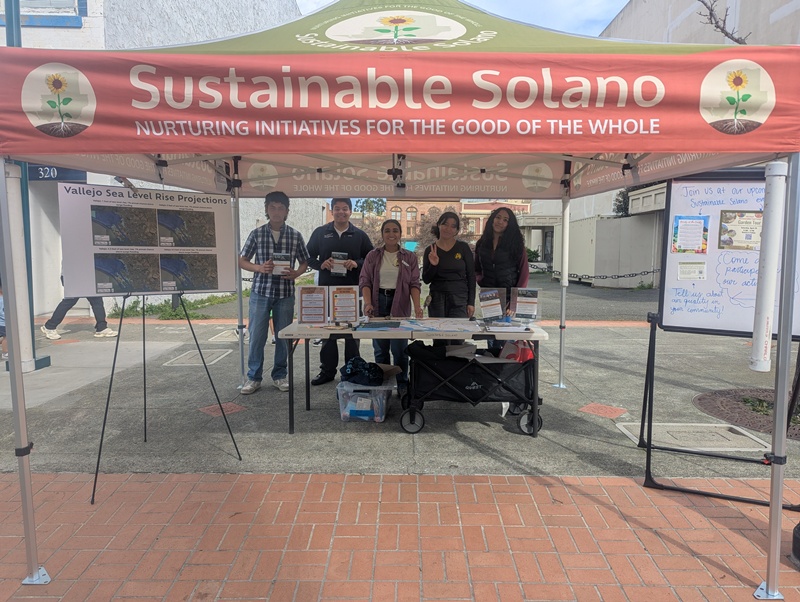
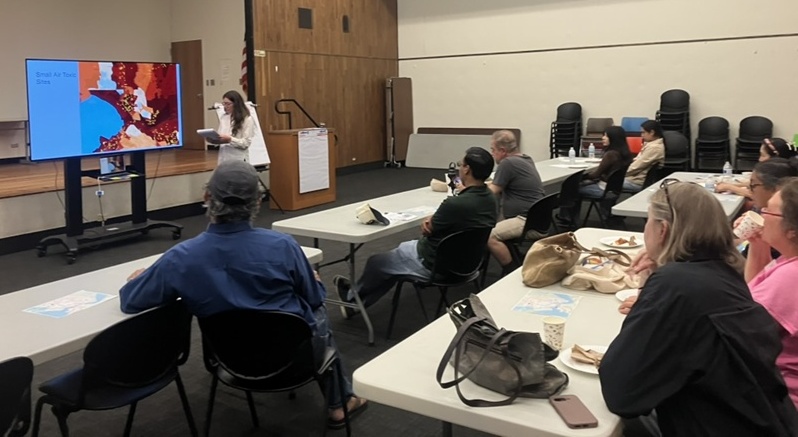
Dixon Youth Air Protectors speak with community members about air quality, community priorities and locations for new bike racks at a community event in January 2026.

By Layla Booth, Dixon Youth Air Protector

My internship this year has been an eye-opening journey into the world of environmental health, specifically regarding the air we breathe every single day. One of the most impactful parts of my experience was getting directly involved with you, the community. Through conducting surveys and interviewing neighbors about their opinions on our local air quality, I discovered that while many are concerned about pollution, there is a powerful shared desire for a healthier environment. I also had the opportunity to host public events to promote clean air awareness, which showed me that when we come together, we can turn complex environmental issues into manageable, community-driven solutions.

Advocacy was another major pillar of my work. I had the privilege of speaking at a city council meeting to highlight how crucial walkability and bikeability are to our community’s future. By pushing for better infrastructure for pedestrians and cyclists, we aren’t just making our streets safer — we are directly reducing the number of cars on the road and lowering the emissions that cloud our air. I also spent time attending public meetings to learn about sustainable practices like local gardening, even getting my hands dirty helping with the garden at our public library. These experiences taught me that air quality isn’t just about what comes out of a tailpipe; it’s about how we design our cities and nurture our local ecosystems.

As I wrap up this internship, I want everyone to know that improving air quality is something we all have a hand in. You can help today by choosing to walk or bike for short trips, supporting local gardening initiatives that help filter our air and staying engaged with city council decisions regarding our environment. Our collective voice matters — whether it’s through a community survey or a public meeting, your input helps shape a cleaner, more breathable future. Thank you for sharing your stories with me. Let’s continue to work together to keep our community’s air clear and healthy.

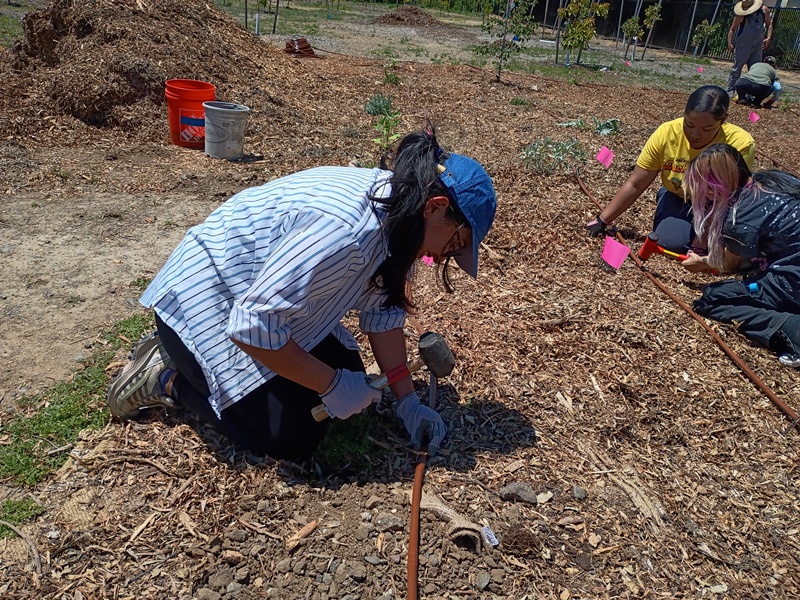
Dixon Youth Air Protectors work alongside community members to plant at the community garden

By Sophia Ferri, Dixon Youth Air Protector

In my time in this internship during the fall semester, I’ve learned a lot about air quality and generally everything surrounding it. I interacted with my peers in order to plan and survey the community on problems and their opinions. I had a lot of fun, actually; it was very interactive and educational at the same time. I’m doing the internship again in the spring semester and highly recommend it to students. Even if they’re not interested in the environment, there are still extremely intriguing topics discussed each meeting. The most fun I had was when we went to a community garden and planted with other community members. It was a fun way to reach out to others outside of the classroom we meet at. In general, this internship has furthered my understanding that air quality is such an important aspect to many people and everyday life.

Throughout my time in this internship, I was introduced to various resources that are available to anyone! Websites or maps that show air quality indexes or general environmental concerns in communities. I think that’s just really cool that we have that available to anyone. At one point in the internship, we created an air filter from vents and a fan! I learned how air filters work, which I didn’t previously know and now I do! I got to experience seeing my community up close as in many instances I had to research and survey common areas for people and other spots that need improvement. Whether that’s through bike racks, crosswalks, or more.

Overall I have really enjoyed my time in the internship. I got a lot closer with my peers and built friendships that’ll last a lifetime from this internship. It gave me something to look forward to every week.

Layla and Sophia build a DIY air purifer

We’re planning a countywide Air Quality Summit this fall that will bring together community members, citizen air quality organizations and experts to share knowledge. We want to hear about your interests when it comes to air quality. Take a short survey here!

Roots in the Ground: Tree Planting

By Maleah J. Brown, Rio Vista Youth Air Protector

Maleah, one of our Rio Vista Youth Air Protectors this fall, wrote this blog about the tree planting project the YAP did in partnership with the City of Rio Vista. Interested in planting more community trees? Our Fairfield/Suisun City Youth Air Protectors invite the public to plant trees Feb. 21 at City Church in Fairfield. Learn more and register here.

Planting a tree seems like such a small act, until you hold it and place it in the ground. When you walk away, knowing it’ll be in the same spot it was left in, that small act seems much bigger. At the tree planting in Rio Vista last November, the sense of community was touching. The small group we started with grew as it came time to start planting.

When I arrived early in the morning at Airport Road, I was greeted by my fellow Youth Air Protectors. We discussed how the event was going to go, as we sipped our coffee and ate our bagels. When participants ranging from residents, elected city officials, and even the fire department started arriving, we tied our hair back and grabbed our gloves.

Maleah, left, works with others to plant trees

We went through a brief instructional meeting on how to properly install the trees to insure longevity. From there we took a course of action and split into groups, 3-4 people a tree. People put their ideas together to help make the process smoother, like dedicating a group to installing all the tree support posts. I joined a group including two of my peers and someone who I’d never met. This experience not only helped me connect with my peers, but also helped me branch out and make new connections in the community. We worked together, shoveling soil, spreading compost, and placing trees in the ground. The smell of nature and the warm rays of the sun made the experience calming. In the end, my group succeeded in planting around four trees. Once we were all done, I helped distribute the extra compost soil on all the trees. We were finished after around three to four hours of planting.

I returned to the scene around eight weeks later to check on the conditions of the trees, as well as to plant some native wildflower seeds. The leaves have fallen off since I last saw them, which is unsurprising due to the currently cold weather conditions, but the trees seem to be stable and thriving. They were standing tall where they had been placed, and were bright and healthy. Soon, they will have new plants to share their soil with. The beautiful flowers will enhance the view of the road, as well as providing a food source and home for native pollinators. As I left, driving past the trees I had helped stamp into their new spot in my community, I knew this small act was bigger than I could have hoped.

The Rio Vista Youth Air Protectors program is funded through the California Air Resources Board and is part of California Climate Investments, a statewide initiative that puts billions of Cap-and-Invest, formerly known as Cap-and-Trade, dollars to work reducing greenhouse gas emissions, strengthening the economy, and improving public health and the environment — particularly in disadvantaged communities.

Little Free Library and Pollinator Garden Installed at the Rio Vista Roots Community Garden

By Willa Gruver, Resilient Communities Program Manager
SuSol Program Manager Willa Gruver cuts the ribbon at the dedication of the new Little Free Library in Rio Vista

SuSol installed a Little Free Library in the verge strip next to the Rio Vista Roots Community garden on Sept. 6. This library will serve as a resource for the community and  was made possible by the Rio Vista Youth Air Protectors program.

This community library was made possible by the work of many hands. It was created collaboratively by the Rio Vista High School woodshop students who built it, the Youth Air Protectors who painted it, the SuSol team members and volunteers who installed it, and the greater Rio Vista community, who came together to contribute books and install a pollinator garden around the base of the library.

The Youth Air Protectors program and our air quality work in Rio Vista is funded through the California Air Resources Board and is part of California Climate Investments, a statewide initiative that puts billions of Cap-and-Trade dollars to work reducing greenhouse gas emissions, strengthening the economy, and improving public health and the environment — particularly in disadvantaged communities.
This library is being hosted and stewarded by the newly established Rio Vista Roots community garden, and will contribute to its vision of the garden as a vibrant community space and social hub.

The Rio Vista Youth Air Protectors worked in small groups back in March to design and paint each side of the library with artwork of their choice
We also painted kindness rocks to spread positive messages around the site and neighborhood.

The native pollinator garden was planted with California native plants such as Yarrow, California Fuschia, Blue Sage, and Narrow Leaf Milkweed that will provide valuable habitat for butterflies and other insects, while also beautifying the site and providing benefits to the air, soil and water quality in Rio Vista.

This event provided an opportunity to discuss our local air quality, a topic that is of particular importance in Rio Vista. Rio Vista is in the 86th percentile of California census tracts for ER visits due to asthma. It is in the 84th percentile for ER visits due to heart attacks; both of these conditions are exacerbated by poor air quality.

Community members were able to sign up to receive free air purifiers from the Yolo-Solano Air Quality Management District, provide feedback on air quality solutions they would like to see in their community, and learn more about health impacts and mitigation tactics.

These plants will grow quickly and provide food and habitat for birds, butterflies and other beneficial insects.
Rio Vista community members gave feedback on what types of air quality solutions they’d like to see implemented in their community.

We filled the library with resources that address air quality and environmental health (for all ages). If you’re in the neighborhood, we hope you’ll stop by, take a book, and leave a book!

If you’d like to get involved, we’re seeking volunteers to help steward (and weed) the pollinator garden. Please email nicole@sustainablesolano.org if you’re interested. You can find out more about our upcoming events at sustainablesolano.org/events – we’d love to see you there!

Public Art Makes Spaces More Walkable and Welcoming

By Taylor Collins, Development & Communications Coordinator

Public art has a way of transforming everyday spaces into places where people want to slow down, gather, and enjoy their surroundings. Too often, we move through our cities at a rushed and urgent pace, focused on getting from one place to the next. But sometimes, we need reminders that public space should be made for us to enjoy, linger in, and connect with one another.

That’s exactly what the Fairfield in Full Bloom mural set out to do. This vibrant piece of art captures the diverse and friendly spirit of Fairfield, bringing color, creativity, and warmth to the area. At the community mural event on March 22, we invited community members to make their mark — literally — by adding their handprints to the mural. We are grateful to the community members and city leaders who came out to the event, and to the City of Fairfield, Select Furniture property owner, and artist Sheree Rayford for working with us to make this mural a reality.

Despite the light sprinkling rain and cloudy skies, the event was bright and uplifting. We engaged the community in air quality education, and one lucky participant even took home a DIY air purifier! Attendees could review the community-driven air quality action plan that was created through engagement with Fairfield residents. Copies of the plan are now with city staff and at the local libraries. We also got creative by painting kindness rocks, and decorating them with inspiring messages to spread joy long after the event. And in a collective act of optimism and renewal, we planted flowers and dispersed seeds, adding new life and beauty to the area.  

Public art is more than just decoration — it invites us to stop and spend time outside. By making our streets more walkable, welcoming, and meaningful, it fosters a deeper connection between people and the places they call home. Fairfield in Full Bloom is now part of the landscape, a reminder that our city is meant to be enjoyed, one step at a time.

Artist Sheree Rayford

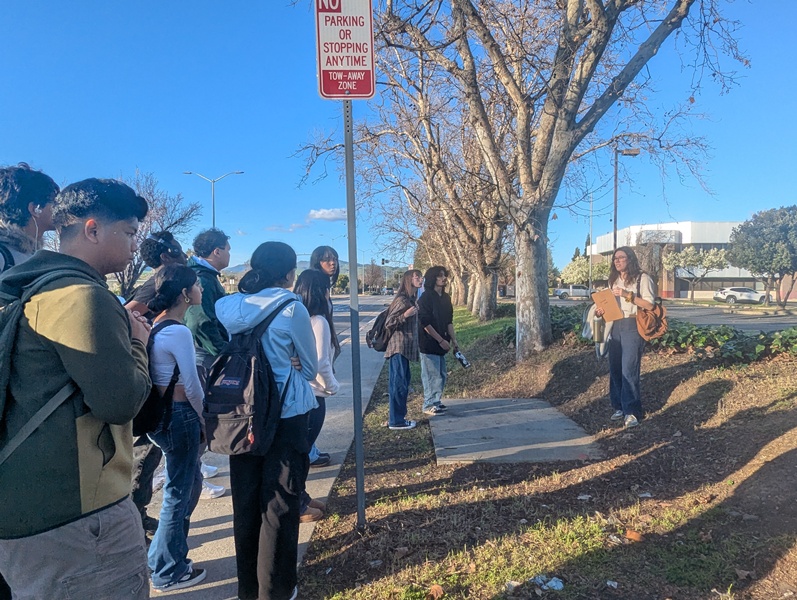
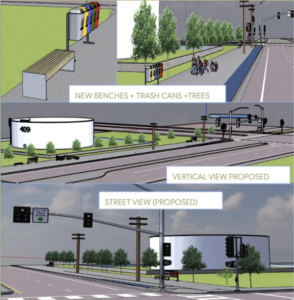
As part of our work in Fairfield around air quality, community members have asked about ways to create more walkable spaces. Some of this work has to be done through large changes, such as the ideas envisioned by our Youth Air Protectors in their street redesign projects. But other changes can be done on a smaller scale, such as planting trees in front yards that will shade sidewalks and improve the air, as was done through two Fairfield garden installations through this program. Then there is what can be done on a community scale. We hope this mural will invite residents to use, enjoy and care for the trail more often.

This mural project and Sustainable Solano’s Fairfield air quality work is part of California Climate Investments, a statewide initiative that puts billions of Cap-and-Trade dollars to work reducing greenhouse gas emissions, strengthening the economy, and improving public health and the environment — particularly in disadvantaged communities.

Why Understanding Air Quality Matters More Than Ever in California

By Taylor Collins, Development & Communications Coordinator

Interns with the Vallejo Environmental Leadership Fellowship build DIY air purifiers after attending a virtual class on air quality

Air quality is something many of us take for granted — until it becomes a problem. In California, we know that wildfires can happen at any time of year, filling clear skies with thick, hazardous smoke. But wildfires aren’t the only cause of poor air quality. Vehicle emissions, industrial pollution, and even household sources like gas stoves contribute to indoor and outdoor air pollution that can make us sick.

Over the past few years, Californians have experienced extreme air quality events. From the urban fires in Los Angeles at the start of this year to the record-breaking wildfire season in 2020 that forced people indoors for weeks. Indoor air pollution can be just as harmful, especially for those with asthma, allergies, or other respiratory conditions. However, with careful planning, we can protect ourselves while indoors. Learning about air filtration, monitoring air quality indexes, and improving indoor air circulation can help you stay safe.

Last month, we held a Virtual Air Quality Workshop with Dr. Nicholas Spada of the UC Davis Air Quality Research Center. We covered the basics of what is in the air and the science of keeping ourselves safe.


We’ll be holding an in-person workshop in Dixon on April 17 that will feature a live demonstration on how to construct an easy home air purifier. Materials to create the DIY purifier will be available, however, supplies are limited to the first 10 people who register. Register here for the class.

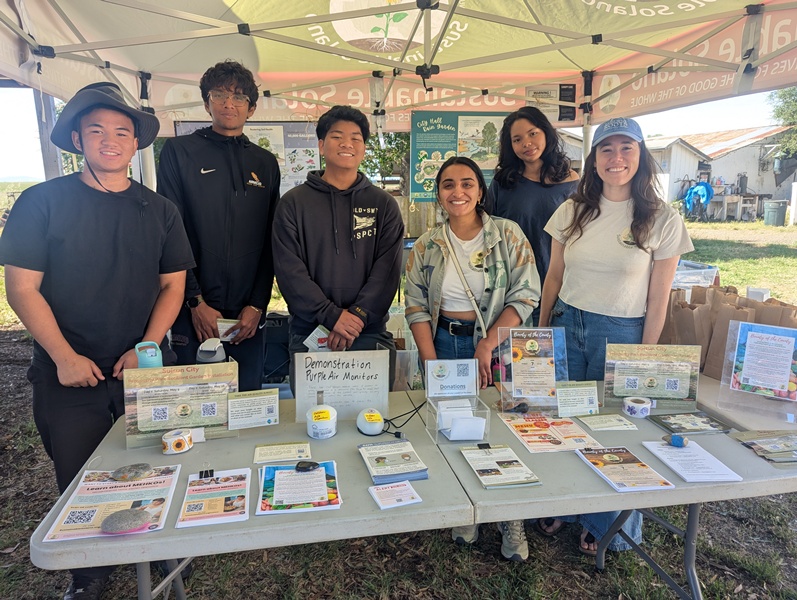
If you’re interested in helping your community monitor your air quality, sign up to receive a PurpleAir monitor using our Air Quality Interest Form. Due to limited supply, air monitors will be distributed based on neighborhood and geographic need first, and then in the order requests were received.

This work, including public air quality classes, the Vallejo Environmental Leadership Fellowship and air purifier and monitor distribution, are generously funded through support from the Solano Community Foundation.