Jun 26, 2018
 Sustainable Solano envisions an environmentally, economically sustainable and equitable local food system for residents across Solano County. In addition to stronger relationships with our farmers through Community Supported Agriculture, supporting local sustainable business and eateries is part of this vision that aims to create healthier families and communities countywide.
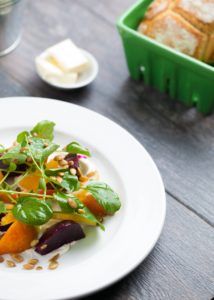
BackDoor Bistro and Wine Bar is one of the few gems in the county to deliver holistic, fine dining using locally-sourced, seasonal ingredients. Chef and founder, Lindsey Chelini is a Vacaville native with a degree in business from Humboldt State University and a graduate of the Napa Valley Cooking School in St. Helena. Her journey through the culinary arts and fine wine includes working at a well-known valley Michelin Star restaurant for several years and catering for her father’s wine business.
BackDoor Bistro offers creative, seasonal spins on American and European classics in a rustic, chic space and a variety of wine selections. Hearty, nutritious breakfast options such as Meyer lemon ricotta pancakes, eggs benedict and their famous flat iron hash are local favorites. Perfect for summer, delight in lighter entrees like their fresh, unique salad combinations or indulge in something more robust like cheddar, blue cheese, bacon macaroni and cheese! Dinner will not disappoint with savory specials like shrimp & grits, duck carnita tacos and coconut lime wild Alaskan halibut. Gluten-free, vegetarian and vegan options are available. Happy Hour daily from 5:00pm-6:30pm.
Backdoor Bistro sources from and supports the following farms and food growers:
Lockwood Acres
Mary’s Chickens
Niman Ranch
TerraFirma Farms
Full Belly Farm
Jun 13, 2018
By Stephanie Oelsligle Jordan
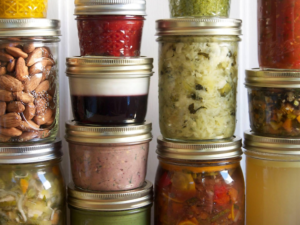 As many of you know, Sustainable Solano has been working on a USDA Local Food Promotion Program planning grant, for what we’ve been calling “Community Food Centers”. We are in Phase 2 of the project, which includes exploring successful, relevant business models, from which we hope to glean ideas for our own model. From May 23-29, Elena Karoulina, Kristin Kiesel and myself dove head-first into Three Stone Hearth’s “Week-long Kitchen Intensive,” to see how they run their worker-owned cooperative in Berkeley. For seven days straight we – along with 6 other people – listened, observed, discussed, questioned, chopped, jarred, and cooked in their commercial kitchen. By the end of the week, we had new information on “Holacracy” (a form of democratic leadership – more on that later), Co-ops, nutrient dense food, and everything in between.
But first, a little history. Three Stone Hearth is the nation’s first community supported kitchen. It’s mission is to “heal our community, our planet, and ourselves by building a sustainable model for community scale food preparation and processing that honors culinary traditions and provides nutrient-dense foods for local households and beyond.” Inspired by diverse cuisines and cultures, Three Stone Hearth produces weekly menus of prepared foods, along with fermented beverages such as kombucha, kefir, beet kvass and the like. While there last week, I helped prep an Ethiopian Beef Stew, mixed lime into polenta, and jarred green beans for pickling. A recent menu included Chicken Posole, Mexican Albondigas Soup, a Vegan Cauliflower Soup with Lemongrass and Ginger, Tuscan White Bean Soup, Braised Pork with Saurkraut, Beef Liver Pate with Mushrooms and Thyme, various condiments (pestos, pepper jelly, mayonnaise, salad dressing) and more. For more information on Three Stone Hearth, visit www.threestonehearth.com.
The food prepared at Three Stone Hearth is informed by the research of Dr. Weston A. Price (1870-1948), a Cleveland dentist who was interested in finding the secret to good health. He was also interested to know why second and third generations of people (down from his original patients) had markedly more dental decay and teeth issues. For nearly 10 years, he and his wife travelled the world and analyzed diets of secluded populations, as opposed to studying those who were ill. He visited 14 different countries, including remote villages in Switzerland, Eskimos and Indians in North and South America, African tribes, Melanesian and Polynesian South Islanders and Australian Aborigines to name a few. His research found that people who were isolated and not yet touched by commercialized agriculture and food production – in other words, those who followed a traditional/ancestral, nutrient-dense diet – had properly spaced teeth, very little tooth decay, good dental arches, better immunity to tuberculosis, and overall excellent health. In contrast, people who consumed processed food had more dental caries, deformed jaw structures, crooked teeth, arthritis and a low immunity to tuberculosis. After this extensive research, he identified eleven characteristics of traditional diets that crossed over among all cultures, including methods such as soaking/sprouting grains, nuts and seeds; avoiding refined or denatured foods; consuming equal amounts of omega-6 and omega-3 essential fatty acids; consuming some sort of animal protein, and more. Additional information on his work can be found on The Weston A. Price Foundation website https://www.westonaprice.org/
Day One of our Kitchen Intensive included a presentation by Jessica Prentice (founding member and worker-owner of Three Stone Hearth) on diets of traditional peoples around the world, and how those diets influence the dishes made at Three Stone Hearth. Jessica also spoke of the role of dairy products in traditional diets. On Day Two, Jessica delved into the history of Three Stone Hearth – how it was founded and how their business plan emerged. She also spoke about their organizational structure and governance, Holacracy, which removes traditional management hierarchies and replaces them with distributed authority, where authority lives as close to the work as possible (not up to the boss/supervisor, etc). Everyone becomes a leader of their respective “roles,” but also becomes a follower of other people’s roles. (Visualize five or six small circles – like departments – within the larger circle of the organization. These are the “roles”; however, no role is more powerful than the others.) As a result, operations within the organization have more transparency. The Holocratic model focuses more on “sense and respond” instead of “predict and control”. Another way Jessica discussed Holocracy was “of the organization, through the people, for the purpose.” Structured as a worker co-op, no one may be an owner without being a worker. Members of the co-op don’t own a percentage of the company, but they do receive profits, which are distributed via “patronage”, based on hours worked. The size/scale of Three Stone Hearth is also specific – it strives to be a community kitchen, which is larger than home kitchens, but not at a factory level; it is a smaller community making food for a larger community, much like community bread-baking facilities of years past. Day Two concluded with some hands-on learning about fermentation, preservation, and the making of lots of sauerkraut!
Day Three continued the discussion of traditional diets, focusing on fats and the use of bones and braising in traditional cooking. We then moved on to a presentation on Dietary Protocols, led by Nutritional Therapist, Joey Anderson. Joey discussed the differences between various diets, including GAPS, Paleo, Keto, Mediterranean, etc., and how they relate to traditional diets, as promoted by Weston Price. Then, we were off to the kitchen for jarring of bone broth, pickling green beans, processing liver for pate, and learning methods for culturing dairy products.
On Day Four, Jessica was back to discuss Budget and Finance within Three Stone Hearth, and how the numbers intersect with the organization’s values of People, Planet & Profit. Like many organizations and commercial kitchens, they strive to keep a balance between income and various costs. Three Stone Hearth’s sales are comprised of Housemade products (like the broth, pickles, soups and stews described above), Retail products (made elsewhere and sold in-store), Fermentation and Preservation products (made in-house), Educational classes, and also “Homestead” products, which are bodycare items and household products like candles. She discussed challenges and opportunities within their model, such as the need to create “rescue recipes” to ensure little to no food waste. Another worker-owner named Mud walked us through how they source ingredients, which are organic and local whenever possible. It was challenging for some small-scale farmers to work with them, due to the quantities needed. At the same time, certain distributors were challenged with them because of their smaller scale. In other cases, Three Stone Hearth had the opportunity to work with smaller producers to develop certain products, and then guarantee the purchases of these products. We saw this in action in the afternoon, when we visited Feral Heart Farm at the Sunol Ag Park. The farmer was experimenting with different types of crops for Three Stone Hearth, which can ultimately be a stepping stone for expansion.
Day Five brought our group of nine participants back into the kitchen, where we joined production for chicken vegetable soup, Ethiopian Beef Stew, Zucchini Pickles, West African Peanut-Ginger Sauce, and flavor preps for fermentation and preservation. In the afternoon, Jessica Prentice walked us through “Mapping Polarities in Organizations,” a process and framework for working through opposition, recognizing the pros and cons of each side, and then refocusing on the larger goal and solutions. It has been a very useful way for the worker-owners at Three Stone Hearth to get “unstuck” and find a balance that fits the situation. Examples of polarities that our kitchen intensive group came up with were “hard work vs. self care”, “practicality vs. vision”, and “automation vs. people power.” At the end of each polarity analysis, we outlined action steps which would move away from one side (or the other), toward balance.
Day Six began with us observing Three Stone Hearth’s monthly “General Company Circle” Holocratic meeting. There are two types of basic meetings in Holacracy: 1) Tactical Meetings, which focus on operational concerns, ongoing projects, new actions and metrics, and 2) Governance Meetings which focus on the structure of the Circle, looking at roles, accountabilities and policies. For example, in a Governance meeting, tasks may be moved from one role to another. Policy issues cannot be addressed in a Tactical meeting, and operations issues cannot be addressed in a Governance meeting. At Three Stone Hearth’s meeting, topics discussed included wage reviews, monthly profit & loss, professional development, and new policies. More information about Holacracy can be found at www.holacracy.org.
The second part of Day Six featured Ricardo Nunez, Cooperatives Program Director at The Sustainable Economies Law Center (SELC). Ricardo explained how co-op attorneys assist with agreements, risk assessments, employment law and much more. Co-ops can be 1) a legal entity, 2) a legal structure (even if the business is another legal entity, like an LLC), 3) a tax category and/or 4) a set of values and principles. He pointed out that the strongest co-ops are networked with other co-ops, and they offer a certain level of economic resiliency and stability. For example, in Minneapolis, MN, there are 17 food co-ops. The marketing, finance and other departments of these co-ops come together to share resources, and as a result have leveraged their position in the community, thus keeping certain other grocery chains out of the market. The last presentation of the day was on menu planning, new product development, costing and pricing, production planning and inventory. Menu planning at Three Stone Hearth involves almost everyone – a designated planner, product coach, ingredient buyer, people doing costing and several other coordinators. The challenge is to bring all these ideas together each week in a one-hour meeting to determine what gets on the menu.
Our last day at Three Stone Hearth took us back into the kitchen for some more food prep, and then a “Business Planning 101” session with Kristina Sepetys, a food writer, consultant and economist. She gave advice on choosing company names, business structure, accounting and finance/investment. We also discussed the use of various start-up tools, “pop-ups” for marketing, and community/customer engagement. We ended our week with a final Q&A session with some of Three Stone Hearth’s founding members and kitchen personnel, and a celebration with house-made cake (a recipe they were testing!) It was so very generous of Three Stone Hearth to open their doors to us. We all left with a greater understanding of their role in the community, as well as the local economy. Now, our challenge is to see how aspects of their model might apply to our project. Stay tuned!
Jun 1, 2018
 by: Elena Karoulina, Executive Director
Our local food system team continues to learn about sustainable local food systems and is moving into the second stage of the Solano small farms feasibility study: interviews with local farmers.
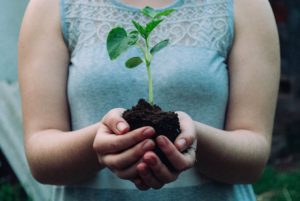
In the next two months, team members will be meeting with farmers face-to-face to have a dialogue about the state of small farming in our county, farmers’ challenges and opportunities, and our collective vision of a resilient, just and sustainable local food system in our home county. One of the absolute requirements for a healthy local food system is its ecological sustainability. The term “organic” is losing its original meaning of deep relationships and care for the soil as a foundation of agriculture (the recent move of our legislative authorities to allow aquaponics and hydroponic methods – the “soilless” agriculture – to carry organic certification is a sure proof of it.) Many large industrial organic farms are using methods and techniques that are focused on yield, not care for the soil, as their primary goal.
What is then,“sustainable agriculture”? Healthy soils must be a foundation of it! Last month Sustainable Solano was invited to join a tour of our local farms participating in the Healthy Soil movement. We need every farm in the county to join this movement!
To learn how healthy soils can halt climate change, click here.
Next time you go to a farmer’s marker, ask your farmer: what are your soil management practices? How do you maintain farm fertility? Do you use cover crop and animal manure? It is a question of interest for the entire community, not just farmers: the health of our soil determines the health and well-being of our entire community!
May 3, 2018
By: Stephanie Oelsligle-Jordan, Local Food Project Manager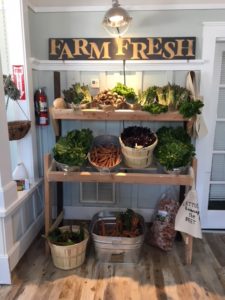
As I pulled into the parking lot, I wondered if I was in the right place. Several tents were set up, people were bustling around, and a guy was grilling chicken on a huge BBQ. It looked more like a small farmer’s market than a retail store….which meant the grand opening of The Heritage Pantry in Dixon was off to a great start!
Owned by Lindsey Hickman and Alyssa Connelly, The Heritage Pantry is “using the power of communal ideology and old fashioned homesteading skills to bring local farm goods into one place for consumer ease and education.” Located in a quaint old house (which used to be a real estate office), plenty of farm goods there were: beautiful fruits and vegetables; freshly baked breads; pantry staples such as jams, nuts, honey, olive oil, salsa, salts, ketchup and coffee; and a refrigerated case full of raw milk, cheese, eggs, yogurt, butter and meat. The shop also features essential oils, soaps, and other natural body care products. The Heritage Pantry will also serve its community by offering classes on a variety of topics. In May, you can learn to make Almond Milk (and use the pulp!), Cheese, Kombucha and Sourdough bread. (Parents take note – there is also a breadmaking class for kids!) And on May 18, “Rooster Paint and Sip” happens, when participants can sip on wine, and paint a rooster on a large canvas.
As I browsed around and watched the line of customers, it became clear that The Heritage Pantry is more than a retail store; it is a place that connects community members through local food. While Hickman’s and Connelly’s passion for local food certainly shows through the diverse array of products on the shelves, they have also created a synergy evidenced by the enthusiasm of their shoppers, and the pride of the farmers who were there showcasing their goods. It was fulfilling to see this small food system functioning, where local food is valued and appreciated.
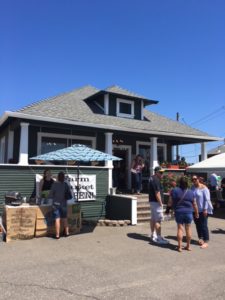
The Heritage Pantry is located at 350 West A Street in Dixon, CA, and is open Monday – Saturday, 12-6 pm. For more information visit www.theheritagepantry.com.
Farms and Producers featured at The Heritage Pantry include:
Eatwell Farm
Terra Firma Farm
Lockewood Acres
SucherNova Apothecary
The Cloverleaf Farm
Araceli Farms
Erickson Ranch
Early Bird Farm
Olivewood Olive Oil
Petaluma Creamery
Claravale Raw Dairy
Mast Coffee
Thaddeus Coffee Roasting
Fat and the Moon
Minnie and Grace Soap Company
AzureStandard.com
May 3, 2018
By: Elena Karoulina, Executive Director
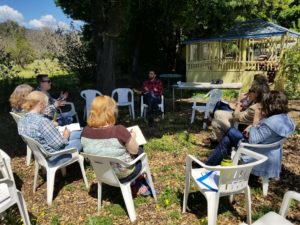
On a sunny Saturday morning, a group of local community members gathered at Morningsun Farm in Vacaville to have a conversation with a Food and Farm Attorney Neil Thapar from the Sustainable Economies Law Center.
In the beginning, Neil painted a grim picture of the state of our national food system. We produce a lot of food and throw away 40% of it, while the rate of hunger is going up each year. For example, studies show that one in four kids is going hungry in our county. Diet-related diseases are also on a rise, so all we have to show for our latest “advancements” in agriculture and food production is the excess of food and decreased food security and community’ well-being.
Neil focused on the three major components of production: land, labor, and capital, and shared with us the staggering examples of the increasing level of consolidation of ownership in agriculture, food industries and land use. Our food system, from field to table, is being concentrated in just a handful of companies.
Then Neil introduced a concept of commons. The commons is the cultural and natural resources accessible to all members of a society, including natural materials such as air, water, and a habitable earth. These resources are held in common, not owned privately (Wikipedia). He talked a little bit about an American economist Elinor Ostrom, the first and only woman to receive a Nobel Prize in Economic Science for her work defining principles of the commons.
We discussed how some of the industries can be organized based on cooperation and community control and looked closely to the following examples:
- Worker owned enterprises: Arismendi, Cloverleaf Farm, Flying U Farm, South Central Farmers
- Cooperative lending: credit unions as a concept and Shared Capital Cooperative as an example
- Crowd investing: Direct Public Offering done by Peoples’ Community Market and Equal Exchange CD
- Community Farmland Trusts: Agrarian Trust https://agrariantrust.org, a project of the Schumacher Center for New Economy (remember “Small is Beautiful: Economics as if People Mattered” book?!)
- Farmland Investment Cooperatives: Poudre Valley Community Farms
All these efforts are in the early stages of development and none of them are in our area. We, at Sustainable Solano, are working on envisioning and implementing some of these ideas in our county, but it will take time and dedicated effort.
Meanwhile, there are other ways to support this “new” emerging world of commons:
LAND
Short-term: Learn about history of native people in your area, how US policies displace them, and how that relates and influences your local food system.
Long-term: Create a community land trust to manifest permanently affordable, community-controlled, democratically-managed land
LABOR
Short-term: Increase your spending at cooperatives by a definite amount over the next 6 month (and help take “Cultivate Community Food Co-op off the ground).
Long-term: Convert your business, or suggest conversion, to a worker-owned cooperative
CAPITAL
Short-term: Move your money (checking / saving / loans) to a credit union
Long-term: Redirect a significant amount of your investments into locally owned businesses or cooperatives.

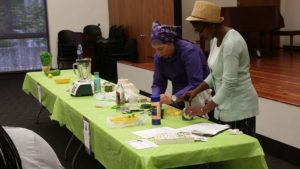 Sustainable Solano offers healthy cooking workshops around the county that share ways to cook with fresh, seasonal produce.