May 30, 2017
By Allison Nagel
Sometimes the hardest thing about finding something new is wrapping your brain around how to approach it. When it comes to permaculture and sustainable gardening, no online resource can replace seeing, walking through, discussing and getting down on hands and knees to install a food forest. That’s where my recent experience with Sustainable Solano has made such a difference.
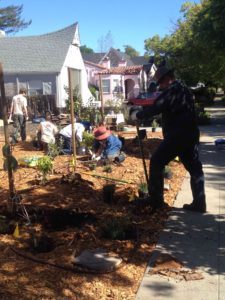
Digging swales at Enchanted Garden, Day 3 of installations.
Before April, I had never dug a swale in my life. The thought of redirecting downspouts and digging swales was intimidating, as was the wonder and worry about what to plant where. Participating at the Enchanted Cottage Garden installation in Vallejo changed that, because it helped create the muscle knowledge of digging, filling and planting an actual food forest. With so many people involved, the work was fast and fun, and I picked up so many tips on creating a swale, laying sheet mulch, and planting trees, edibles and beneficial plants.
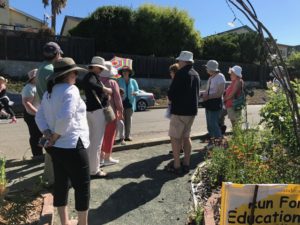
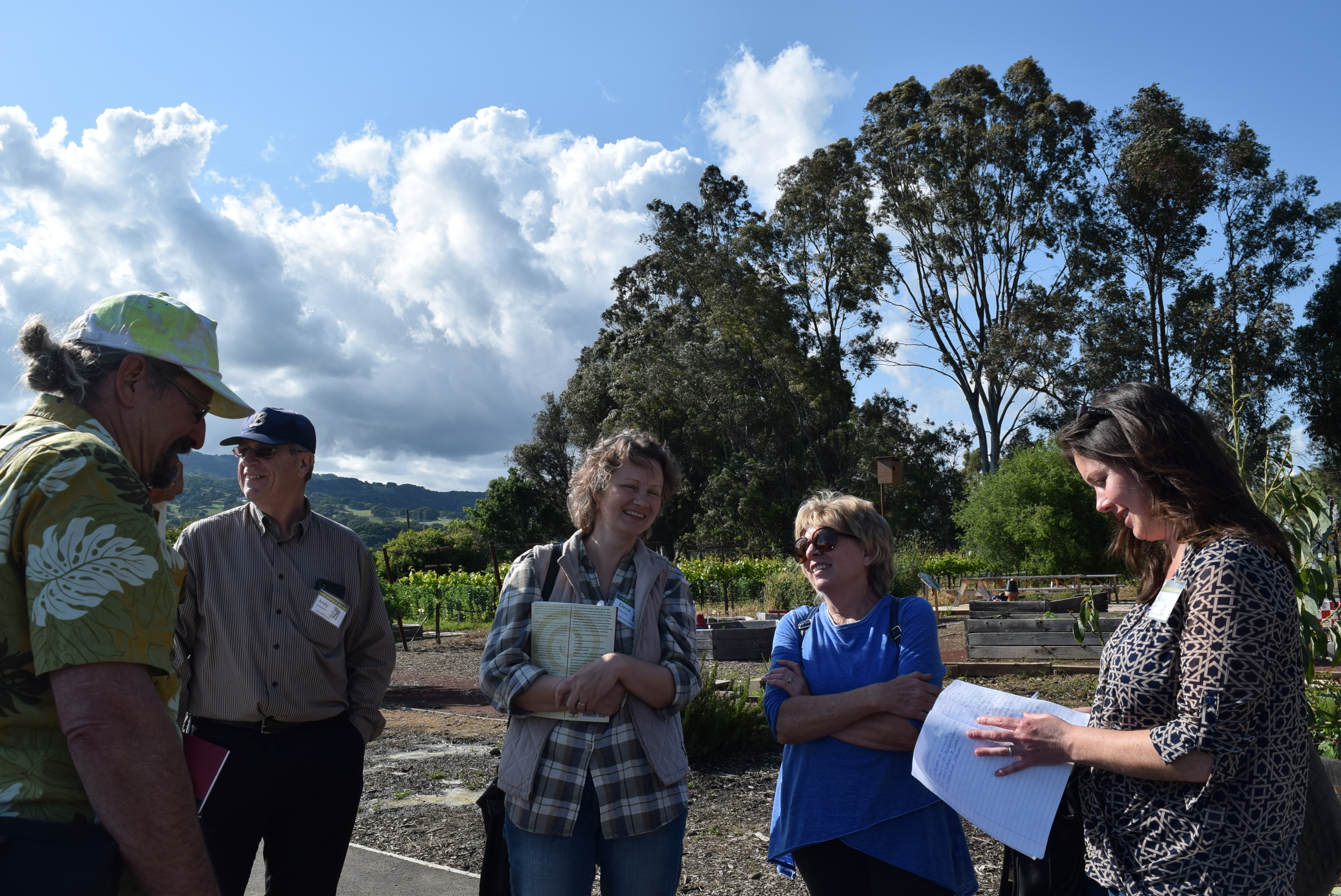
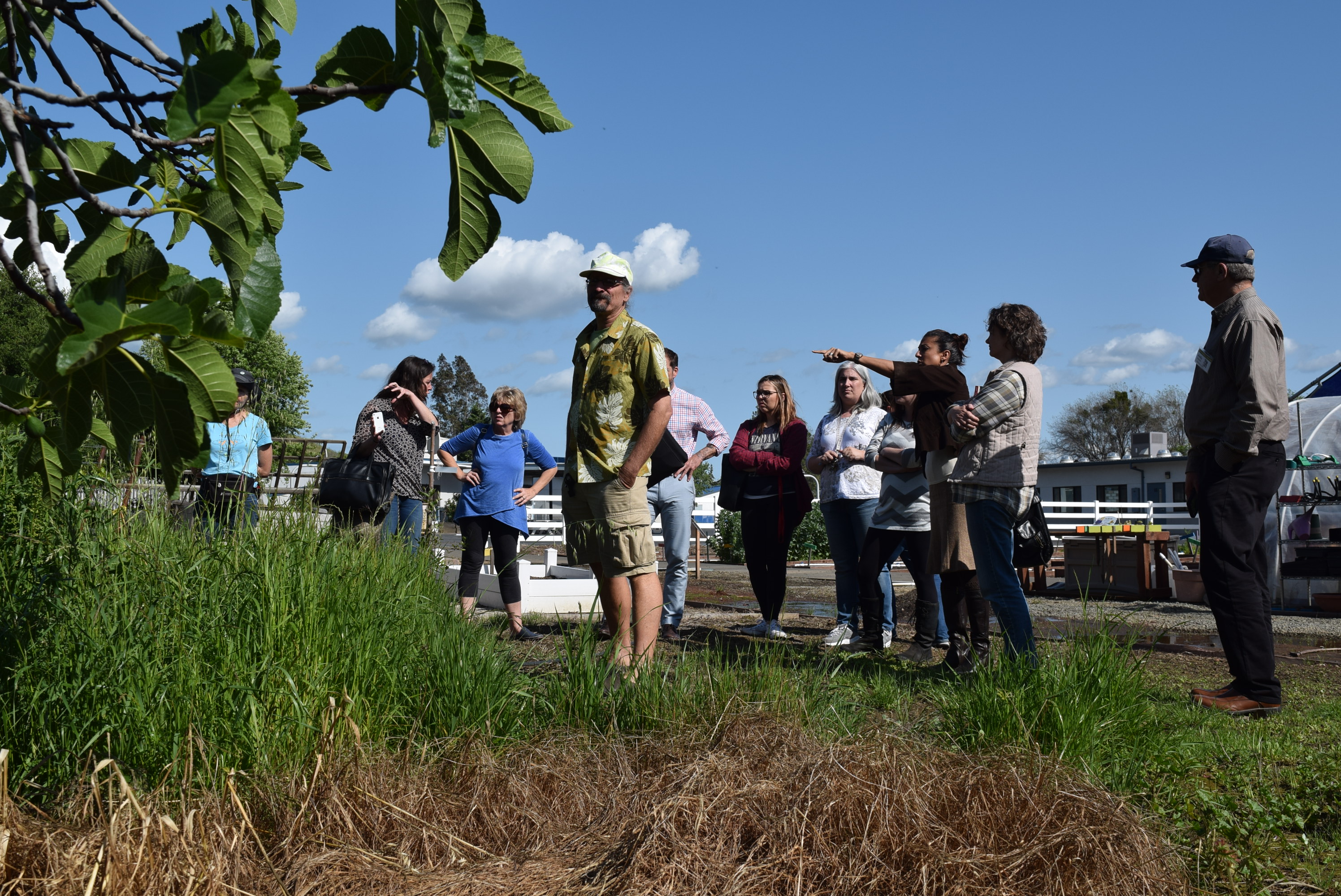
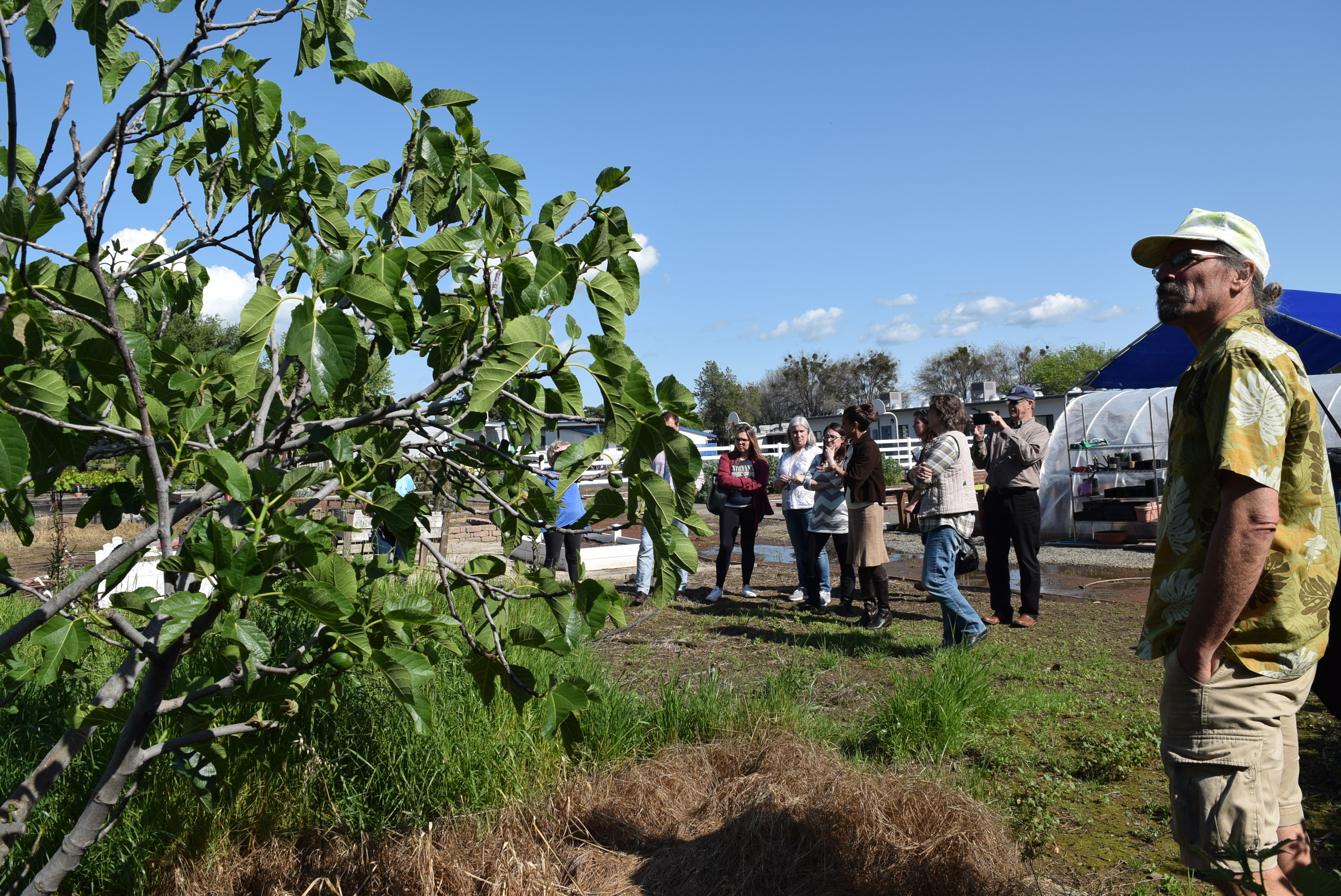
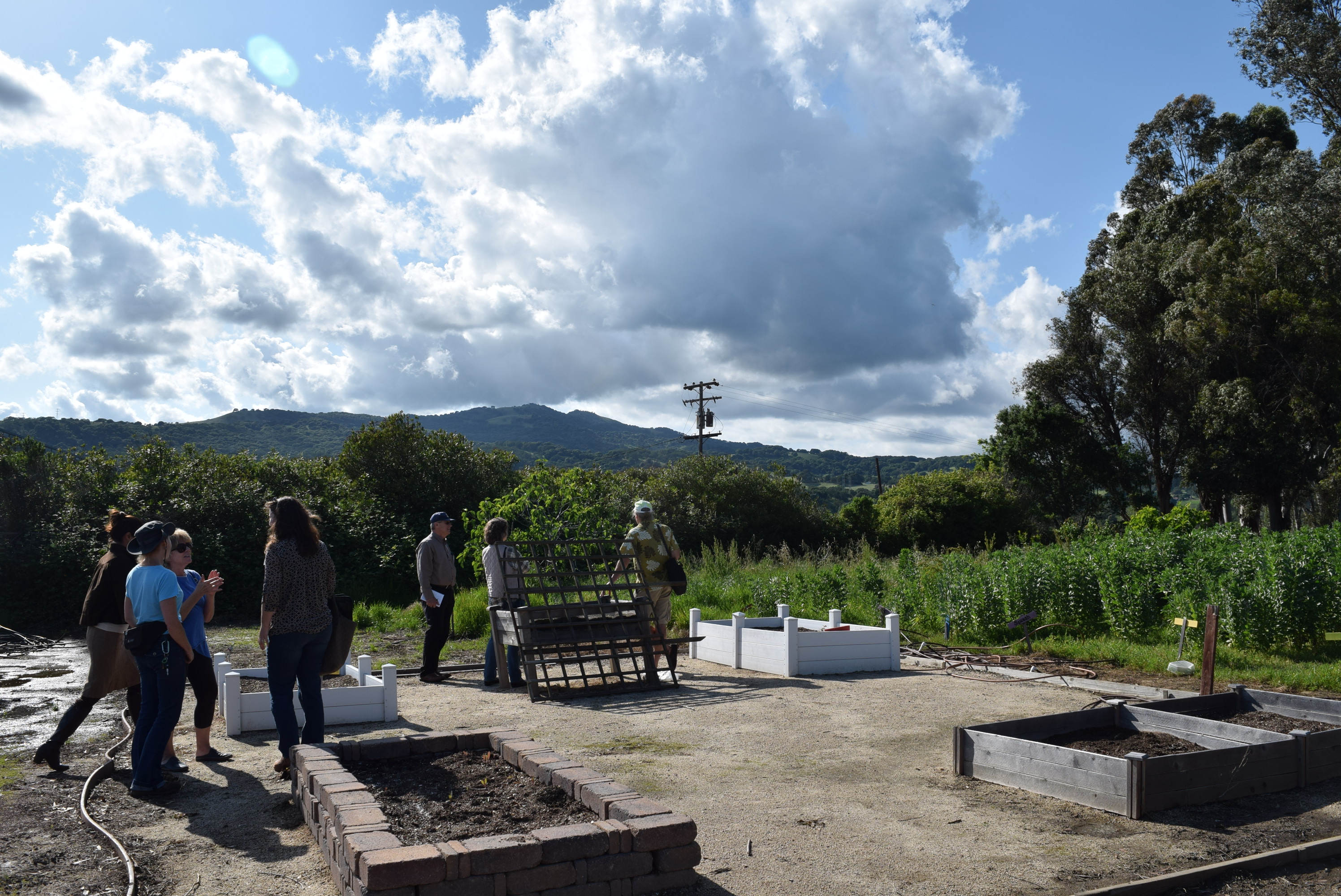
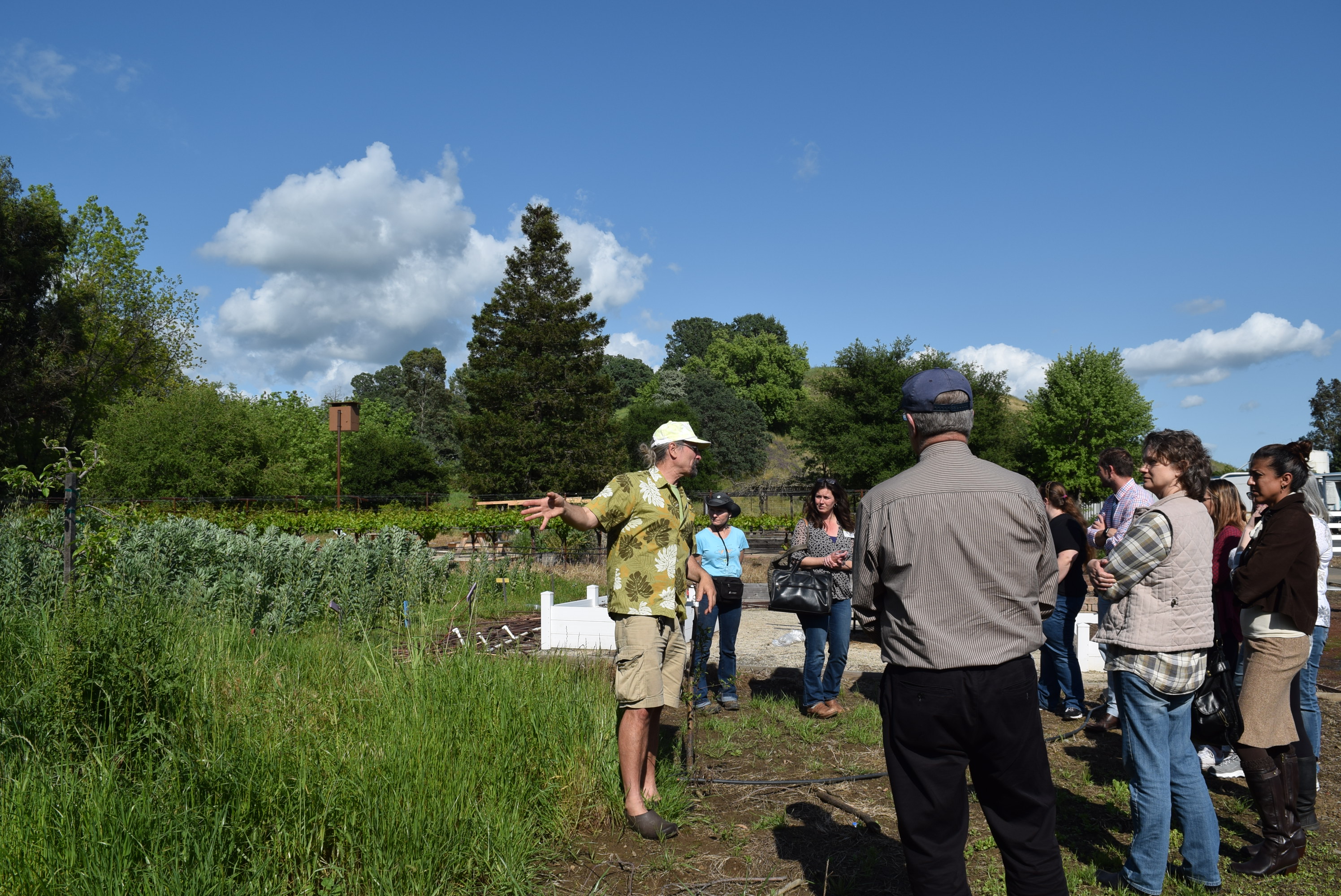
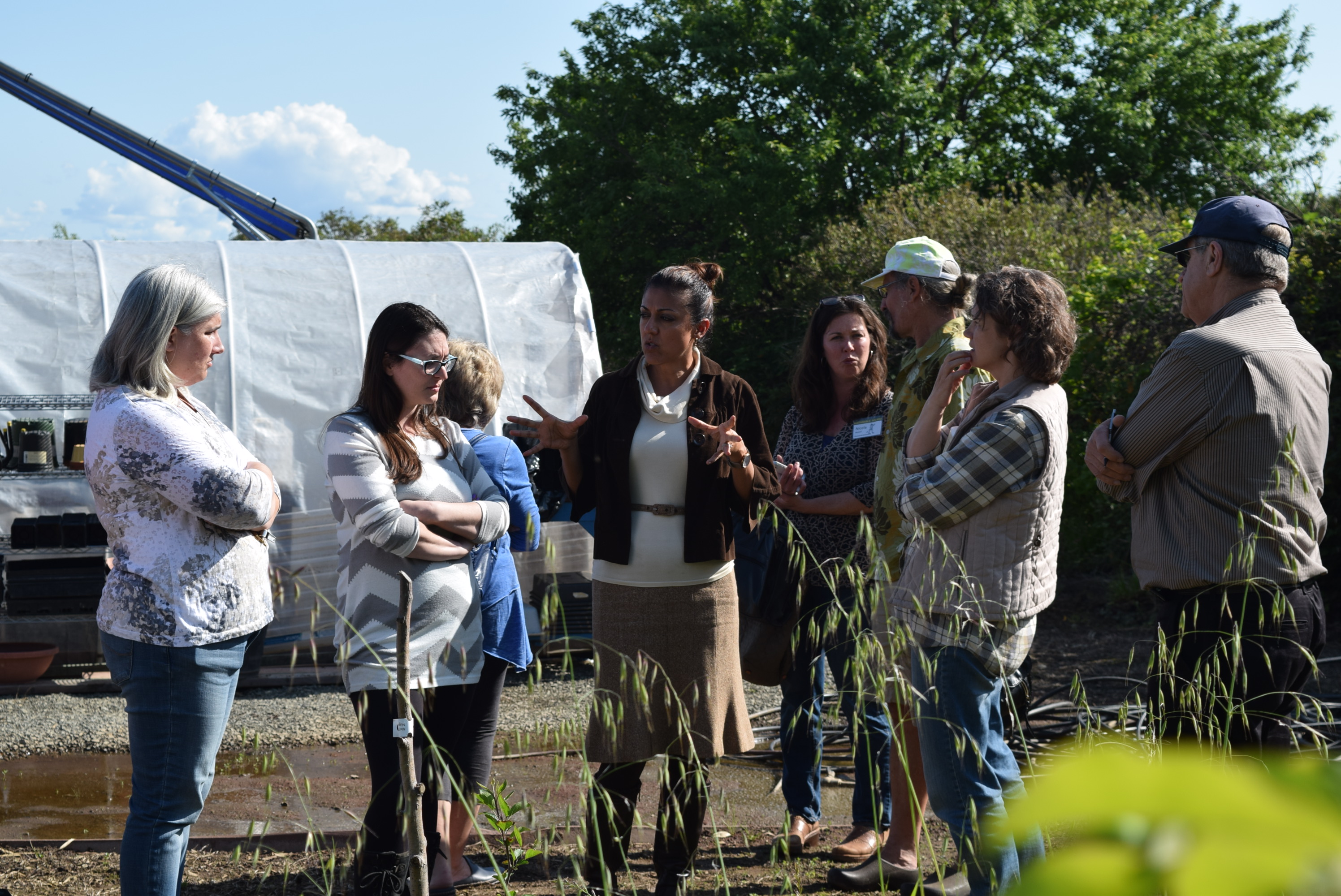
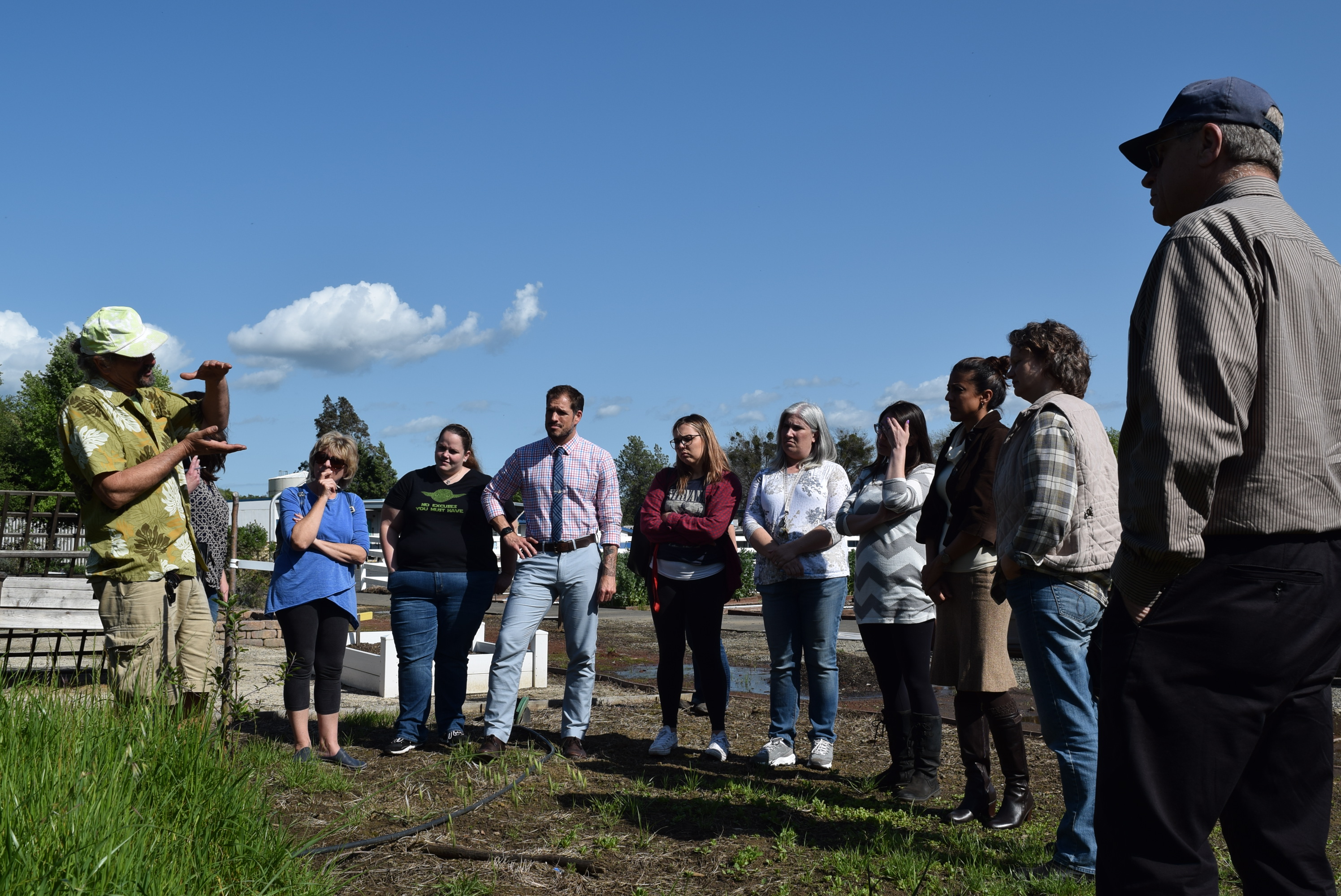
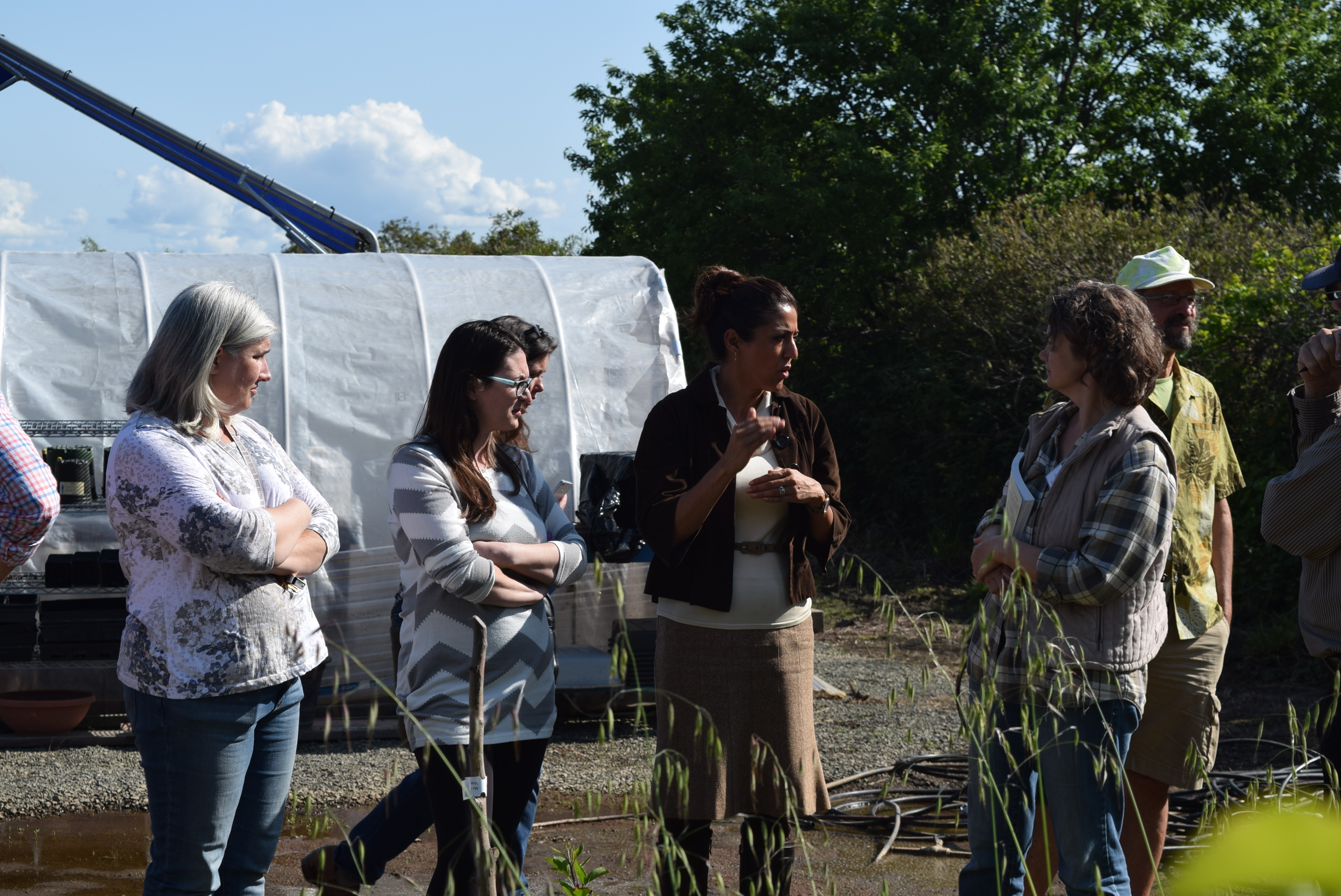
Food Forest Keeper Heather welcomes a tour group at the 7 Food Forest Tour on May 20th.
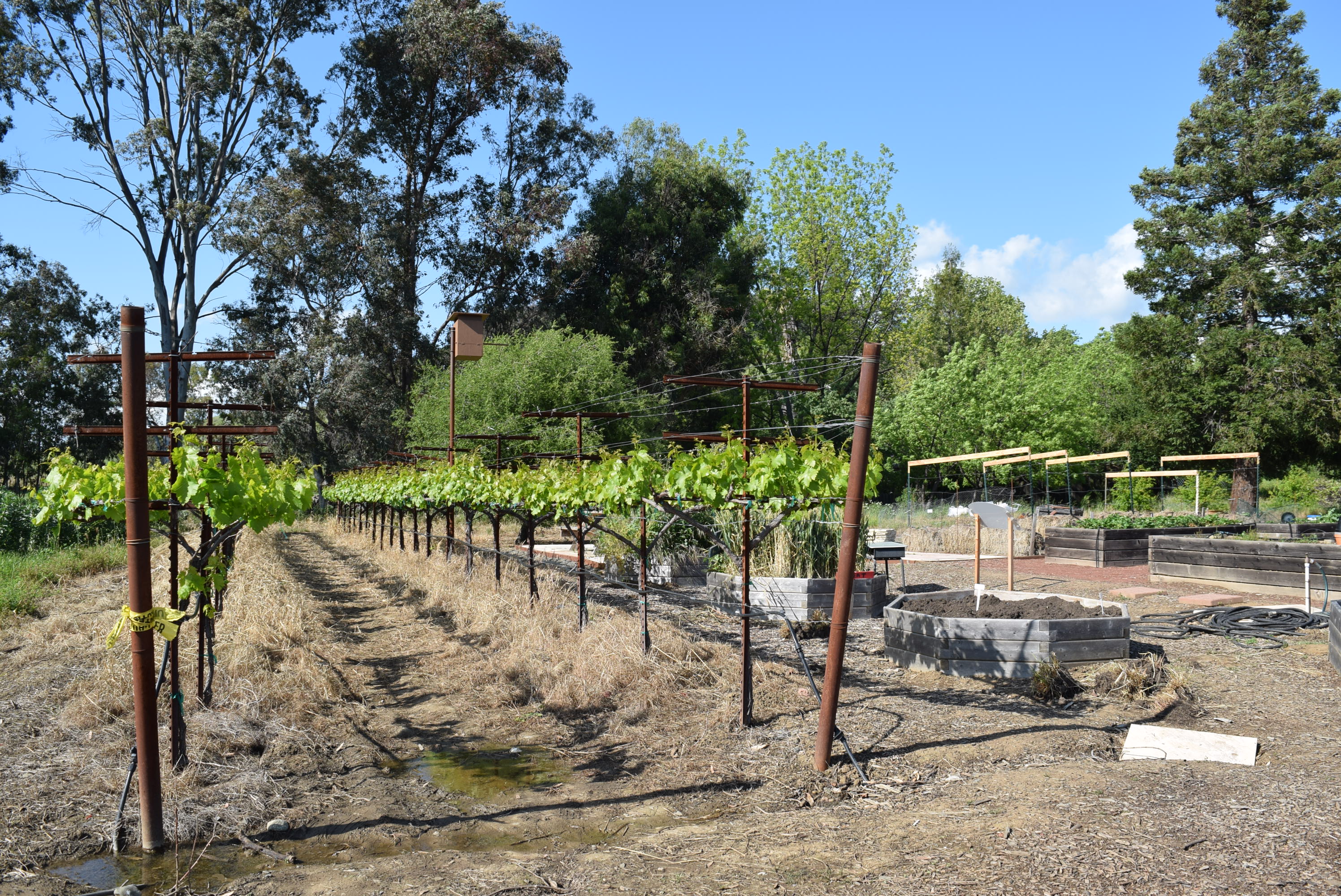
Seeing a garden at its very beginning was one experience, and the May 20 tour of seven gardens in Benicia showed what can happen in a year or two. Trees had flourished, producing fruit, and vines of raspberries threatened to take over their designated corners. In some cases, certain plants had not survived conditions that were too wet or too dry — and the forest keepers who owned and shared their gardens talked about relocating, replacing and replanting. Often the refrain came up that the gardens were “sink or swim” with plants best suited to the tops of hills, the sunny spots or the wetter spots given their chance to settle in and grow, but not coddled or forced.
One thing I’ve also learned that is just as valuable as any landscape or plant knowledge: There is a community of pretty amazing people doing this.
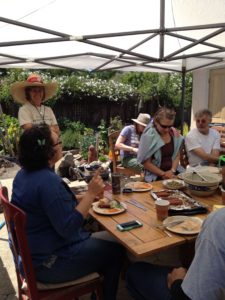
Sharing lunch and each other’s company on Installation Day 2 at The Ripple Effect.
During the time spent on the Enchanted Cottage Garden, I got to know the other volunteers, hear about what they were doing in their own homes and why they were volunteering on the project. We talked greywater and plants, but also about neighbors and community. I was sad to say goodbye on the last day and hope to reconnect at future events and projects.
In Benicia, each forest keeper who opened their gates to those of us on the tour was open and welcoming in discussing their gardens, offering up plants and offering advice. They shared how often they water their fruit trees, what struggled in one location and thrived in another, how they collected and let their gardens self-seed or how they were taking the ideas from their food forests and translating them into other parts of their yard. I spoke with some about how sharing the garden’s bounty with neighbors has fostered a stronger sense of community.
I left that tour with notes on each garden, a rough sketch of ideas for my own yard and a pivot in what I want to focus on first, moving my ambitions from the backyard to the front with what we might be able to start planting that could draw in neighbors (though, trust me, I certainly have plans for the backyard, too).
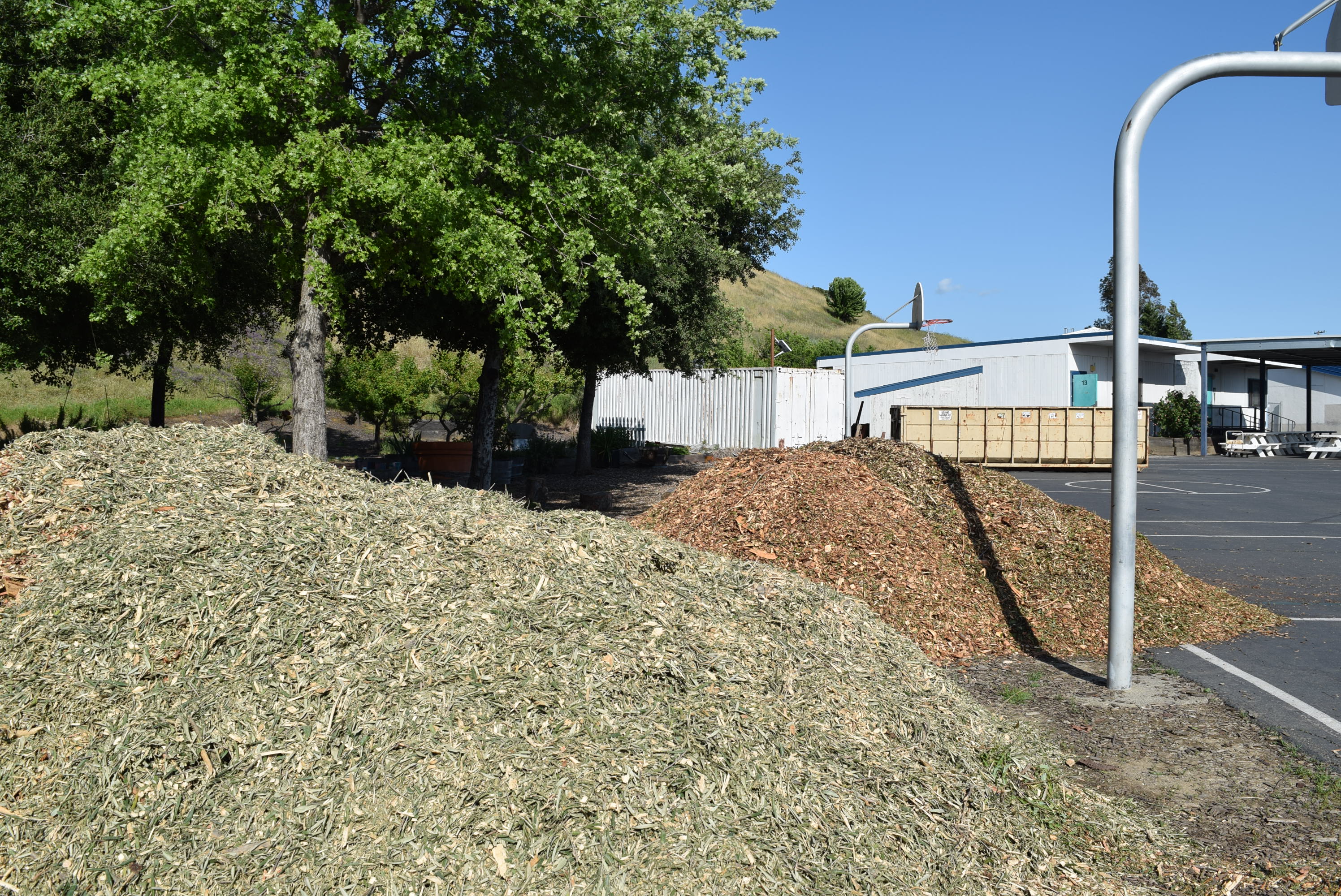
And, whether it’s finding a local source for wood chips, floating a question about plants or seeking out programs to further my own understanding, I know that there is Sustainable Solano and this community of keepers always there to help.
May 5, 2017

By Allison Nagel
On Saturday, about 15 volunteers arrived at the Enchanted Cottage Garden for the first day of transforming the Vallejo home’s front yard into a food forest.
Eight cubic yards of mulch, a stack of cardboard and a nondescript patch of grass in the front yard greeted volunteers as they arrived. Blue lines detailed where swales would go; orange outlined the edges of the planned garden. Shovels, pickaxes, wheelbarrows and trowels waited at the ready.
We moved to the backyard where we learned what to expect for the day. Sustainable Solano Executive Director Elena Karoulina talked about the food forests the organization had created in Benicia — gardens that will be featured in the 7 Food Forests tour on May 20. She talked about bringing the program to Vallejo, starting with this day’s work.
Then it was time for Kathleen Huffman, owner of The Repurposed Oakie, to go over her plans for the front-yard food forest, with several fruit trees surrounded by bushes, lower vegetation and vines. She walked the group through the plan for the day to create something that nurtured the soil, starting with laying the groundwork on Saturday.
We shifted to the front of the house, where the volunteers gathered in a circle, taking a mindful moment to appreciate the ground beneath our feet and the way we would combine our efforts to achieve something bigger than ourselves for the greater good.
We started digging the trenches for the swales, roughly a shovel-blade deep by a blade wide. Earth piled up next to the swales, ready to be shaped into berms for planting. At the side of the house where the rainspout ended, we dug out another trench for the pipe that would funnel rainwater from the roof into one of the swales where it could spread out and soak in. Pickaxes were used to create tiny trenches around the edge of areas that would be mulched, digging out dirt and pulling up grass.
Stakes around the yard showed where various trees would go, including apple trees, Bacon avocado trees and a fig tree that had sprouted in a neighbor’s yard. Ever the learning experience, those of us who knew little about planting fruit trees worked alongside volunteers with intimate knowledge of the depth of the hole, the value of mixing in amendments with the local soil, the need to create rough edges on the sides of the hole and even how to face the tree so it could best grow in the sun and wind in that yard.
Once the trees were in and the swales dug and filled with mulch, there was a natural pause — a perfect time to take a break, sit in the shade and continue conversations started during the digging and start new dialogues over lunch.
Rested and ready after lunch, the group started the next stage, laying out and staking in the cardboard and then mulching, mulching, mulching. Teams worked shoveling the mulch, pushing it over the cardboard in wheelbarrows and raking it out 3-inches deep. Before long, the day’s tasks were over. Many hands had made light work, and the yard was transformed.
It was a wonderful day of collaboration and conversation and left us with a satisfying feeling of accomplishment to see what had come of those hours of work.
Saturday’s efforts will be followed by another day of work May 13 at the Enchanted Cottage Garden to put in the other layers of plants that will truly create a food forest retreat. Before then, on May 6, installation of a greywater system will take place at The Ripple Effect.
Apr 24, 2017
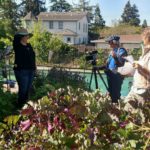
Heather Pierini, Landscape Architecture student at UC Davis and Birds, Bees & Beyond Food Forest Keeper, speaks on camera
Over the weekend, Sustainable Solano, with our wonderful Constance Beutel as camera-woman and director, shot scenes for a Water-Wise documentary video. The video was shot at Birds, Bees & Beyond, one of the Demonstration Food Forests, with commentary from Executive Director Elena Karoulina, Sustainable Landscaping Advisory Board Member Kathleen Huffman, and food forest keeper Heather Pierini.
Sometimes pictures tell a story better than a thousand words. This might be the case – the film shows the three components of our Wise Water approach – rainwater collection in the ground, roofwater diversion to the ground and L2L greywater. You’ll be able to see how these systems were put together and an amazing difference this secondary water makes in this garden. We will use the film for training, presentation, and inspiration. Stay tuned for its release!


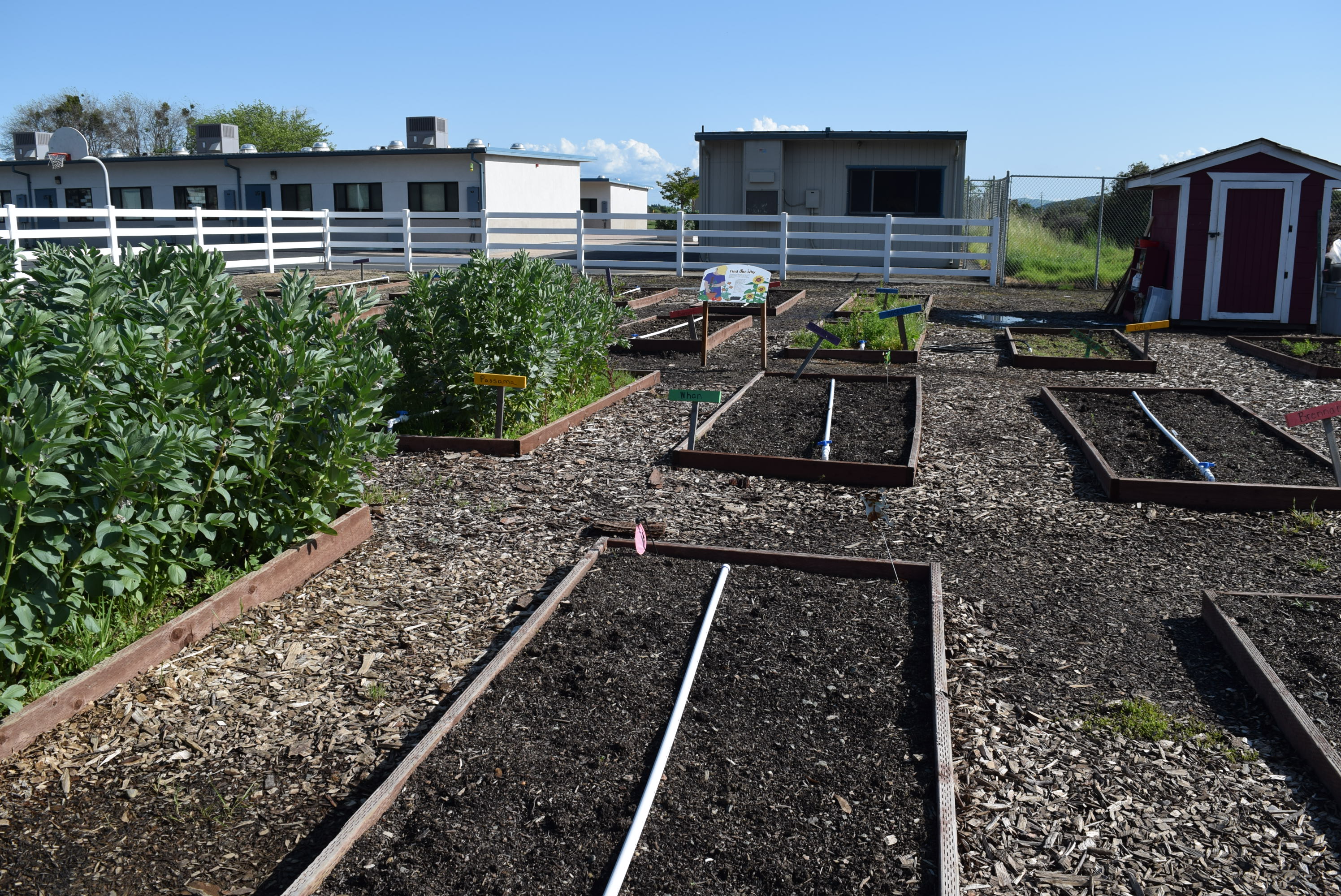
 Like with all of our educational programs, we believe in learning by doing, and we’ve already begun the long process–which in many ways is more meaningful to us and the children than the actual planting of the garden! The ground work has already started at the school! In May, Sustainable Landscaping Advisory Board members – Kathleen Huffman, Larry Lamoreux and Andy Zinkevich, – lead a workshop “Swales: Slow it, Spread it, Sink it” to two seventh grade classes of the school.
 volumes of water, how to design simple water collection and diversion swales, and how to measure the levels in the soil. Outside, students were instructed on how to build a simple water collection swale (really an in-ground water tank–simpler and more effective than rain barrels) to collect and store the excess of water around the future food forest. Then it was time to get hands dirty. Kathleen, Larry and Andy were slightly terrified of so many children, all with shovels and with such high energy! But in no time, their youthful energy won over the day, and despite the 100-degree heat, all students were engaged, interested, and efficient. The school garden teacher, Laura Klein, will lead the team to finish the swale and fill it with wood chips before the school end.

 Introducing Julie
 Introducing Melissa and Steve & Family