Oct 1, 2018
Since the launch of its Sustainable Backyard program in 2014, Sustainable Solano has created 15 food-producing, self-sustaining demonstration “food forest” gardens across Solano County on both public and private land. These gardens are primarily irrigated by secondary water sources (diverted roofwater, laundry-to-landscape greywater systems). The food forests are designed based on a permaculture design system of food production that utilizes the wisdom inherent in natural woodlands and the understanding of beneficial relationships between plants to create and support landscapes that grow food for human use.
The program officially expanded to Vacaville in mid-August. Since the launch, sustainable landscape classes have been offered to Vacaville residents covering sustainable landscape design, wise-water practices and permaculture.
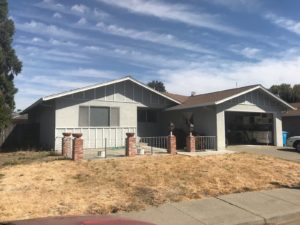 On Saturday, October 13th, residents will have a hands-on opportunity to help create Vacaville’s first private demonstration food forest garden, alongside their community, by attending the first demonstration installation workshop. The selected homeowner is a long-time Vacaville resident with a vision to transform his front yard from barren, dead grass to an oasis of edible and beneficial trees and plants. This demonstration food forest garden will be named “Healthy Futures” with the goal of providing nourishment and serve as a community asset to learn about sustainable landscaping.
All are invited to help transform this lawn into a thriving ecosystem fed by secondary water sources. The garden will take three full days to complete and each public installation workshop will be hands-on.
This first workshop will focus on digging swales, diverting roofwater, planting fruit trees and sheet mulching to increase water-holding capacity and improve soil health. On Saturday, October 20th, with the guidance of Greywater Action, attendees will learn about greywater use and how to install a laundry-to-landscape system that diverts water from your washing machine to your garden reducing the need for potable water irrigation. Day three, Saturday, October 27th,, will wrap up the project with attendees planting a community of plants with multiple functions that support a healthy, diverse ecosystem, installation of water efficient in-line drip system.
The selection process for these sites are based on criteria such as yard access, greywater feasibility and sun orientation. Sites are assessed and selected by Sustainable Solano’s Advisory Board made up of dedicated Solano County residents aiming to raise sustainability awareness in Solano County.
There will be yearly ongoing workshops and tours of these demonstration food forest gardens on private and public land in each city. This project is made possible by funding and support of the Solano County Water Agency.
Oct 1, 2018
By Marlen Otten, Board Secretary, Sustainable Solano
 A new movement is emerging throughout the Bay Area where women are connecting to collaborate and embrace their visions for a sustainable and regenerative future for all. Conversations arise about the concepts of abundance, sustainability and what it means to be “regenerative”.
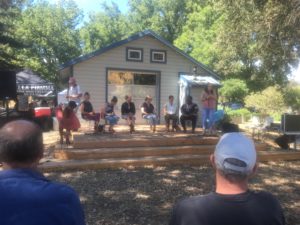
To explore these concepts more deeply, Alexis Koefoed of Soul Food Farm had envisioned for a long time to host a special event at her Soul Food Farm on the outskirts of Vacaville. On Saturday, September 22, 2018, this vision became a reality when women and men gathered at her farm for the first-ever “Women of Abundance: Women Entrepreneurs in the Regenerative Culture, Economy, and Community” event.
The key theme of this gathering was the exploration of the meaning of “regenerative”. It was proposed that “regenerative” is defined as a “living, evolving and naturally functioning environment where abundance and resilience are recurring outcomes of its underlying health”. This idea is closely linked to wide-ranging economic factors throughout our communities in Solano County and the Bay Area. To create regenerative local economies, awareness and education help strengthen the relationship with local food producers and consumers towards an ecologically balanced system. “Regeneration” is also the central theme of the work at Sustainable Solano. Our interest in and commitment to regeneration is at the heart of what we do as we continue to work on our vision for an environmentally and economically sustainable and socially just local food system in our county.
At this unique gathering, a panel of six successful Bay Area women entrepreneurs and farmers was led in discussion by Erin Walkenshaw, who is part of a new movement of spirited women in the Bay Area who are breaking new ground in the world of farming. The panel included Kelly D. Carlisle of Acta Non Verba: Youth Urban Farm Project, in Oakland, Elisabeth Prueitt, co-founder of Tartine Bakery in San Francisco, Nicolette Hahn Niman of Niman Ranch in Bolinas, Rebecca Burgess, Executive Director of Fibershed and Chair of the Board for Carbon Cycle Institute, Helena Sylvester, co-owner and lady farmer at Happy Acre Farm and Jessica Prentice, co-founder of Three Stone Hearth, the nation’s first Community Supported kitchen.
The panel of women leaders shared in one word about the stage where they are at currently, which ranged from transitioning to transformation, surrendering and doing less, highlighting how there is an ebb and flow in life while maintaining a sense of abundance. The participants explored their individual meaning of abundance and their vision for a regenerative agriculture – how to build and shape the traits that give women the strength and empowerment to lift themselves up to continue their work.
The panelists also revealed lessons women can use to reaffirm the support they have historically shared with one another to become successful and what they would do when things get tough, including the need to be in communication with each other. They examined the abundance model versus the competition model, the role of money and power as well as the meaning of equality versus fairness, or the lack thereof, in today’s society. All agreed the need for policies that would support healthy soils as part of a healthy ecology.
This conversation about regeneration and abundance was topped off with culinary delights by local Solano County producers. Attendees we able to explore the goodness of local olive oil and farm eggs, honey by Pleasants Valley Honey Co., fragrant lavender products by Girl on the Hill and they were able to enjoy local oven-baked pizza by Bella Fiamma and local organic cream by Documentary and portrait photographer Paige Green of Petaluma shared her inspiring exhibition of panelist portraits under the big olive tree, where attendees shared inspiring paper notes with their interpretation of the meaning of abundance.
We are grateful for Alexis Koefoed’s vision and taking the initiative to make this inspiring event happen. Events like this bring together the hearts and minds within the community and empower participants to take part in the creation of a sustainable and regenerative future we strive for, and we look forward to the next event.
Sep 27, 2018
Richard Fisher, of the Vallejo for the Future Commission, reflects on the state of the world and talks about our shared vision for our Resilient Neighborhoods project we plan to pilot in Vallejo next year.
Understanding Biomimicry
Biomimicry, as Richard describes it, is the practice of emulating biological forms, processes, and systems to address human challenges. He is particularly keen on applying this innovation to enable cities to function like ecosystems. For example, parts of cities—including buildings, streets, parks, industry, community programs, etc.—can be induced to perform ecological functions that serve the larger whole. This includes filtering water, cycling nutrients, cleaning the air, fostering biodiversity, storing water, building healthy soil, and regulating local temperatures like local native ecosystems.
Companies have begun to understand the economic value of the services that ecosystems provide—“how much would it cost a company to purify water, like a watershed would, for free?” Puma and other future-facing companies are conducting environmental profit and loss (EP&L) reports on the impacts of doing business. The environmental loss is readily understood—Puma is measuring exactly how much clean water, a gift from the watershed, it uses or pollutes to create a shoe. Richard is working on how to enhance the environmental profit side of the equation—“How much clean water can a product, company or city create for its watershed?”
Richard explains, “By challenging cities to meet or exceed the ecological performance of local native ecosystems, cities can become generous contributors of conditions that foster a safer, healthier and more resilient world. Not only do our local native ecosystems provide metrics for resilience, they also provide a model for how to get there. In addition to ecological performance, a city can set social performance standards based on community values like those of Vallejo’s recent General Plan Update Guiding Principles. Strategies for addressing these social aspirations can be sourced from native ecosystems as well as nature is teeming with models of anything from coordinating housing, to cycling resources, to cultivating community.”
With these social and ecological performance standards, cities can evaluate decisions based on the extent to which they positively or negatively affect progress toward their social and environmental goals. This degree of transparency would empower communities with tools to hold decision-makers accountable and gives them the information they need to push for policies that align with community values. Perhaps most exciting is that achieving ecological performance can provide a means for achieving social performance and vice versa.
As an example, Richard ties the two together by asking, “How can filtering water, sequestering carbon, supporting biodiversity, etc. create meaningful jobs, increase access to healthy food, and lift people out of poverty?”
With this type of thinking, meeting these aspirational goals in Vallejo provides a pathway for social innovation, new jobs, and more social engagement. These benefits can also help promote more sustainable culture, lift people out of poverty, and enhance the community’s quality of life as a whole. Richard is currently working with Sustainable Solano on a resilient neighborhood project to pilot these concepts.
This work in biomimicry is closely related to Greenbelt Alliance’s work to create sustainable and resilient communities—“Cities that are conducive to life,” as Richard would say. Through biomimicry, he asks “How can we leverage the genius of native ecosystems to inspire socio-ecological standards in our city?”
As Greenbelt Alliance promotes sustainable infill development throughout the Bay Area, we can frame the creation of our cities and towns through this biomimicry-inspired lens. By turning them into sustainable ecosystems, we can help our cities and towns meet the demands of more individuals. Doing so also helps prevent the need to sprawl outward into suburban and rural areas where the lands simply aren’t equipped with the resources to create a thriving urban ecosystem.
Turning Potential into Action
From Richard’s perspective, one of Vallejo’s main challenges is that it has limited resources to address community needs. It is a city that is trying to stay afloat after bankruptcy with a backlog of basic services waiting to be met. Adding to the scarcity of resources is the lack of external funding for community non-profits—Solano County has by far the lowest per capita giving in the Bay Area, at about $3. Too often, this lack of resources results in Vallejo missing out on opportunities and applying band-aid solutions rather than solving problems at the roots.
Richard elaborates, “Vallejo has the capacity within it to solve its challenges but needs bold leadership to nurture a culture of possibility and resource innovation. Look at how ecosystems deal with scarce resources. By drawing upon biological inspiration for cycling nutrients in closed loops and cultivating cooperative relationships, we can identify more effective ways to leverage Vallejo’s existing talents and resources.
I am currently working with multiple organizations on initiatives to foster greater connectivity between community needs and assets. One of the community assets I believe is underutilized are Vallejo’s anchor institutions—the medical and educational institutions that are the largest employers in the city. The employment, purchasing, and investment power of these institutions, along with those of the city government, as potential assets that can be utilized multi-functionally to more effectively meet community needs.
I am currently organizing a summit to bring community leaders together to constellate community needs with these assets. The goal is to leverage the capacity of anchor institutions for local training, hiring, investment, and procurement to catalyze policies and programs that achieve shared community performance values. While adopting an Anchor Mission represents a huge lever for changing the way Vallejo thinks about its resources, I believe that tapping into human capital on a small scale can also have major impacts.”
The people of Vallejo are caring, friendly, and hold a lot of pride for their city. In Richard’s view, Vallejo’s residents should be empowered to use their talents and passions to improve their home. This belief led him to start a microgranting potluck dedicated to celebrating and empowering community projects in Vallejo.
Taking Stock of Vallejo SOUP
Richard’s love for his city is perhaps most visible in an event he brought to the city earlier this year, Vallejo SOUP. Originally held in Detroit, Michigan in 2010, SOUP events invite community members to gather together and crowdfund support for local projects, all while eating “soup,” which attendees bring for a large potluck community dinner. Recognizing his neighbors’ passionate desire to better their city, Fisher was confident Vallejo SOUP would be a success. But the results immediately exceeded his expectations.
Richard expected a crowd of around 30 for Vallejo SOUP’s first gathering back in April. Instead, he was thrilled to see 65 people show up, more than doubling his expectations. Over the course of the evening, the attendees watched as four project groups each presented a proposal to improve Vallejo. The crowd was treated to proposals on mental health, youth theater, homelessness, and a city bike plan.
“Vallejo’s greatest strength is its people, who care deeply about making their city a better place.”—Richard Fisher
During the evening, the generous and enthusiastic crowd donated $1,500, which was awarded to the four project groups as prize money. After this initial success, Fisher hopes to organize another event every few months. That way, he can keep nurturing residents’ interest in local activism and community participation.
Richard’s efforts are an excellent example of how just one resident can drastically improve his community by strengthening the social fabric to create greater resilience. One individual’s actions can be a catalyst for much-needed social change, especially when backed by other inspired community members. Greenbelt Alliance’s Development Endorsement Program functions similarly, but on an organizational level. It is a way to promote community health and environmental sustainability within cities and to inspire more smart growth by leading with individual examples.Richard’s sustainability-focused efforts also remind us to look to nature for solutions to our modern problems.
Richard Fisher is a Vallejo local applying the principles of biomimicry to community building. Richard’s background in engineering and education in biomimicry trained him to think at the systems level—to see how all of the interrelated and interconnected components of a city, like Vallejo, can be leveraged to create a cohesive sense of place and a thriving city. He has spent the last two years studying unique ecosystems—from the Canadian Rockies to the rainforests of Costa Rica—with an interdisciplinary team, seeking innovative solutions to the social challenges of our time.
If you or someone you know is doing exciting and innovative smart growth or conservation work, email Solano County Regional Representative, Amy Hartman at ahartman@greenbelt.org.
Sep 17, 2018
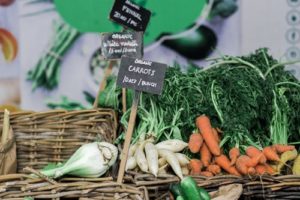 We’ve all heard at least some of the benefits of eating local: fresher produce, better for the environment, contributes to a stronger local economy. Shopping your local farmers’ market is a great way to support your local farmers and eat seasonally. But before you grab your shopping bags and head to the market, you’ll probably want to make a shopping list. But just what is in season? Take the guess work out of what fruits and vegetables are growing in your area right now by using the Seasonal Food Guide, your farmers’ market cheat sheet!
With data on more than 140 fruits and veggies in all 50 states it makes it easier to eat seasonally. Also find tons of recipes, preserving techniques and serving suggestions for all your fruits and veggies, along with great tips for buying and storing. It’s the perfect tool for planning menus, creating shopping lists and looking up recipes before heading to the market. Visiting a new city and curious about what’s available? Check the Guide.
Download the Seasonal Food Guide App for your personal pocket guide to seasonal food wherever you are! You can set reminders for when your favorite produce item is at a farmers’ market near you.
For a list of Solano County Farmers’ Markets, click here.