Permaculture Design Certificate Course Coming to Benicia
By Allison Nagel, Workforce Development Program Manager
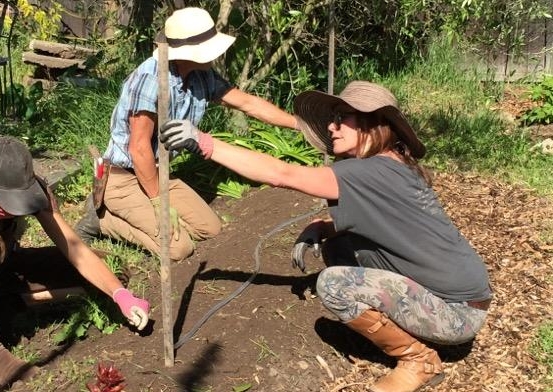
Permaculture education is a key part of Sustainable Solano’s mission, and that means not only educating the public through our hands-on workshops and online talks, but also offering ways for professionals to grow their knowledge and understanding.
That’s why we’re excited to bring our first Permaculture Design Certificate course to Benicia starting in January. The course offers an internationally recognized certification, though its appeal is widespread – from landscapers interested in enriching their design skills to individuals who want to create change in their communities. At its core, permaculture recognizes the strength of working with nature to encourage natural processes that result in healthy soil and abundant ecosystems. Permaculture can be used to design a landscape, neighborhood, community, organization or society.
Sustainable Solano’s 2021 PDC develops a broad understanding of permaculture and design that uses whole systems thinking, which looks at how everything works together as a part of a larger whole. This can apply to the environment, our internal state of being and our organizations and social systems. In this course, participants learn a standard 72-hour permaculture curriculum toward certification. Participants will also gain hands-on experience in designing and transforming a local landscape using design principles and incorporating the use of captured rainwater and greywater systems.
We are excited to bring Lydia Neilsen and Anne Freiwald of Vital Cycles to Benicia as the course instructors. Lydia, a longtime partner with Sustainable Solano, is a PINA certified permaculture educator, landscape and habitat designer, specializing in water cycle restoration and passionate polyculture. Anne is a passionate personal health and permaculture educator focusing on growing food in small spaces, working for over 25 years with individuals and communities on personal ecology and community resilience. They have an action-based perspective that highlights skills, practices and resources necessary for growth, creativity and vitality in person and place.
Curious to learn more? Lydia and Anne will be offering two free online introductory talks that will cover the foundations of permaculture. They will discuss Permaculture 101: Patterns & Principles from 11 am-12:30 pm Oct. 3, and Soil, Water & Plants from 11 am-12:30 pm Nov. 7. These are a great way to learn more about permaculture and to meet these wonderful instructors. The Patterns & Principles class will cover working with nature to create resilience – the very heart of permaculture design. The Soil, Water & Plants class will explore how these vast and interconnected systems work together to restore and maintain balance in local and global climates.


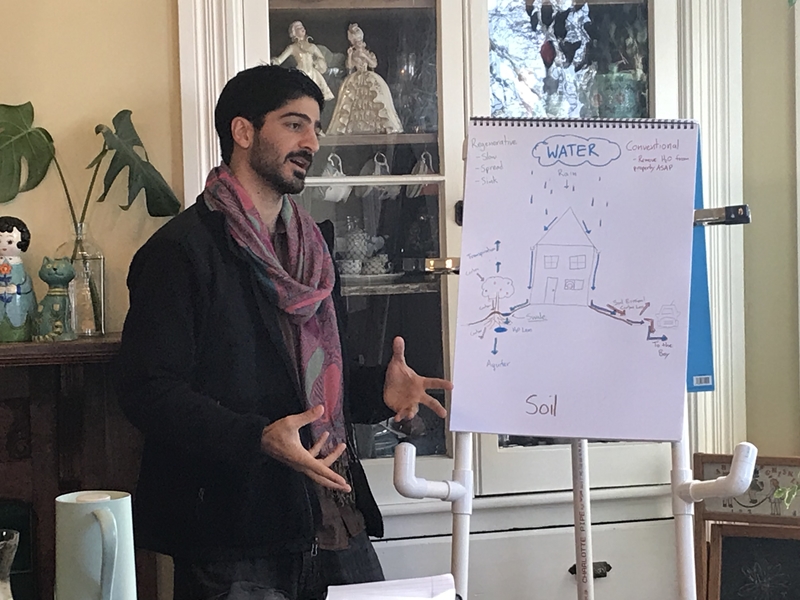
2021 PDC instructors Lydia Neilsen and Anne Freiwald
For those inspired by the talks or already wanting a deeper dive into permaculture, the PDC will offer a rich, varied experience with a small group of peers involved in online classes, hands-on experience and cooperating on a final design project. The program runs from January through April with all classroom instruction online and four hands-on weekends spent outdoors at a site in Benicia. The program is $1,200, with a 10% discount for verified Benicia residents.
Because of safety precautions due to COVID-19, we are limiting enrollment in the 2021 PDC. This will allow us to maintain physical distancing requirements, and we will take other precautions, such as sterilizing tools between uses, during the outdoor instruction. We will continue to work with Solano Public Health and monitor state and CDC guidelines to make sure the program meets the latest requirements.
For those with PDCs who want to brush up on certain topics or those interested in learning more about permaculture before signing up for a full PDC, there will be four online Friday Focus classes that will be open for public registration on a sliding scale. These classes are included as part of the PDC instruction, but are also being open to the public. We will have more details and registration open for these closer to January.
The PDC program will be partially funded by the second amendment to the Valero/Good Neighbor Steering Committee Settlement Agreement, which supports our goals of public and professional education, and measurable improvements for the city of Benicia. The free introductory permaculture classes are funded by the Solano County Water Agency.
Free Online Introductory Classes
Oct. 3 (11 am-12:30 pm): Permaculture 101: Patterns & Principles (Register here!)
Nov. 7 (11 am-12:30 pm): Permaculture 101: Soil, Water & Plants (Register here!)
Permaculture Design Certificate Course
PDC begins Jan. 29. Learn more and register here!
Questions? Contact Program Manager Allison Nagel at allison@sustainablesolano.org
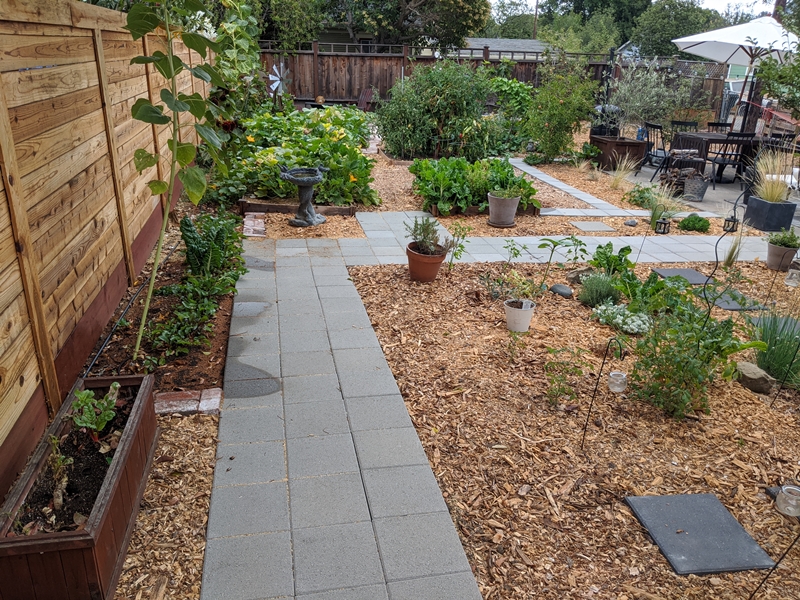


 For the production area of the farm we converted the area where my dad had his garden when I was growing up. As you can see, over the years nature had taken over much of the open area and some clearing had to be done. We were focused on saving as much of the natural habitat as possible while still opening up enough area to make a viable market garden. Any trees that had to be cut were used to make fence posts and edging for the food forest.
 Shortly after arrival we mowed the grass and started laying out the outer edge off the garden. When we finally got it cleared we had almost 10,000 square feet of planting area. We then laid out the rows and covered the area with a 6-inch-thick layer of woodchips. We worked with a great company here that processes used pallets into safe, economical wood chip mulch. We ended up using approximately 160 yards of chips to do the entire area. By using this product we were able to stop seven semis of pallets from going to the landfill!
 We then started removing the remaining grass clumps and adding the needed amendments. The soil test we did revealed several deficiencies in the soil chemistry. We did have to do some cultivation because of this but we tried to keep it to the top 6 to 8 inches of the soil surface.
 We have started planting the fruit trees and berries in the area we have designated as the food forest. This area will be the main teaching garden for urban food gardening. We currently have 11 classes booked through the Oklahoma County library system where we will be teaching the permaculture principles and urban food forest installation.