Design Workshop Guides Participants In Sustainable Garden Transformation
By Kassie Munro and Nicole Newell, Program Managers
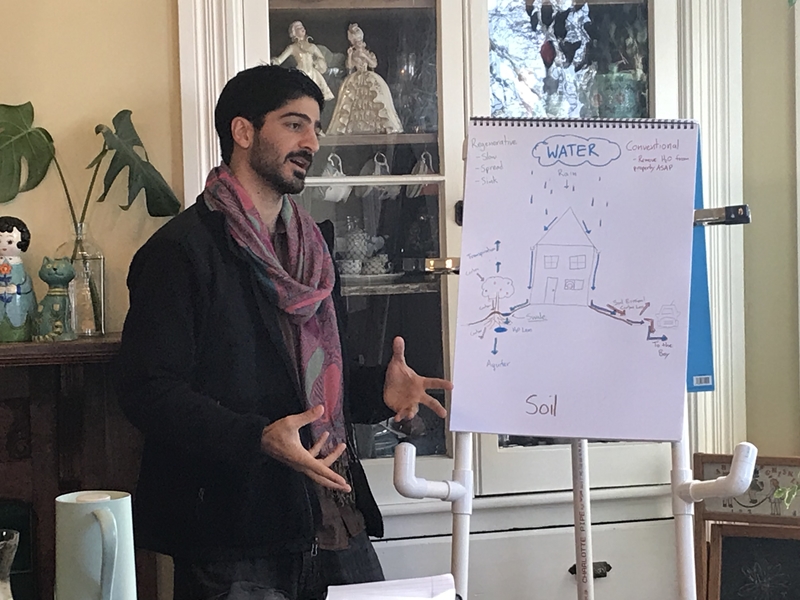
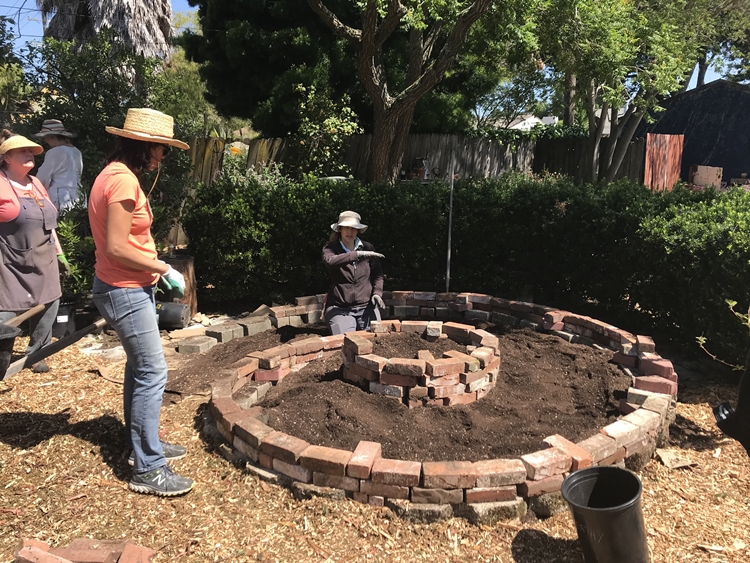
Permaculture designer Ojan Mobedshahi leads the Sustainable Garden Design Workshop in Vallejo
We are continually striving to find the best way to provide as many people as possible with the tools they need to transform their outdoor space into a more regenerative landscape, but we don’t have the capacity to install gardens for every interested homeowner. We created the Sustainable Garden Design Workshop with the hope that this resource can help get more people started with one of the most challenging parts of a landscape project — the design. The workshop provided an opportunity for attendees to be guided by a professional designer through the whole systems thinking design process with a focus on wise water management, soil health and permaculture elements.
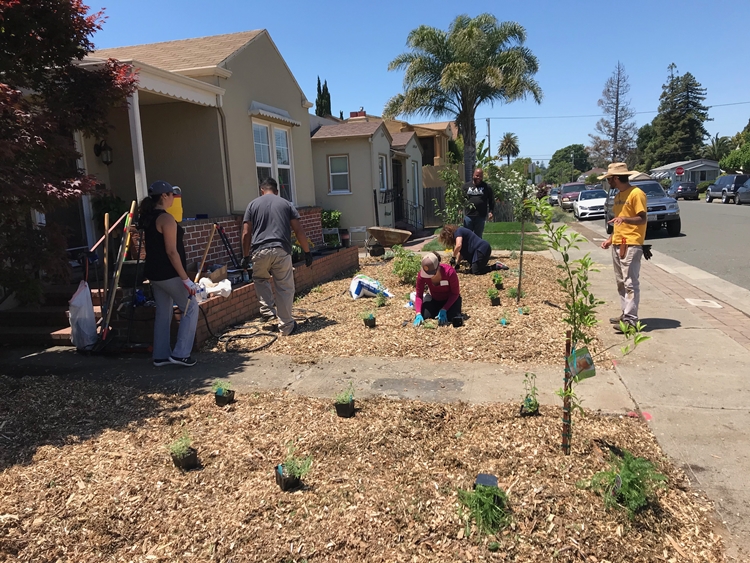
Mary and Ben were selected to be our first hosts. They opened their 120-year-old home in Vallejo for this workshop with the desire to have a front yard garden to showcase sustainability, share the bounty with their neighbors and create a place for their daughter to play. The class instantly received a ton of interest; it was full with a waiting list in a matter of days.
Permaculture designer Ojan Mobedshahi led the day’s workshop with the grace, insight and playfulness that we have come to expect from him. Ojan has partnered with us on designing the Resilient Neighborhood homes in Vallejo, and when this opportunity arose we jumped at the chance to work with him to develop a new offering for the community.
Ojan started the day’s discussion with an acknowledgement of place and asked attendees to honor the indigenous communities whose land we are residing on in Vallejo. He also spoke of the indigenous people whose land he lives on in Oakland, displaying respect and humility that set a mindful tone for the day. Lessons on fundamental permaculture and landscape design elements followed, which felt much more like a group discussion than a tutorial — Ojan has a way of making everyone feel at ease and open with each other. We discussed a range of topics from water cycles and management to the different use sectors around a home.
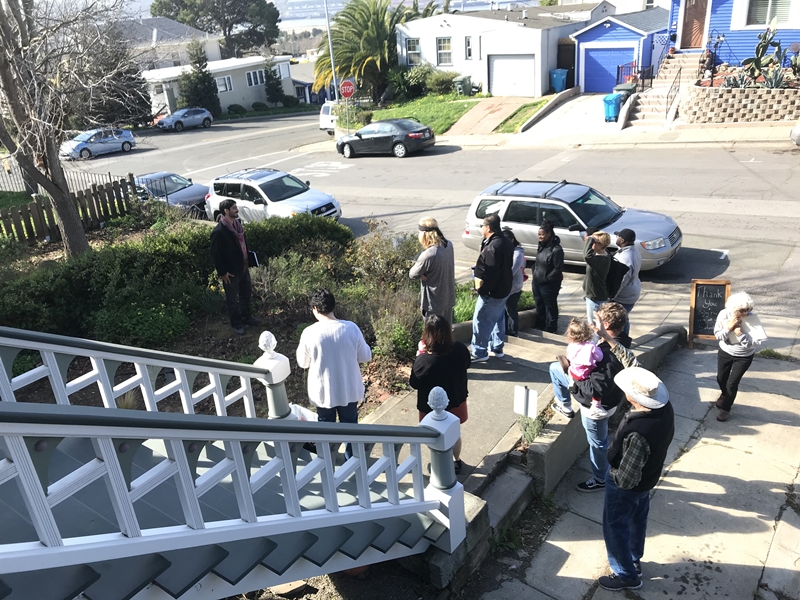
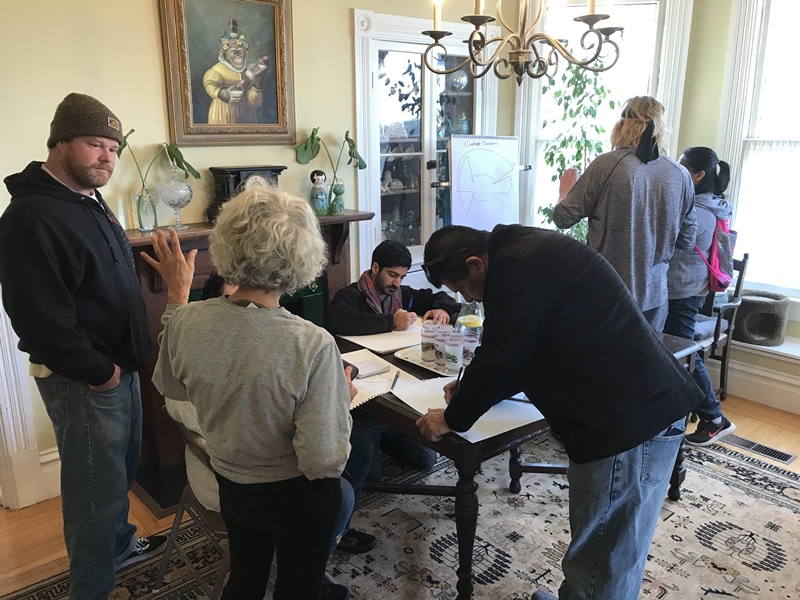
Participants in the workshop assessed the yards and worked on designs for their own properties
The learning continued outside where the group walked Ben and Mary’s front and back yards with Ojan’s guidance, completing a site assessment and beginning to identify real-world design challenges and opportunities for this space. Ben and Mary were incredibly candid with everyone about their challenges with the space, and there was a wonderful amount of wisdom offered by attendees who shared experiences in their own lives to add to the learning process. While this portion of the workshop focused specifically on one unique home and all its quirks, the teaching was deeply valuable and transferable to any space. The reality that most of us face with our yards is a complex web of existing features and nuanced obstacles (or a blank canvas, which can often be the most challenging of all!). Ojan taught us not what to think, but HOW to think and approach the design process the way he does in his role as a designer. After the site assessment, it was time to get all of the wonderful ideas down on paper. The remainder of the workshop focused on creating a design for Ben and Mary’s home and a working session for attendees to begin applying some of what they had learned to their own space. This time was a chance to brainstorm together, ask questions and collaborate.
This workshop, as with all of our events, served not only as a place to learn about sustainable landscaping practices but also as a time for people to connect with each other, sparking wonderful conversations. Mary’s dad, Larry, told us about spekbom, a succulent shrub that is being used to sequester carbon in South Africa. Ojan also talked about the other hat he wears: Not only is he a Regenerative Permaculture designer, but he also is the finance director for East Bay Permanent Real Estate Cooperative. This organization works with the community to create a permanent affordable housing solution in the East Bay.
At the end of the day, Ojan was able to gift our host homeowners with a design for their property that they can use as a jumping-off point to begin their yard transformation, and we are so excited to see what they create! Our next design workshop will follow the redesign of an expanding demonstration food forest in Benicia. We hope to be able to offer more sustainable garden design workshops in the future. Keep an eye on our calendar for the latest workshops, and subscribe to our monthly newsletter for updates. Let us know if you want to bring a design workshop to your city or have ideas on other workshops that would help support your yard transformation by sending an email to mailto:nicole@sustainablesolano.org
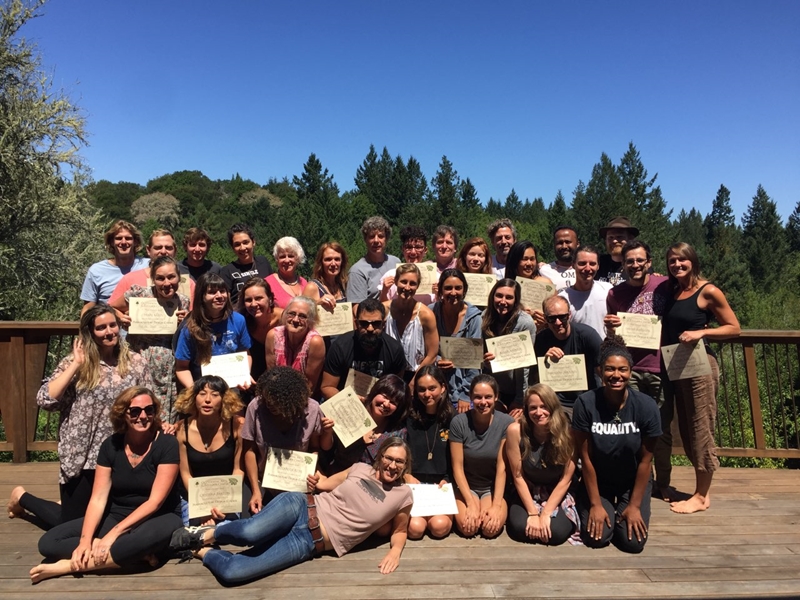
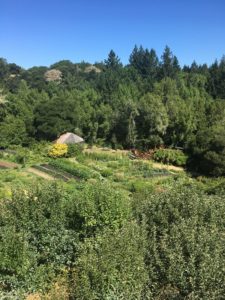 The course itself was both incredibly rigorous in its training, and yet at times also felt remarkably like summer camp. Nestled in the lush Duck Bill Creek watershed of Western Sonoma County, the property boasts a number of incredible gardens, restored forest and grasslands, an irrigation pond (which doubles as a swimming hole), and countless trails to get lost on. Communal vegetarian meals cooked in the shared kitchen with ingredients from the gardens were shared three times a day.
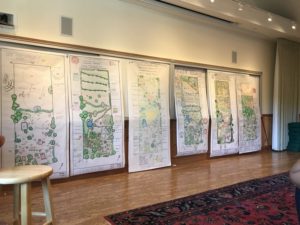 The course culminated in a group design project, which for us focused on a nearby 7-acre plot of land that had recently been acquired by the Cultural Conservancy. Indigenous wisdom and learning the heritage of our host land was a focal point of the training. This came in many forms: first a small presentation by The Cultural Conservancy, then a trip to the actual site in the city of Graton, which is Southern Pomo Coast Miwok Territory. During this site visit, we all took notes, pictures and asked members of the Cultural Conservancy what they envisioned for the space to better understand their hopes and aspirations for the place. As a group, we were grateful that we were allowed to participate in a project that aims to create an inter-tribal bio-cultural heritage farm and indigenous education center. Together in a team of five, we created designs that represented all the different topics we were taught, and then on the last day presented it to the Cultural Conservancy.