Perennial Edible Gardening

By Lori Caldwell, CompostGal

Lori Caldwell once again answers your gardening questions — this time from her talk on Perennial Edible Gardening. You can watch Lori’s talk in the video here and read her responses to your additional questions below.

Watch Lori’s previous talk and answers to more questions on Big Gardens in Small Spaces: Container Gardening here.
Want to connect with Lori? Find her information on our Sustainable Landscaping Professionals List!

Thanks so much for all the great questions and discussions!

How many years do artichoke plants produce edible fruit?

You can expect about 3-6 years of fruit.  There are some maintenance tips I’d like to pass on:

  • Don’t overwater or over mulch the artichokes. They are pretty drought tolerant.
  • Cut the ripe artichokes often to encourage more to grow.
  • Feel free to let a couple of artichokes go to flower. They are beautiful and the bees love them!
  • Do a hard cut back of the plant at the end of the growing season or before winter comes. Leave about a foot of stem

Can artichokes survive the snow for a short time?

They can but only if you prep them for the cold season.  Cut the stems the stack on top of the main stem.  Put a coarse mulch around the base and top of the cut plant.  This should help insulate the plant from lower temps.

What frequency do you deep water, for how many minutes?

It depends on a couple of things:  the type of plant (tree/shrub, annual) and your soil type (sandy/clay)

Here’s a great PDF watering schedule link:

https://www.urbanfarmerstore.com/wp-content/uploads/2013/08/SFBay_Irrigation_Schedule1.pdf

It’s specific to the San Francisco Bay Area, so adjustments would need to be made for other areas/climates.

What’s a good, tall, perennial edible that will grow well in the morning to just afternoon shade and pretty harsh afternoon sun?

  • Tree collards work great in all types of climate and sun/shade conditions.
  • Blackberries, especially if you can get the thornless variety, could work well, too.
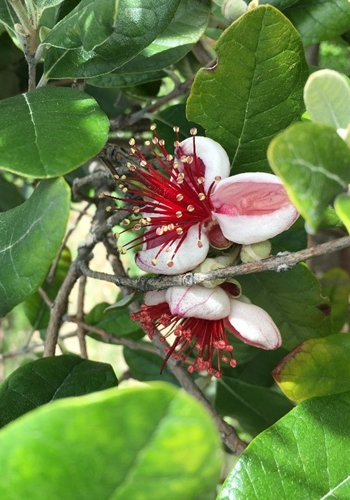
  • Pineapple guavas are drought tolerant and can be trained for espalier. They can handle the heat and are quite drought tolerant.

Would starting an apple tree in a container be advisable?  If so, when is the best time to transplant into the ground?

You could start an apple tree in a container for sure! I’d recommend getting the largest container (10 gallons or larger) and if you can, a tree on dwarf root stock. A dwarf could last maybe 1-2 seasons in the large container. However, a traditional root stock tree may only make it 1 season before having to transplant. The roots would be fast growing and fill the space quickly.

Fall and Winter (depending on snow of course) is a great time to transplant:

  • Easier access to water from winter rains
  • Cooler temps will help the tree adjust much easier and prepare it for hotter days
  • The soil may be more forgiving to work with

What dwarf citrus trees do you recommend for a small garden?

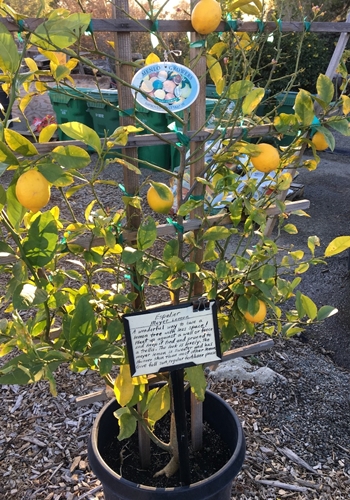
Any and all of them! My first question is what do you like to eat? What will you use this citrus for? Depending on where you live you should check to see what varieties grow well in your Hardiness Zone or your Sunset Zone. Most citrus trees varieties have certain heat and cold tolerance:

  • Lemons and limes can handle cooler temps
  • Valencia oranges require a lot of heat, but cannot handle cold temps

If you have issues with space, consider getting an espalier citrus. It will orient itself along a wall or fence (you just have to keep pruning to maintain the “flat” shape).

I’m very happy with my Meyer lemon and Rangpur lime. I’ve had them in 10 gallon pots for the past couple of years and they are about to get a container upgrade.

Fig Questions:

How often should a fig be watered?

The goal is going to be deep watering on an infrequent schedule.  The roots will go deeper with this type of watering.

Here’s a great PDF watering schedule link:

https://www.urbanfarmerstore.com/wp-content/uploads/2013/08/SFBay_Irrigation_Schedule1.pdf

It’s specific to the San Francisco Bay Area, so adjustments would need to be made for other areas/climates.

Can you grow figs in Zone 8?

Yes you can!  Looks like Zone 8 is at the end of the range that favor keeping figs outdoors year round!

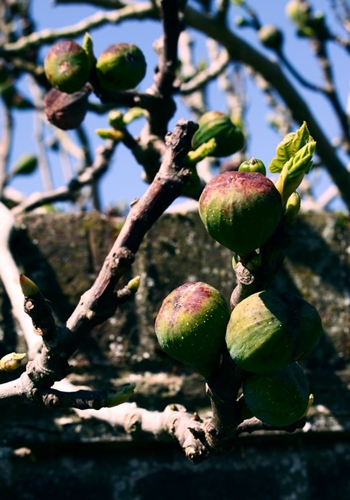
What makes fig drop their fruit before they are ripe?

It can be a couple of factors:

  • Not enough water : be sure to water regularly, especially during the fruiting period
  • Lack of phosphorus in the soil at the time of fruiting. Application just as the fruits start to appear should help.

Passionfruit? How do you prune?  How do you propagate?

Such a beautiful plant and flower! You prune them every year after harvesting the fruit.  Cut them back to about 1/3.  Prune dead branches especially. I’ve never propagated passionfruit before. If I had to guess:  root green stems in water? Dry out a fruit and plant by seed? There is also the option of rooting woody stems with rooting hormone.

Do you advocate planting onions and garlic around the plants that attract aphids?

I do! Onions are great companions for plants like broccoli, cabbage, tomatoes and lettuce. Not only do onions repel aphids, but also cabbage worms!

Can you deter aphids if it’s above/below a certain air temperature?

Sorry, aphids are pretty hardy pests in the range here in the Bay Area.  I’ve seen them in Vegas in the summer too.  I wish there was a way to deter them! Remember, you do actually need some level of pests in your garden in order to attract beneficial insects.

I have bark mulch around my trees. Do I need to scrape it back before amending the soil around the tree?

Yes, pulling it back would make amending it much easier. Actually, most plants should have a bit of space between the main stem/stalk and mulch. Too close could be too much water at the root base.

Any recommendations on which phosphorus to use?

I use Bone Meal for my garden mostly. Lately, I’ve been doing some research for my clients who are vegan/vegetarian and don’t want animal products in their gardens. I’ve discovered rock phosphate as an alternative.

  • Contains a slower release phosphorus so it’ll last longer in your soil. 1 application per season should be sufficient for your flowering and fruiting edibles/plants.
  • It also contains calcium as a bonus trace element.

Can an orange tree be grown in an 11-square-foot pot?

The smallest container that I’ve seen an orange in is 5 gallons. But that will only last a year at the most. A larger container (10 gallons+) will certainly keep a tree for longer to indefinitely. Regardless of the size, an orange tree will still need lots of nitrogen, well-drained soil and consistent watering.

Enjoy the talk? Take this survey to help us determine future sustainable landscaping classes.

The Solano Sustainable Backyards program and the talk are generously funded by the Solano County Water Agency.

Resilient Neighborhoods Plant Seeds for Future in Uncertain Times

By Gabriela Estrada and Kassie Munro, Program Managers

We began 2020 on a high note with the selection of our second Resilient Neighborhood Hub team in Vallejo and excited to invite the community back to our first Hub during the annual spring garden tour. As it became clear that everything was about to change with the restrictions of the pandemic, we used the opportunity to deeply consider the meaning of resilience and what that looks like in the face of dashed hopes and so much uncertainty. After a period of reflection and a lot of soul searching about the importance of adaptability and perseverance in this current climate, we made some difficult decisions that allowed us to move forward and continue building this vision, albeit through a very different path than we had planned.

Seeding Our Second Resilient Neighborhood Hub

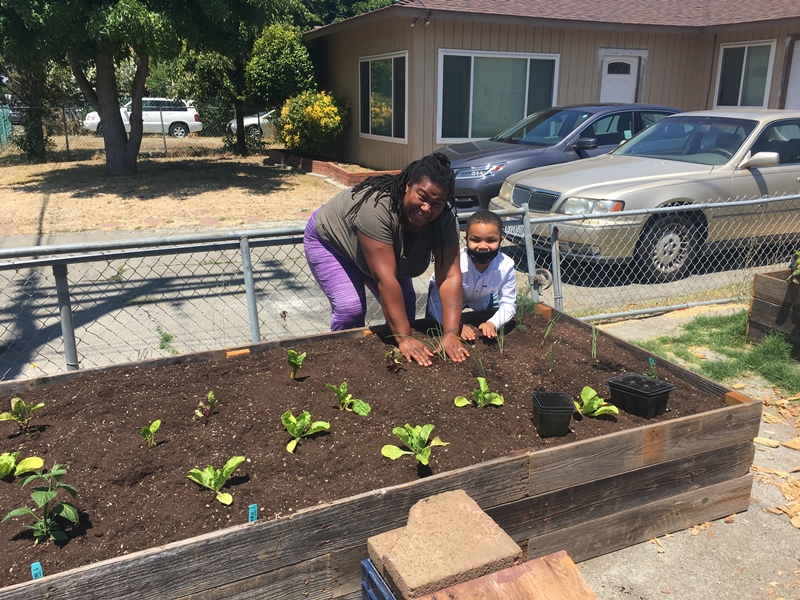
After months of searching, we were thrilled to have identified our neighbor-team for the second Resilient Hub installation in March. While beginning the design process we ran up against the COVID-19 pandemic and social distancing mandates, a particularly difficult obstacle to overcome for this project, which centers on community collaboration, connection and education through public workshops. We made the difficult decision to move forward with the installation of South Vallejo’s Growing Together Hub in June by employing our designer to complete the work with support from the neighbor-team and our staff as needed. While we were not able to hold public educational workshops as part of the process, we felt it was important to keep the project momentum moving forward in these uncertain times and serve as an example for neighbors and others that creating change within a community and building connection is still possible even with such challenges. The neighbor-team has been fantastic to work with; they are gracious, flexible, and have always remained positive despite the adaptations we’ve had to make along the way. While the scope of what we had hoped to do with the Hub had to be modified to fit our limited capacity under the circumstances, we’re excited to continue building our relationship and working towards opportunities for expansion in the future.

Virtual Tour of Morningside Botanical Bounty

This video is a shining example of how sometimes challenges can lead you to unexpected opportunities. While forgoing the in-person annual garden tour this year was disappointing, we are delighted to have had the chance to create this virtual tour of our first Resilient Hub, Morningside Botanical Bounty. It was a unique opportunity to capture the story of our neighbor-team and their reflections on the process one year in, as well as updates on how their beautiful gardens have flourished. It was a pleasure to connect with each of the team members individually and weave their stories together (even though we couldn’t actually be together) as a reminder that the teamwork and unity they created during these installations is enduring.

Reimagining the Neighborhood

This summer also afforded us the opportunity to virtually connect with Mark Lakeman of Portland’s City Repair Project for a community conversation around Reimagining the Neighborhood: A Placemaker’s Journey. Our Resilient Neighborhoods program is rooted in the belief that the need for strong communities where people know, support and care for their neighbors is more pressing than ever, and during this Zoom event Mark offered insights on simple, impactful solutions to foster placemaking and community building. His discussion with our first Resilient Hub neighbor-team and full presentation can be viewed here. If you’re inspired to create change in your own community, check out the City Repair Placemaking Packet full of resources and share your vision with us through our vision form or Resilient Neighborhood interest form.

Moving Forward

With a future full of unknowns, adaptability is key, and the lessons learned from this pilot have already begun to shape and flow into all our programs as we’ve come to see the positive impact of building social connections through our green infrastructure work, and the power that is created when neighbors unite around a common cause. At the same time, we are faced with the prospect that large public gatherings may not be possible any time soon and are working to dream up ways to overcome this challenge: from relying on virtual workshops and gatherings, to garden work days for smaller groups of people spread across a longer installation process. This is also a time of transition for our team, as Resilient Neighborhoods Program Manager Kassie Munro has stepped down from her role, handing the reins to Gabriela Estrada as the new Resilient Neighborhoods program manager. Gabriela brings her experience as program manager for the Solano Gardens, Urban Forest and Listening Circles programs and a passion for fostering grassroots efforts and supporting individuals and communities who are eager to participate in civic efforts that make the community a more resilient and thriving space.

In her new role, Gabriela will be guiding the expansion of the Growing Together Hub in South Vallejo, by including a third neighbor to the Hub. These three neighbors have lived next to each other for the past 15 years, and it’s exciting to see them working together in beautifying not only their homes, but their neighborhoods. Gabriela will work closely with sustainable landscape designer Ojan Mobedshahi to bring to life the new Hub member’s vision for her garden and her neighborhood. Much like with the installation of the other two gardens due to COVID-19 precautions, the contractor, the homeowner, and Sustainable Solano team will be tasked with installing this home garden.

Through this Hub expansion, we hope to build closer relationships among neighbors and offer low-tech tools that will transform their block into a robust, regenerative and beautiful urban ecosystem that mimics nature in performing valuable functions like producing food, filtering air, cycling water, reducing heat during the hot summer days, and producing a home and food for birds, bees and butterflies. While we continue to navigate this new normal, we’re excited about what the future may hold, and even more excited about finding new ways of supporting our Solano County community.

The Resilient Neighborhoods program is generously funded through the PG&E Corporation Foundation.  

Share Your Inspired Gardens!

By Sustainable Solano

We know that many of you attend our demonstration garden tours, hands-on workshops, talks and classes with your own gardens in mind. Maybe you’re considering converting your lawn into something waterwise. Maybe it’s learning about groups of plants that work together to support each other. Maybe it’s the desire to grow food for your family and your community.

Often, we hear anecdotally about what inspired people to take action, from downspouts routed to swales to laying lots and lots of mulch. Now, we want to share your inspired gardens so your projects can inspire others! We’ve launched a new Inspired Gardens section on our Solano Sustainable Backyards page, starting with Colette and Daniel’s “Der Biergarten.” Sustainable Solano’s Land & Water Caretakers class worked with Colette and Daniel on their class design project, giving us a chance to get to know them and talk about their desires for the property. We wanted to share the beautiful transformation Colette and Daniel made to their garden that brings in various sustainable practices. You can find more on their garden here.

Do you have an Inspired Garden to share that reflects some of what you’ve learned? Tell us about it! Please submit:  Your first name, location, what inspired you, what action you took and 1-3 photos to info@sustainablesolano.org

Your inspired garden entry will be posted on our website to inspire others. If you live in Solano County or nearby counties, then you will be entered in an upcoming monthly drawing to receive a gift card from a local nursery of your choice:

  • Lemuria
  • Mid City
  • Morningsun Herb Farm
  • Grow a Pear

The winner will be announced each month during our online classes. Entries will remain in the monthly drawing and removed only once they win. Let us know how you’ve moved from inspiration to action!

More Sustainable Landscaping Education Programs Planned for Benicia

By Allison Nagel, Workforce Development Program Manager

Students in the 2020 Land & Water Caretakers certification course do a soil test at the project site

As we plan for an exciting slate of programs based in Benicia for 2021, we want your insight on what sort of workshops we should hold in the city — what is most interesting to potential participants as well as property owners. These workshops will help to strengthen and expand the programs we piloted in Benicia at the beginning of this year.

These Benicia programs support our goals of public education through class instruction and public workshops, targeted sustainable landscape professional education for adults and high school interns, and measurable improvements for the city of Benicia, including water savings, improved soil health through mulching and keeping organic matter on-site, and planting trees and understory plants for carbon sequestration, food production and heat island mitigation through shade and evapotranspiration, which moves water through the plant from the soil to the leaves where it can evaporate and cool the air.

Our Youth Leadership and Workforce Development programs in Benicia launched in January, bringing instruction and certification programs through adult education and high school internships. We offered our Land & Water Caretakers program in partnership with Benicia Adult Education to participants from around the county looking to build their sustainable landscaping design skills for use in their careers, seeking new work and at their own homes and in their communities. Working with Liberty High School’s award-winning Learning Through Interests program, we offered an internship that taught students about sustainable landscaping and systems thinking while building hands-on skills that they could put to use in further study or future careers.

Participants in both programs worked on creating demonstration food forest gardens in Benicia: Wild Cherry Way and Giardino su una Colina (Garden on a Hill). Shawn Carter and Maleik Dion of Resilient Solutionaries were the course instructors for both programs and designers for Giardino su una Colina, and Lauren Bennett was the designer for Wild Cherry Way.

At Wild Cherry Way, the Adult Education Caretakers worked alongside their class instructor and garden designer to create a backyard food forest complete with three fruit trees and a laundry-to-landscape greywater system. The Caretakers went through the design process and then joined in three public workshops to dig swales for roofwater capture, work on the greywater system and put in the plants and drip irrigation. It all added up to nearly 33,000 gallons of possible annual water savings for the property. The Caretakers then took what they had learned from that process and created a design for another Benicia property based on their knowledge and what the homeowners wanted for their backyard. Funding for the program and the public workshops came from the second amendment to the Valero/Good Neighbor Steering Committee Settlement Agreement, the Solano County Water Agency and student fees. Republic Services donated compost for the Wild Cherry Way project.

Liberty High School students in the Land & Water Caretakers internship work on their project site

At Giardino su una Colina, the Liberty High Caretakers went through a similar process with their instructor, learning about permaculture design, meeting with the homeowner, and, through a front-yard lawn conversion, creating a demonstration food forest that introduced the concept to neighbors and others. The students dug swales for roofwater capture, sheet mulched, constructed guilds of plants that work together and replaced the sprinkler system with drip irrigation, resulting in a possible annual water savings of more than 96,000 gallons for the site. Students then used what they learned to design their own guilds and create a sample design to earn the certification. Funding for the program came from the second amendment to the Valero/Good Neighbor Steering Committee Settlement Agreement, and Republic Services provided lunch from Benicia restaurants for the days the students worked on the installation.

There were challenges, perhaps most noticeably how the shutdown from COVID-19 affected the conclusion of both the adult education and internship programs, with final presentations moving online and the cancellation of planned field trips. We are already planning for our next Land & Water Caretakers course through Benicia Adult Education and high school fellowships for this coming January. We are also planning to offer Sustainable Solano’s first Permaculture Design Certificate course in Benicia starting in January! You can find more information here and we will provide exciting updates in the coming months.

For all of these programs, we are figuring out what we can offer online and how to best hold outdoor workshops that are safe and adhere to the guidelines from Solano Public Health, the state and the CDC. We also want your insight on what to offer. While this year’s Caretakers courses focused heavily on permaculture design, for the coming year we are trying to offer a variety of workshops in Benicia that would be open to the public as well as those enrolled in the Caretakers certification programs. Maybe you’ve always wanted to learn how to convert a sprinkler system to drip irrigation, or you want to create a guild of supporting plants around an existing fruit tree, or capture all of that rainwater off the roof during the rainy season.

If there are workshops you would like to see in the year ahead, please let us know by taking this quick Benicia Workshop survey. And if you are a Benicia resident interested in hosting a workshop either on your own property or a community site, such as a church or school, please fill out our Sustainable Landscaping Interest Form.

Questions? Contact Program Manager Allison Nagel at allison@sustainablesolano.org 

Design Workshop Guides Participants In Sustainable Garden Transformation

By Kassie Munro and Nicole Newell, Program Managers

Permaculture designer Ojan Mobedshahi leads the Sustainable Garden Design Workshop in Vallejo

We are continually striving to find the best way to provide as many people as possible with the tools they need to transform their outdoor space into a more regenerative landscape, but we don’t have the capacity to install gardens for every interested homeowner. We created the Sustainable Garden Design Workshop with the hope that this resource can help get more people started with one of the most challenging parts of a landscape project — the design. The workshop provided an opportunity for attendees to be guided by a professional designer through the whole systems thinking design process with a focus on wise water management, soil health and permaculture elements.

Mary and Ben were selected to be our first hosts. They opened their 120-year-old home in Vallejo for this workshop with the desire to have a front yard garden to showcase sustainability, share the bounty with their neighbors and create a place for their daughter to play. The class instantly received a ton of interest; it was full with a waiting list in a matter of days.

Permaculture designer Ojan Mobedshahi led the day’s workshop with the grace, insight and playfulness that we have come to expect from him. Ojan has partnered with us on designing the Resilient Neighborhood homes in Vallejo, and when this opportunity arose we jumped at the chance to work with him to develop a new offering for the community.

Ojan started the day’s discussion with an acknowledgement of place and asked attendees to honor the indigenous communities whose land we are residing on in Vallejo. He also spoke of the indigenous people whose land he lives on in Oakland, displaying respect and humility that set a mindful tone for the day. Lessons on fundamental permaculture and landscape design elements followed, which felt much more like a group discussion than a tutorial — Ojan has a way of making everyone feel at ease and open with each other. We discussed a range of topics from water cycles and management to the different use sectors around a home.

Participants in the workshop assessed the yards and worked on designs for their own properties

The learning continued outside where the group walked Ben and Mary’s front and back yards with Ojan’s guidance, completing a site assessment and beginning to identify real-world design challenges and opportunities for this space. Ben and Mary were incredibly candid with everyone about their challenges with the space, and there was a wonderful amount of wisdom offered by attendees who shared experiences in their own lives to add to the learning process. While this portion of the workshop focused specifically on one unique home and all its quirks, the teaching was deeply valuable and transferable to any space. The reality that most of us face with our yards is a complex web of existing features and nuanced obstacles (or a blank canvas, which can often be the most challenging of all!). Ojan taught us not what to think, but HOW to think and approach the design process the way he does in his role as a designer. After the site assessment, it was time to get all of the wonderful ideas down on paper. The remainder of the workshop focused on creating a design for Ben and Mary’s home and a working session for attendees to begin applying some of what they had learned to their own space. This time was a chance to brainstorm together, ask questions and collaborate.

This workshop, as with all of our events, served not only as a place to learn about sustainable landscaping practices but also as a time for people to connect with each other, sparking wonderful conversations. Mary’s dad, Larry, told us about spekbom, a succulent shrub that is being used to sequester carbon in South Africa. Ojan also talked about the other hat he wears: Not only is he a Regenerative Permaculture designer, but he also is the finance director for East Bay Permanent Real Estate Cooperative. This organization works with the community to create a permanent affordable housing solution in the East Bay.

At the end of the day, Ojan was able to gift our host homeowners with a design for their property that they can use as a jumping-off point to begin their yard transformation, and we are so excited to see what they create! Our next design workshop will follow the redesign of an expanding demonstration food forest in Benicia. We hope to be able to offer more sustainable garden design workshops in the future. Keep an eye on our calendar for the latest workshops, and subscribe to our monthly newsletter for updates. Let us know if you want to bring a design workshop to your city or have ideas on other workshops that would help support your yard transformation by sending an email to mailto:nicole@sustainablesolano.org

Tangible and Valuable: Permaculture Design Course Shapes Program Work

By Gabriela Estrada and Kassie Munro, Program Managers

The OAEC Permaculture Design Course cohort that included Sustainable Solano Program Managers Gabriela Estrada and Kassie Munro

During Sustainable Solano’s restorative summer break, we traveled to Occidental Arts and Ecology Center, a research, demonstration, education, advocacy and community-organizing center in West Sonoma County, where they develop strategies for regional-scale community resilience and the restoration of biological and cultural diversity. For two weeks, we joined 30 other people in an intensive Permaculture Design Certificate program – frequently referred to as the PDC.

While Permaculture Design Courses follow a standardized curriculum to ensure that those who get their PDC receive comprehensive training in all of the critical systems design components, each program has a unique approach to how they immerse students in the permaculture experience, which for us meant living in yurts on the 80-acre OAEC property as part of their intentional community for the duration of the program.

Upon arrival on the first day, we all sat in a circle and were asked why we decided to attend the PDC training. What quickly became evident was that a lot of our fellow PDC-ers wanted to learn about permaculture design not only to create beautiful gardens, but to heal the earth and the people on it. As the days progressed this became more evident. Cohort members came from all walks of life and from all over the world! We had Mimi from Taiwan and our yurt-mate Mounir from Dubai. Their goal was to create a space of sustainability and social cohesion in their properties back home. Their generous attitudes were not unique among our cohort.

The course itself was both incredibly rigorous in its training, and yet at times also felt remarkably like summer camp. Nestled in the lush Duck Bill Creek watershed of Western Sonoma County, the property boasts a number of incredible gardens, restored forest and grasslands, an irrigation pond (which doubles as a swimming hole), and countless trails to get lost on. Communal vegetarian meals cooked in the shared kitchen with ingredients from the gardens were shared three times a day.

While living on-site, the property became so much more than a demonstration classroom, and the experience became so much more than simply an education. With course topics covering everything from cob building and composting to botany and global water systems, the training is incredibly holistic. We even had an afternoon dedicated to learning the art of fire-making. The social permaculture teachings truly came to life in the communal living experience where we had the chance to feel and live a different way based on designing social structures to favor beneficial patterns of human behavior and attempting to create conditions that favor nurturing and empowering relationships with each other.

The course culminated in a group design project, which for us focused on a nearby 7-acre plot of land that had recently been acquired by the Cultural Conservancy. Indigenous wisdom and learning the heritage of our host land was a focal point of the training. This came in many forms: first a small presentation by The Cultural Conservancy, then a trip to the actual site in the city of Graton, which is Southern Pomo Coast Miwok Territory. During this site visit, we all took notes, pictures and asked members of the Cultural Conservancy what they envisioned for the space to better understand their hopes and aspirations for the place. As a group, we were grateful that we were allowed to participate in a project that aims to create an inter-tribal bio-cultural heritage farm and indigenous education center. Together in a team of five, we created designs that represented all the different topics we were taught, and then on the last day presented it to the Cultural Conservancy.

It was a true honor to be a part of a tangible and valuable regenerative restoration project during our course. Belonging to an organization such as Sustainable Solano, whose core principals are permaculture-based, it has been very valuable to obtain Permaculture Design Certification. As program managers, this certification will allow us to infuse permaculture design principles and guiding ethics more deeply into our work, allowing us to continue shaping programs that approach sustainability through the lenses of social, environmental and economic equity.