By Manpreet Singh, Public Education Coordinator Fellow
“Inspiring.” That was the most frequent word from participants who joined Sustainable Solano’s 10th annual Benicia & Vallejo Demonstration Food Forest Garden Tour. Having the opportunity to see how lively and full each garden was, I found it no surprise that participants took inspiration from these sites and each gardener’s stories. The creation of Enchanted Cottage Garden, for example, was a family affair with each member actively involved from setting the foundation to naming the garden. Hearing from landscape architects and homeowners at the Habitat and Harvest Garden provided insights into how the garden was created; interacting with docents and land stewards at Yggdrasil Garden provided real-life examples of permaculture and pollinator havens.
With 16 locations scattered across both cities, participants met with passionate local gardeners and explored real life examples of flourishing food forests, community gardens, and native plant gardens that nourish humans, pollinators, and the Earth. Additionally, participants learned about permaculture, native planting, and water conservation, providing them with practical knowledge that can help them transform their own gardens and the way they interact with the environment. The annual Garden Tour provides real life examples of how humans and land can coexist and take care of each other.
Sustainable Solano is actively looking for a site in Vallejo to do a front lawn conversion into a demonstration food forest.
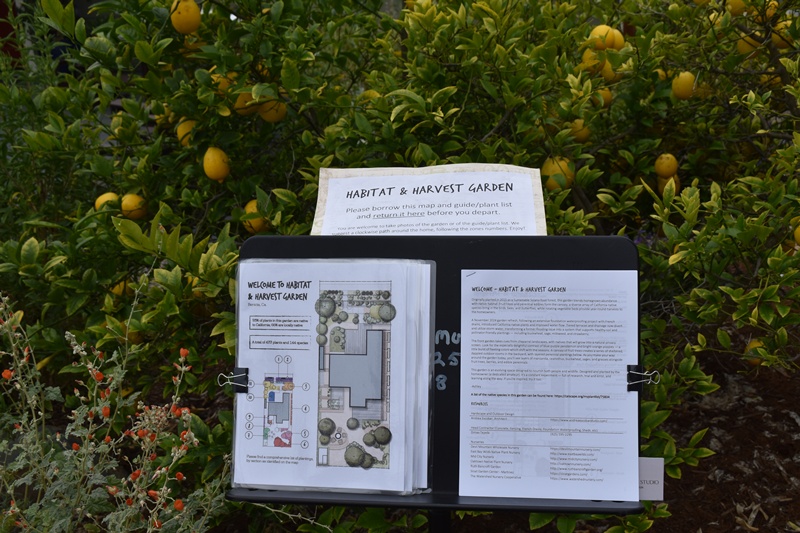
Habitat & Harvest, a California Native Plant Society garden on this year’s tour
Our relationship with the land is important because we depend on it for life-sustaining resources such as food and shelter, and it forms the foundation of our identity through influencing history, culture and traditions. Humanity and land are intertwined in a loop where our activities and interaction influence what the land will share with us and can alter earth systems that shape our climate and how society itself functions. Humans and land are connected and interdependent with each other, and we need to work towards a regenerative relationship with the land that helps us protect and sustain it for future generations.
Throughout human history, humans have reshaped the environment to sustain themselves. This is often done through two pathways: exploitative and regenerative. The exploitative pathway is the most prevalent in which natural resources are extracted through unsustainable methods that remove green spaces and degrade soil quality. Action such as deforestation, large scale monocultures, intensive tilling, and pesticide use can negatively impact soil nutrients, lead to a loss biodiversity, contaminate water, harm production of fresh produce, and lower the capacity of Earth to absorb carbon dioxide, thus accelerating global warming, impacting air quality, and exacerbating weather events linked to climate change. Exploiting land is unsustainable and can significantly reduce what we leave for future generations.
The alternative and more sustainable method is the regenerative pathway where humans partner with the natural land and its cycles and take actions that heal the environment. This can include supporting healthy soil to sequester carbon, increase water retention and boost soil life; using elements of companion planting where plants support one another and the wider ecosystem, such as attraction of pollinators and protection from pests; and composting to reduce waste and methane pollution. These types of actions were on display during the Garden Tour, showing how people are taking care of the land and in turn the land provides us with fresh fruits and vegetables, serves as a home for us and other animals, and further carries our history into the future.
The regenerative pathway is often practiced through environmental stewardship where actions by individuals or groups are taken to protect, responsibly use, and care for the environment. These actions can happen at any scale and can include creating community gardens, replanting trees, using native plants, limiting harvest, or purchasing more sustainable products. Indigenous communities are the greatest examples of environmental stewards with a “kincentric worldview” in which people are part of and share a genealogical connection with nature. These communities view the natural world (land and sea) as being alive and that caring for the world is a reciprocal relationship where the natural world is both a caregiver and care-receiver — echoing the intertwined relationship between human and land.
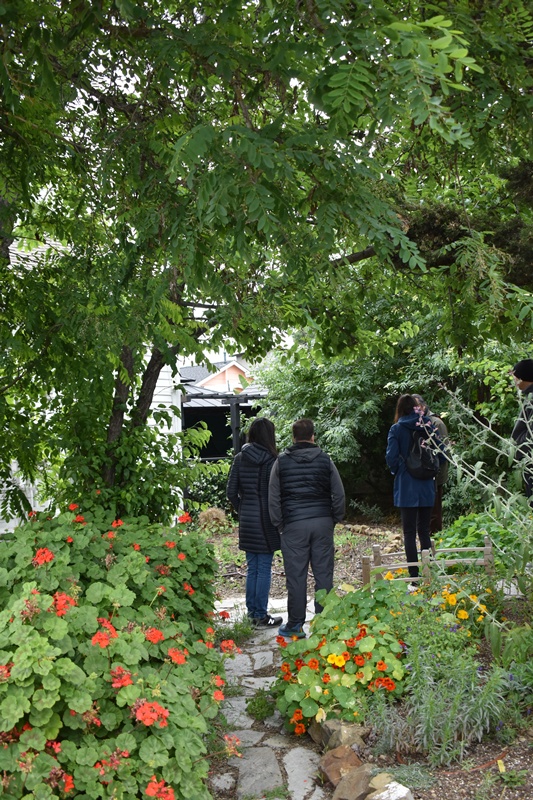
Yggdrasil Garden in Benicia
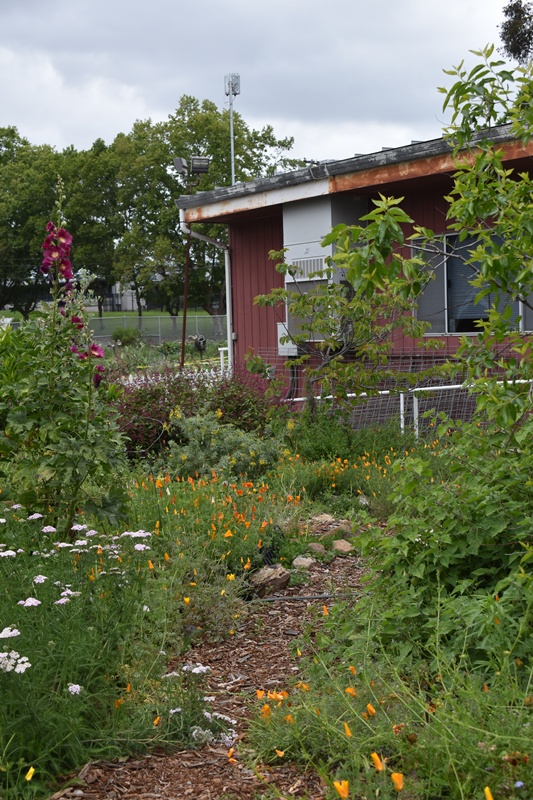
Loma Vista Farm in Vallejo
As climate change worsens and impacts all living things, the need to promote improved human-environment interactions through stewardship is ever pressing. During the Garden Tour, there were many examples of environmental stewardship. One key example is the practice of permaculture in which we design our life and environment around processes and systems found in nature to create ecologically and socially sustainable ways of living. Permaculture reflects the key principle that all elements found in nature are connected on many scales. For example, native plants draw in pollinators (e.g., butterflies, bees) who help nourish the plants that provide us with shade and fresh produce, and in turn the plants provide nutrition and nesting sites that help the pollinators survive and reproduce. Yggdrasil Garden and Loma Vista Farm are real life examples of permaculture that embrace the 3 ethics of permaculture — Earth Care, People Care, and Fair Share. These guide us in how we can live regeneratively while protecting the planet and meeting current and future generational needs in an equitable manner to protect resources.
The relationship between humans and land is critical and deeply interwoven as the land forms the basis of who we were, are, and will be. As we continue to shape the natural world, becoming environmental stewards and taking actions through sustainable landscaping and creating food forests are vital in creating a resilient, regenerative interdependent relationship where we take care of the land and the land continues to take care of us as future generations grow.
This piece recognizes that Solano County has been home of the Suisune, the Patwin of the Wintun tribes, Miwuk, Karkin Ohlone, Yoche Dehe, and the countless other California tribes who have remained committed to the stewardship of this land over many centuries. As we continue shaping our environment, we are reminded to honor and look to the relationship indigenous communities have maintained with the natural world since time immemorial. We encourage those of you reading this blog to learn more about the Native tribes where you live and seek active ways to acknowledge and give back.