Big Gardens in Small Spaces: Container Gardening Tips

By Lori Caldwell, CompostGal

Lori Caldwell’s talk “Big Gardens in Small Spaces: The Adventure of Container Gardening” was a big hit. We had a ton of interest in this class, with 216 people registered! Lori provided great resources and her presentation was perfect for new gardeners and also very informative for seasoned gardeners. There wasn’t enough time to answer the many great questions during her talk, so Lori was kind enough to answer the questions in this blog. You can watch Lori’s talk in the video here and read her responses to your questions below.

Find the handouts from Lori’s talk and more plant resources here.
Want to connect with Lori? Find her information on our Sustainable Landscaping Professionals List!

Hello gardeners!!!

Thanks so much for participating in the Container Gardening Talk! I really appreciate all the great questions! I know we ran out of Q&A time, so I thought I’d respond to them here.

What is a bumper crop?

A bumper crop is when you get A LOT of fruits and veggies in a given season. This windfall is above and beyond what you expected. I wish you all bumper crops this year!

Would the fish emulsion smell attract neighborhood cats?

I’ve been happily using fish emulsion for years and there’s been no indication that cats have messed with my plants or soil. If that’s a problem, there are other options to provide nitrogen for your plants: alfalfa meal, worm castings or fish meal.

How do you add castings when you’re feeding your plant?

I make a dilution of the castings: take a small handful of castings and put in a bucket. Add water until they are the color of weak tea. The color is important as worm castings are like a fertilizer. Too much could kill your plants so be careful! I start by adding castings right after planting and feed on a regular basis until the plant starts to flower.
When you chop plants down do you chop them in the soil or put into the compost?

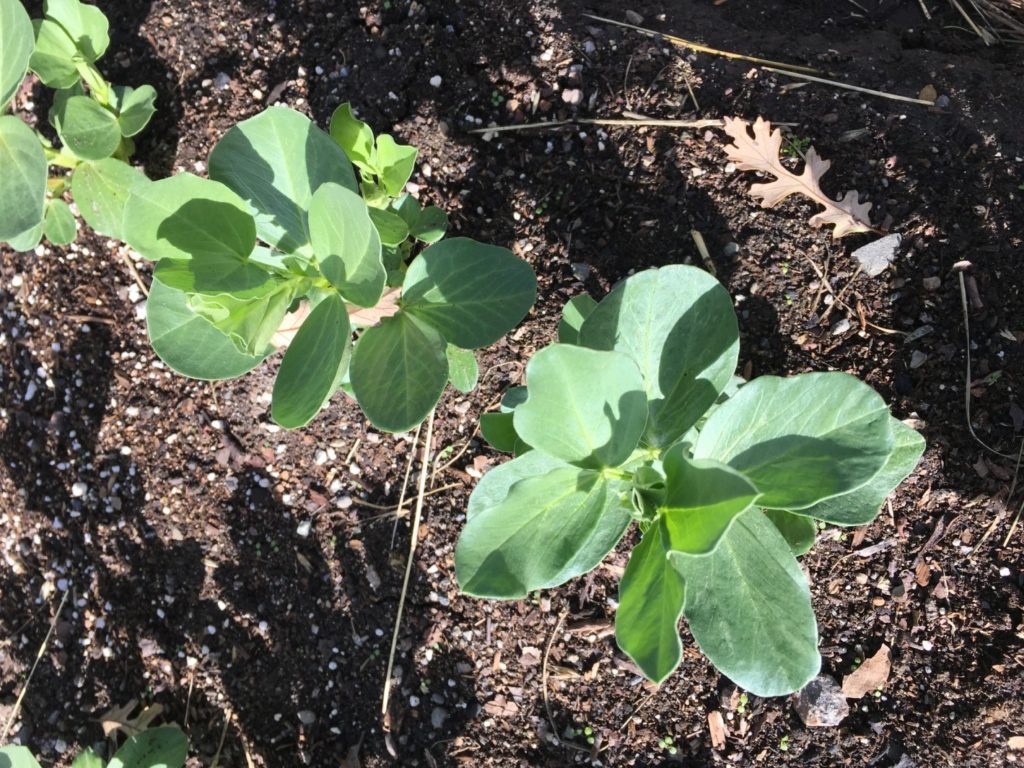
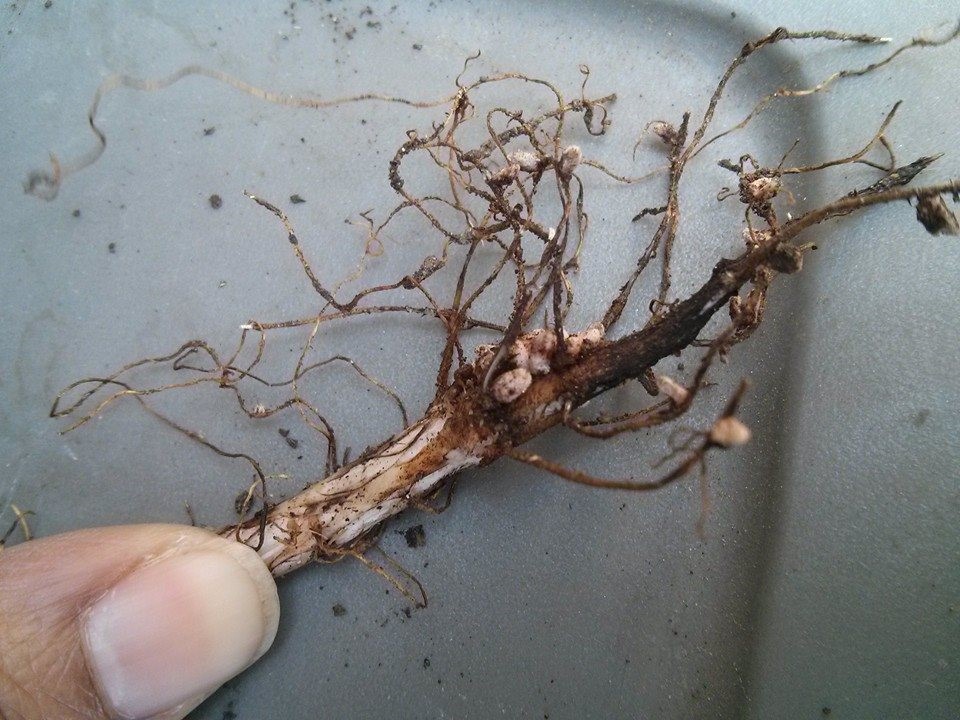
For plants like fava beans, I wait until the plant has mostly flowered before I chop it at the soil level. It’s important to keep the roots in the soil, the nodules (see picture above right) hold the nitrogen. I compost the stalk and eat the flowers!

For container gardens I’ll completely remove other types of plants and roots to make room for the next crop.

How to control pests without killing them (snails, slugs, tomato horn worms)?

Slugs & snails: Without actually killing it will require you to setup a series of barrier method options:

  • Crushed eggshells: put a ring of finely crushed shells around the base of your plants. It’ll be like crawling over glass for them.
  • Cloche: fancy ones are beautiful and glass; DIY ones are recycled bottles (glass or plastic). Cut bottoms off bottles and remove caps. Cover the hole with something breathable (cheesecloth, old nylons, etc). Cover plants at night to keep those night feeders away. Take off during the day.

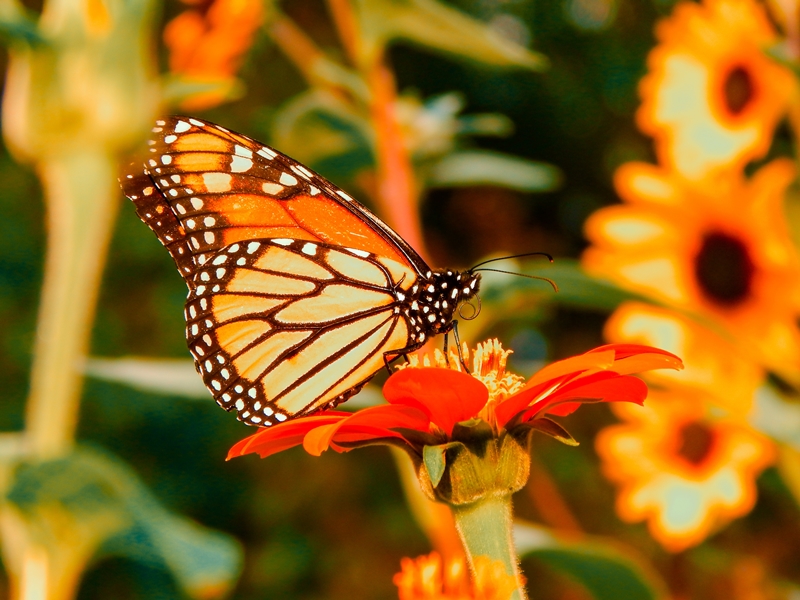
Tomato horn worm: So not killing these creepy guys is going to take some preventative measures. One of the reasons hornworms show up is because of not doing crop rotation. The moth responsible for the worm is gorgeous! However, she likes to lay her eggs at the base of existing tomato plants. Planting tomatoes in the same container every year allows those eggs to
hatch right next to their favorite foods. Now, I know with container gardening crop rotation might not be possible. What about rotating soil? The following season after a “hornworm incident,” remove the soil from the container and replacing it with fresh soil. Reuse the soil in other containers that won’t have tomatoes that year.
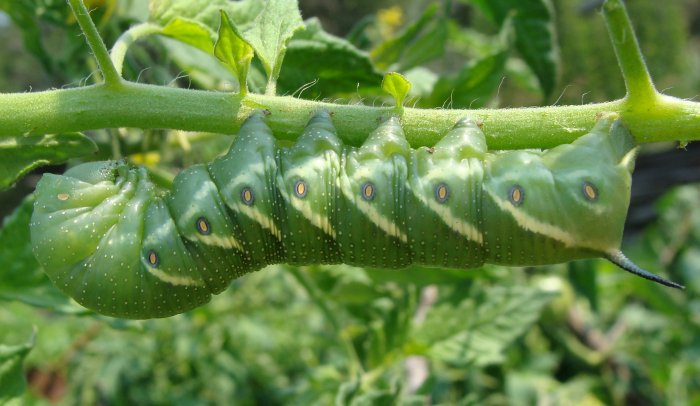
 

Flickr: Amanda Hill
Flickr: Didier Descouens

Do you ever recommend neem oil?
I have never used neem oil actually!

I’ve heard recently about cloth pots. Have I had any experience with them?

I have used cloth pots in the past. I found that they dried out very quickly, even faster than terracotta! If I were to use them again I’d use drip irrigation to keep the moisture level up. They might be good for woody herbs that require decent drainage.

I wanted some tips to save my plants in winter. My basil does not survive the winter in my patio space.

Crops like basil need warmth in order to thrive. You may need to bring the plant indoors if you want it to overwinter.

Some tips for possible success:

  1. Place next to a window that gets afternoon light. Be careful that the light coming in isn’t too intense, it could burn the leaves.
  2. Clip back any brown or dying leaves.
  3. Go easy on the water. Test the soil first before watering. There won’t be as much heat like summer (unless you’ve got it near a heater vent).

How can I plant herbs from stem cuttings? Do I just stick it in the soil? How do I grow roots on mint that I bought at the farmers market?

Rooting them in water first works well!! I’d try to root them before/while you use the herb. They will take to transplanting to soil a bit easier. Just change the water every few days.

Where can I learn how big of a perimeter is required for different plants?

Most plant tags and seed envelopes give you a recommendation as to how far apart the spacing for mature plants should be.

I have some very large pots, way bigger than need be. What can I put in the bottom?

Well I guess my first question is what are you planning to put in these pots? If it’s a perennial plant, you might consider leaving the space. Having a fruit tree in the forever home has a lot of benefits: uninterrupted root development and allowed to grow larger much faster.

If it’s a shallow plant situation then you have some options:

  • Rocks or bricks – it will make it heavy so pick a permanent place for it.
  • Wood mulch or stumps – the wood helps hold onto moisture longer, so that’s great. However, sometimes new plantings die because the wood fiber in the soil is dragging nitrogen from the soil. New plantings rely mostly on nitrogen to get going. I’d suggest adding more nitrogen amendments to compensate.
    • Pros: inexpensive option
    • Con: nitrogen drag and the soil will start to sink into the pot as the wood material decomposes

Any recommendations for dealing with possums and raccoons?

I’ve never had to deal with either of those pests (knock on wood). All my research has pointed to creating barriers and getting rid of things that attract them. UC Davis has a wonderful website dedicated to helping you deal with those pest problems. I’ve included a couple of links to help:

What does Lori think about cucumbers in containers?

I think it’s great! I’m planting them in a container this year too. Try and plant on mounded soil or provide a trellis for them to climb.

Is liquid fertilizer better than powder?

I like both because some of my favorites come in either forms: Bone Meal (powder), fish emulsion (liquid), worm castings (dilute to make liquid). I like liquid because it’s easier to side dress (application during the growing period) my plants.

How do you prevent rosemary and thyme from getting too woody to cook with?

I haven’t noticed woody leaves on my older branches, guess I’ll have to check! I usually harvest and dry once a year from the new growth. That might be an option to prune back once a year. Sorry, I’ve never grown thyme … I’m not much of a fan.

Enjoy the talk? Take this survey to help us determine future sustainable landscaping classes.

The Solano Sustainable Backyards program and the talk are generously funded by the Solano County Water Agency.

Students Write Poetry, Essay on Healing, Life-Supporting Water

By Sustainable Solano

Sustainable Solano is pleased to announce the finalists and winner of our Water Poetry/Essay Contest among students of St. Patrick-St. Vincent Catholic High School.

Students were asked to think about and write on the theme of healing, life-giving, life-supporting and forgiving water. The winner, Samantha Willingham, received a fruit tree of her choice (a peach tree).

We were impressed by the thought and consideration these students put into their writing. They shaped the ideas behind the sacredness and power of water into compositions that were beautiful and inspired.

Students at St. Patrick-St. Vincent Catholic High School learned about water conservation and designing for waterwise gardens this year in a series of sustainability classes on permaculture and water capture and the hands-on involvement in creating a demonstration food forest garden, Teraza Dominicana, at the school.

That project and the contest were through our Solano Sustainable Backyards program, funded by the Solano County Water Agency.

We have published the work of the six finalists below. We hope you enjoy reading them as much as we did!

Sincerely Water by Samantha Willingham

I made you.
From the day you knew life I’ve sustained
you.
I know you.
I’m the clouds above and the ground below
you.
I can help you.
When you’re desperate and only I can save
you.
I see you.
When the waves clap onto the shore I greet you.
I heal you.
I’m the tears that run down your cheeks and release you.
I follow you.
From the lily ponds to the mountain lakes I’ll be there with you.
I forgive you.
When you hurt me I know you don’t mean to.
I love you.
No matter your color, species, gender, size, ethnicity, attitude, orientation, religion, or
beliefs.
All I ask in return is that you love me too.
– Sincerely Water

Contest winner Samantha Willingham

Water is Life by Sophia Bertholdi

Water is life.
Sustaining all living creatures.
It belongs to all beings and is a gift from our Heavenly Father.
A vital resource deserving of
respect and in turn ensures longevity to those who respect it.
Water encompasses all cultures and religions. Providing healing and cleansing of sins.
Water washes away sorrows and tears.
It refreshes and enlightens.
It is ancient and wondrous.
Calm and raging.
The Navajo regard water as Sacred,
Preserving mankind.
Mankind has taken it for granted.
Abusing its generosity — taking more and more.
We have violated this sacred resource.
Humanity has a chance to redeem itself.
To give back and preserve life-giving water.
The time is now.

Contest finalist Sophia Bertholdi

Water is our source of life by Bobby Brooks

Water is our source of life.
Water is our everything.
Water is God’s creation

Water nourishes us and protects us
Water heals our mind and body
Water is our everything
Without water we are nothing

We must protect water like it protects us
Water forgives us for our sins.

Water is the source of happiness and a good relationship with God.

Water is our everything.

Contest finalist Bobby Brooks

Water Poem by Michaela Lamb

Water is what many need,
From watering the plants to feeding the bees
But most of all our thirst goes away,
When we wash all our troubles away
With that crystal clear water we have always had,
What will we do if it ever goes bad?
The water is used for fun times and smiles
But what happens when it goes away for a while?
We come back to find the water we still have
Just waiting for us like we had
Don’t waste our water, it’s what we love
Keep the water clean for generations above

Contest finalist Michaela Lamb

What do you see? by Bella Stevens-Byrd

Close your eyes and think of water with me

What do you see?
Water is life-giving
Take that from me

but what I see and what you see is very different indeed

I see rivers running strong
I see lakes full in places they belong
I see kids playing in pools

I see girls getting hit with water balloons and hearing “boys rule”

I see dogs drinking from their bowls
I see babies on beaches filling holes
I see a woman drinking a bottle after a run
when I think of water I think of fun

World of Water by Stephanie Tuck

How often do you take a shower or turn on the tap without thinking about it? Most likely this happens every day. Do you ever just stare at the water and think about its existence? Whether we realize it or not, water is the main reason we are able to survive on our planet, Earth. We often ignore or forget how water impacts our lives in so many different ways.

When I was younger, I thought that the flavor of water was based on its temperature, so that made me wonder what water temperature tasted best. My eight-year-old self decided to run an experiment to find out for myself. I took five different samples of water at different temperatures and tried each without knowing which was which. To my surprise, my favorite water was the slightly cold, iced water, and now that is what I almost always drink. After running this experiment, I started to realize how much water I consume a day and how without it,  nothing would be alive.

Water has been on our Earth for about 3.8 billion years, and throughout this time, it has been life-giving. Humans were able to evolve because of the function of water and every organism on this planet requires water to live and breathe. Even the dinosaurs drank and lived off of water. We need water to breathe every day and it provides homes for so many sea creatures.

Water is not only essential, but it is also a symbol of life. In the Catholic Church, the
Sacrament of Baptism using water, gives us new birth into the Holy Spirit as both children and adults. Water also signifies purification and cleansing. It cleans our bodies while also bringing us to a healthier mindset. It not only plays a huge role in the Chritian religions, but also in Animism, Hinduism, Buddhism, and Islam. It is a holy symbol and allows us to use it in our
lives. In the Indian culture, divine water is used in temples and consumed during worship rituals. In other places of India, people swim in holy rivers to wash away their sins. In the Hindu religion, the Holy River Ganges is a symbol for purification of the soul and rejuvenation of the mind.

Billions of creatures depend on water to survive and live. Without water, life could not exist on our beautiful planet called Earth. In conclusion, we need to protect and preserve our water as much as possible because of the major role it plays for us, and our world.

Contest finalist Stephanie Tuck

4th Annual Demonstration Food Forest Tour a Reimagined Success

By Nicole Newell, Sustainable Landscaping Program Manager

Permaculture expert John Valenzuela shows the roof water outlet at Living & Learning garden in Benicia during the video tour

Our 4th Annual Demonstration Food Forest garden tour was very different this year, but still brought people together in new ways around the concepts of permaculture and creating waterwise, edible gardens. Permaculture expert John Valenzuela gave a talk over Zoom to nearly 100 people that included a Q&A session and a pre-recorded video tour with John in one of our 27 demonstration food forest gardens.

What also made this year unique was it opened up the opportunity for people from all over the country to be able to attend, even people from the UK and Canada! It was comforting to see all of the familiar faces and exciting to see new people as we are all adjusting to this new way of interacting through video conferencing.

We had to rethink the annual tour this year due to the pandemic and social distancing. The big vision is a community day of local people gathering to tour the gardens, get to know each other and learn about permaculture concepts that can be applied to their landscapes. The original plan was to begin the tour at Avant Garden in Benicia with John’s talk and then 14 demonstration food forest gardens would be open in Benicia and Vallejo for a self-guided tour. These gardens are open annually to educate the community on how to create beautiful and productive gardens that build healthy soil and use water wisely.

Knowing we needed to bring the tour to life in a new way this year, our Sustainable Solano team got into solution mindset. We found David Avery, a videographer that made the video of John touring Living & Learning food forest in Benicia. Then on April 25, John gave his live talk over Zoom and answered many questions on plants and fruit trees. For those who couldn’t make the live event, you can view the talk and Q&A in the video below.


View the Living & Learning tour video below.


Stay tuned for more! In May, we will record Lydia Neilsen touring The Ripple Effect and The Enchanted Cottage garden in Vallejo. At a later date, Lydia will present her Rehydrate the Earth talk in a live Zoom call. We are also creating a series of short videos on the elements that go into creating your own food forest garden. To stay on top of the latest, subscribe to our newsletter here.

On the Fifth Anniversary of Our Garden

By Nam Nguyen, Food Forest Keeper

Nam provides yearly updates on her garden and how it ties in with everything else. Here is her latest update from the garden.

The wonga wonga is in bloom, reminding me with its bunches of cream trumpet blossoms that despite what our personal or communal pandemic worries are, spring is upon us. And that I had to take a moment to appreciate that the Food Forest that you all helped install is coming to its own. Why, it’s old enough to take off to Kindergarten. Or in its case, Gartengarten. And take off it has.

I joked the other day, as stories of toilet paper flying off the shelves and food goods disappearing left and right swirled around, that I had not even checked my toilet paper stores because have you seen how much lamb’s ear was growing in my garden? Likewise, walking through its ever-changing paths (The plants have their own mind as to where the annual beds should be and what shape they should take each year — this year a very forward third-generation artichoke has declared that I am apparently going to have a keyhole bed instead of two separate ones.)

This year a roommate moved in. She is a dear old friend needing port from a storm, and seeing the garden through her response is like re-living all five years anew. She is a gardener, and she is a trained chef — and from the moment she stepped into it, they loved each other. I saw how her tense shoulders relaxed as she inspected each little nook and cranny. How her daily attentions perked up the plants who were so used to the survival of the fittest ways of Greyhawk Grove. She naturally took to it, chopping and dropping like a pro, taking last years’ pruning to make a trellis for hoped for summer cucumbers, and understanding the energy of all who have come before. And even her laughing about me eating, not the watery-sweet jicama-like root of the yacon Nicole planted years ago, but the rather tasteless rhizome, made me cheerful. (If you were wondering, she spent a good afternoon gingerly digging out all the yacon roots, and then made a lovely crunchy salad out of it with sesame oil, lemon and herbs. I hadn’t seen her so satisfied in a long time.)
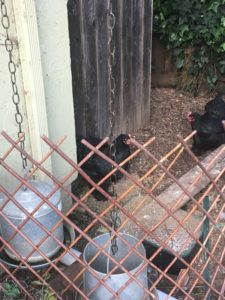
When I was sick, she stepped into the garden and came back with a wonderful witchy and delicious soup that she declared was made entirely from the food forest: arugula, onions, celery, parsely, potatoes, thyme, peas. I told her that having a food forest and a chef roommate was surely one of the best ways to ride out a pandemic.

Aside from food and nurturing though, gardens heal the soul. Five years ago I barely understood the concept, but now, when a curious listing for a garden educator in memory care facilities came across my path, it made perfect sense to me. This year I started working in residential facilities bringing the same elemental essence of joy and hope and community to two communities in Oakland and Lafayette.

The children (now three with our new roommates) are home for at least two weeks from school, probably more. But they are happy like the birds that flood the food forest, easily moving from the home to the garden — not the slightest bit stir crazy. Graham is already eyeing the flowers budding on the berry bushes in anticipation. He diligently collects eggs each day. As he was when just a toddler watching David’s Polish chickens, he is still the one that pays attention to and cuddles them the most. He hand-picks bugs for them (mama makes sure he washes his hands really well upon coming inside), hugs them, and pets all 10 of them.
Perry catalogues all the plants in his encyclopedic mind and is quite pleased that his cat garden visitations have increased by three new cats (and that he was gifted another catnip to handle the additional load by a cat-loving neighbor). He is already planning a shortbread stand for the garden tour this year, seeking to branch out from his lemonade of previous years. “Shortbread can sell for more,” he told me. “They keep for longer. And I can use more plants from the garden, like lavender shortbread, or cheese and rosemary, or thyme, or rose, or lemon, or maybe lemon verbena. Maybe some of the berries.” Last summer he went round and collected all the edible flowers (roses, calendula, nasturtium, batchelor buttons, violas) and made sparkling sugared flowers from them. It was only a matter of time before he moved on from lemonade. Perry and the garden inspire each other onward. (While I have moved on from envy to accepting his green thumb, and simply ask him to plant things that I really want to grow. Last year it was saffron crocuses.)

Eight-year-old Seffy, the newest chaos creature to the crew, loves to flip over logs and stones and is an ace as discovering all manners of worms, bugs, and interesting finds. I had to remain straight-faced as she brought over “this really large and amazing blue centipede!!” Five years ago, none of those would have been easily found in the soil.

To have a garden is to hope. And in these times, as in all the times past, your gift of time, energy, love, and life provides shelter and hope and energy to us (and an unknown number of other critters). I hope you know that this little 20’x20′ plot has grown into something much, much larger. There is a little bit of you in those memory care gardens, a little bit of you in every bit of food prepared or eaten from this garden. In the mischief, ideas, projects and caretaking by the children. A little bit of you that sparks through the hopes and dreams and joys and quiet tears and still moments of everyone and everything that takes from and gives to Greyhawk Grove.

Design Workshop Guides Participants In Sustainable Garden Transformation

By Kassie Munro and Nicole Newell, Program Managers

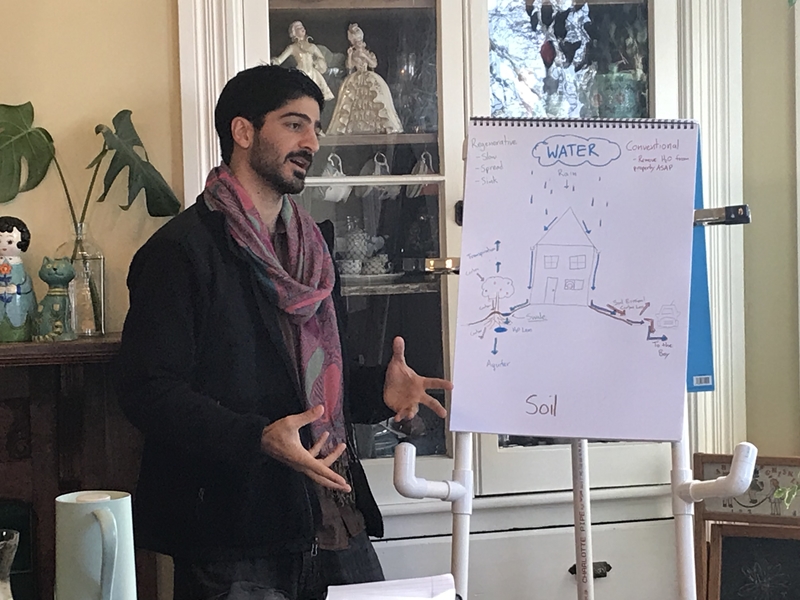
Permaculture designer Ojan Mobedshahi leads the Sustainable Garden Design Workshop in Vallejo

We are continually striving to find the best way to provide as many people as possible with the tools they need to transform their outdoor space into a more regenerative landscape, but we don’t have the capacity to install gardens for every interested homeowner. We created the Sustainable Garden Design Workshop with the hope that this resource can help get more people started with one of the most challenging parts of a landscape project — the design. The workshop provided an opportunity for attendees to be guided by a professional designer through the whole systems thinking design process with a focus on wise water management, soil health and permaculture elements.

Mary and Ben were selected to be our first hosts. They opened their 120-year-old home in Vallejo for this workshop with the desire to have a front yard garden to showcase sustainability, share the bounty with their neighbors and create a place for their daughter to play. The class instantly received a ton of interest; it was full with a waiting list in a matter of days.

Permaculture designer Ojan Mobedshahi led the day’s workshop with the grace, insight and playfulness that we have come to expect from him. Ojan has partnered with us on designing the Resilient Neighborhood homes in Vallejo, and when this opportunity arose we jumped at the chance to work with him to develop a new offering for the community.

Ojan started the day’s discussion with an acknowledgement of place and asked attendees to honor the indigenous communities whose land we are residing on in Vallejo. He also spoke of the indigenous people whose land he lives on in Oakland, displaying respect and humility that set a mindful tone for the day. Lessons on fundamental permaculture and landscape design elements followed, which felt much more like a group discussion than a tutorial — Ojan has a way of making everyone feel at ease and open with each other. We discussed a range of topics from water cycles and management to the different use sectors around a home.

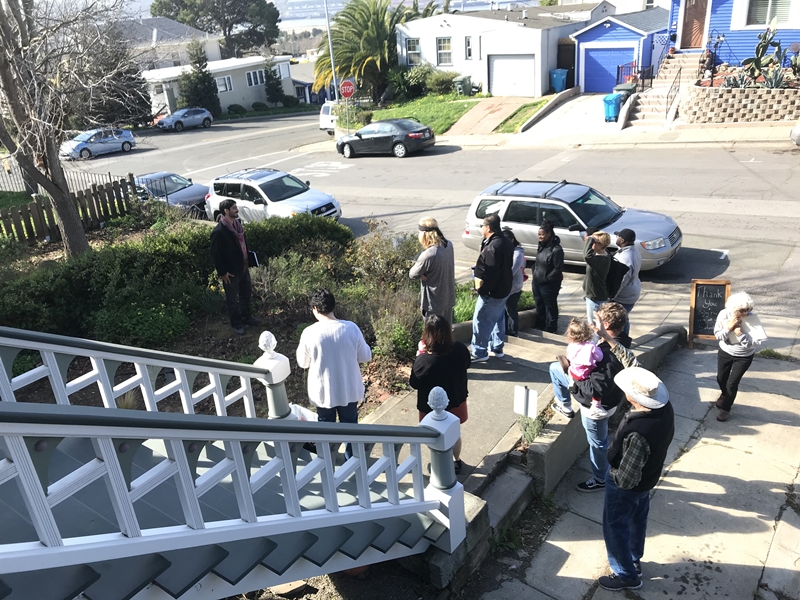
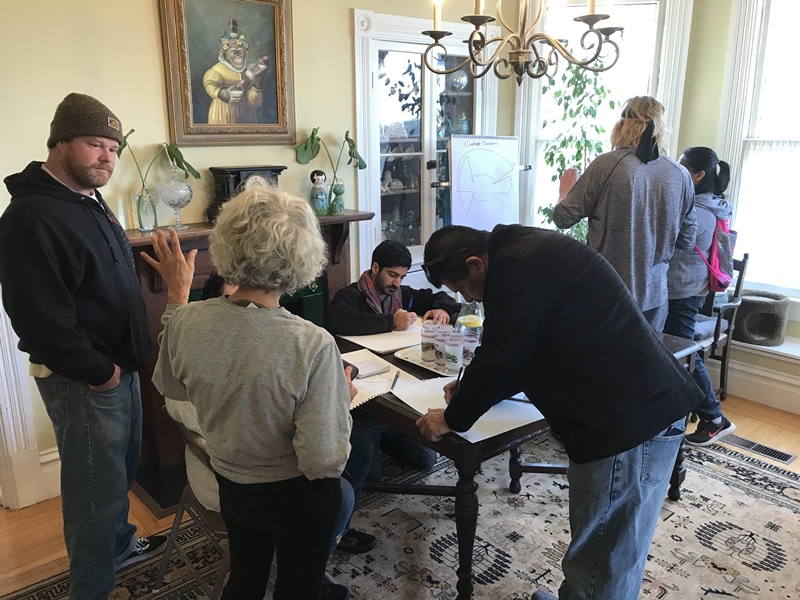
Participants in the workshop assessed the yards and worked on designs for their own properties

The learning continued outside where the group walked Ben and Mary’s front and back yards with Ojan’s guidance, completing a site assessment and beginning to identify real-world design challenges and opportunities for this space. Ben and Mary were incredibly candid with everyone about their challenges with the space, and there was a wonderful amount of wisdom offered by attendees who shared experiences in their own lives to add to the learning process. While this portion of the workshop focused specifically on one unique home and all its quirks, the teaching was deeply valuable and transferable to any space. The reality that most of us face with our yards is a complex web of existing features and nuanced obstacles (or a blank canvas, which can often be the most challenging of all!). Ojan taught us not what to think, but HOW to think and approach the design process the way he does in his role as a designer. After the site assessment, it was time to get all of the wonderful ideas down on paper. The remainder of the workshop focused on creating a design for Ben and Mary’s home and a working session for attendees to begin applying some of what they had learned to their own space. This time was a chance to brainstorm together, ask questions and collaborate.

This workshop, as with all of our events, served not only as a place to learn about sustainable landscaping practices but also as a time for people to connect with each other, sparking wonderful conversations. Mary’s dad, Larry, told us about spekbom, a succulent shrub that is being used to sequester carbon in South Africa. Ojan also talked about the other hat he wears: Not only is he a Regenerative Permaculture designer, but he also is the finance director for East Bay Permanent Real Estate Cooperative. This organization works with the community to create a permanent affordable housing solution in the East Bay.

At the end of the day, Ojan was able to gift our host homeowners with a design for their property that they can use as a jumping-off point to begin their yard transformation, and we are so excited to see what they create! Our next design workshop will follow the redesign of an expanding demonstration food forest in Benicia. We hope to be able to offer more sustainable garden design workshops in the future. Keep an eye on our calendar for the latest workshops, and subscribe to our monthly newsletter for updates. Let us know if you want to bring a design workshop to your city or have ideas on other workshops that would help support your yard transformation by sending an email to mailto:nicole@sustainablesolano.org

Save The Butterflies and The Bees — Our Favorite Pollinators Are in Jeopardy

Sustainable Solano works to bring organic solutions that take a whole-systems approach to how we interact with the environment. That means encouraging the use of techniques that work with and support natural systems, which includes supporting those beneficial insects people love to attract to their gardens. These insects serve many roles, including pollinating plants and eating harmful insects. We wanted to share this blog post from Cristina Goulart of GHD, who works with us on the Urban Water Conservation Committee, to highlight the importance of protecting our beneficial insects through the choices we make — including making the conscious decision to handle weeds or pests in our gardens through methods other than chemicals that have systemic effects on pollinators. The UWCC is monthly meeting of Solano County Water Agency and city staff with the purpose of coordinating regional conservation programs throughout the county.

This article below was originally published by the Russian River Watershed Alliance. Some of the resources listed are for Sonoma County, but can serve as a helpful guide here in Solano.

The Monarch Butterfly

One morning last summer, as I watched a pair of butterflies flying from bloom to bloom on a butterfly bush, I realized I hadn’t seen a Monarch Butterfly in years.  I did some research and learned some distressing news.

In January of 2019, the Xerces Society’s yearly census of the western monarch revealed that the numbers of Western Monarchs were down a dramatic 86% from just one year before. Scientists studying the Western Monarch predict that if we don’t take drastic measures now, the species has a 72% chance of going extinct in less than 20 years.

Monarchs are migratory wonders of nature, migrating up to 3,000 miles to their wintering grounds. Their miraculous migration occurs over generations, one generation communicating to the next the route it must take.  Like all butterflies, they are pollinators, drinking nectar from one flower, and depositing its pollen on the next.

Honeybees

The honeybee pollinates about one-third of our food crops. Honeybees have also been in decline for years with the current population of honeybees estimated at less than half what it was in the 1940s. In 2006, scientists discovered what they call Colony Collapse Disorder. Colony Collapse Disorder occurs when a colony’s worker bee population suddenly disappears. Hives cannot survive without their worker bees, so eventually, the entire hive dies.

The Causes

For Monarch butterflies, loss of habitat is a key cause for its population decline. For both the Monarchs and honeybees, the use of pesticides is another key factor.

Pesticides in the neonicotinoid (a systemic agricultural insecticide resembling nicotine) category are thought to be a culprit in Colony Collapse Disorder. Studies have shown that in non-lethal doses, neonicotinoids cause navigation disruption and memory loss in bees, even in low concentrations. These pesticides are found in our food sources and in our home gardens. A demoralizing study conducted in 2014 found that 50% of nursery plants tested in the U.S. and Canada contained residue of neonicotinoids in concentrations as high as 748 parts per billion (ppb). A dose of 193 ppb can kill a honeybee. A dose of 30 ppb can cause impairments to a bee’s ability to forage and navigate. Plants and seeds purchased to attract butterflies and bees can harm these pollinators if they have been treated with neonicotinoids.

Although some nursery chains have since reduced the numbers of plants on their shelves treated with neonicotinoids, plants containing neonicotinoid residue are still sold in retail nurseries. Typically, they do not come with a warning label.

A Call to Action – Help save the Monarchs and the bees. 

Go Organic!

Don’t use pesticides in your gardens. Pesticides include herbicides to kill weeds, insecticides to kill insects and fungicides as well. Most pesticides are non-specific and kill a broad range of species in addition to the pest. Insecticides kill beneficial insects in addition to those that eat our crops. Beneficial insects include those that pollinate our crops, such as bees and butterflies, and predatory insects that eat the plant eating bugs, such as ladybugs and lacewings. Pesticides kill bees and butterflies as well as “bad” bugs.

Purchase neonicotinoid-free plants and seeds. In Sonoma County we have several nurseries that sell organic and neonicotinoid-free landscape plants and seeds. Please ask your nurseries if they can assure you that the plants and seeds they sell you are not treated with neonicotinoids. If they can’t, head over to a locally-owned, sustainability-minded nursery. Also, the RRWA program ‘Our Water, Our World’ (OWOW) helps residents manage their home and garden pests in a way that helps protect our watershed. More information on OWOW can be found at www.rrwatershed.org/project/our-water-our-world.

Build it and They Will Come

Create a Monarch Butterfly Waystation!

Monarch waystations must include the native milkweed plant because this is the only plant where Monarchs will lay their eggs and the only plant that Monarch caterpillars eat. In our region, the best time to plant milkweed seeds is from November to early spring.  A waystation must also include nectar plants on which the adult Monarchs can feed. Examples are the butterfly bush, salvias, and Ceonothus.

Monarch Waystations also attract bees! Bees feed on nectar-bearing plants, just as butterflies do.

For more information about creating a Monarch Waystation, please go to:  www.monarchwatch.org/waystations

Proper Disposal of Pesticides

When you do go organic, remember to dispose of your unused pesticides through Sonoma County hazardous waste drop off locations. Please go to the following link for more information or call Eco-Desk 707-565-DESK (3375).

www.zerowastesonoma.gov