Outgrowing Chicken Tenders
By Cecilia Abiva, St. Patrick-St. Vincent Catholic High School Graduate
Cecilia Abiva blossomed week after week in our six-week culinary class at St. Patrick-St. Vincent, gaining confidence, having fun and, as a senior in the group, stepping up as a sweet-natured leader bringing the boombox with music every week and oftentimes staying late to help with the dishes with her crew of friends. In the SuSol Youth Cooking Program, we seek to create spaces for young adults to explore their creativity in the kitchen while developing culinary skills they can use to feed themselves and their community. The program is rooted in the fresh food available from our local food system, and promotes health and community culture. Not every student will choose to become a chef, but we hope, like Cici, they will walk away empowered for their future path with a deep respect for where food comes from and an affinity for vegetables.
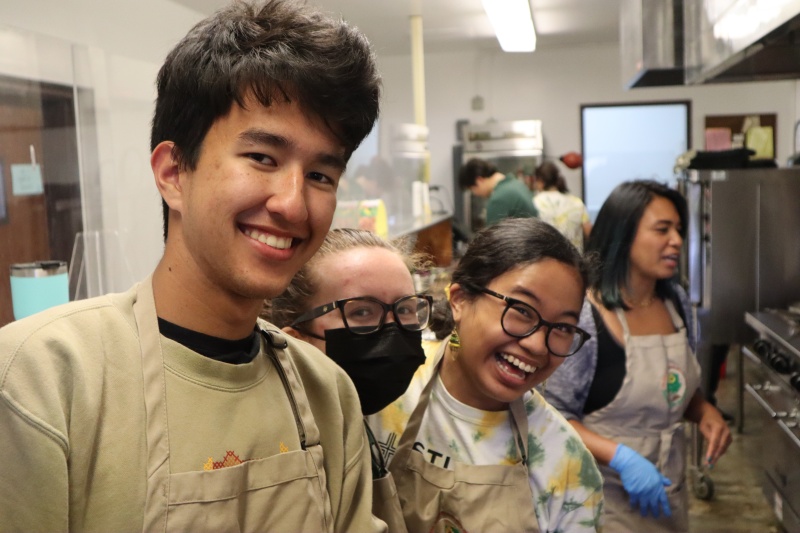
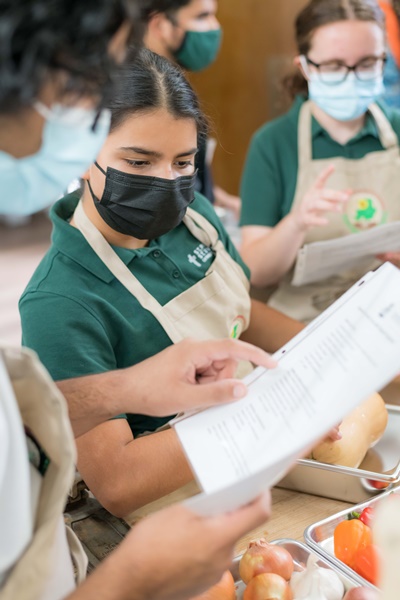
Cecilia Abiva, third from left, during cooking class
Like most kids, my diet consisted of only the crème de la crème: dinosaur chicken nuggets slathered in ketchup, peanut butter and jelly sandwiches, and pineapples cut by my mom (and my mom only). While such comestibles provided adequate nourishment for a child whose days were filled with endless hours spent outside playing hopscotch in the warm sunshine or building castles in the living room with couch cushions and pillows, the contents of my stomach became a concern when my juvenile palate neglected to mature with the rest of my body. I was an 18-year-old who scoured every menu for anything that consisted of or bore a resemblance to chicken tenders.
Unfazed by the criticism of my family, who always managed to point out the contents of my plate during family dinners, I did not make any drastic changes to my diet until recently. Following the flurry of events that transpired during the first semester of my senior year, I found myself with an abundance of free time. Finally unfettered by the stress of finals, college applications, and being a candidate for homecoming royalty, I decided to add a new skill to my repertoire: cooking! I joined a culinary class offered by my school with a few friends. And as you can imagine, it was no easy feat. Although I had found success in the classroom as I am the valedictorian of my graduating class, being a student in the kitchen was a humbling experience. The extent of my culinary expertise at the beginning of my cooking adventure was limited to the use of a microwave. However, I faced an even bigger dilemma: Would I actually be eating the food that I was cooking?
 On the first day of class, I cooked tofu stir fry with rice. The preparation of the meal went rather smoothly. Other than a few near mishaps with a knife and the flame on the kitchen stove, everyone walked out with all ten fingers and eyebrows intact. I sat at the table anxiously awaiting our meal. There was not a chicken tender or bottle of ketchup in sight. But the moment that I picked up my fork and reluctantly shoveled the concoction of onions, carrots, spinach, and celery into my mouth, my mouth curled up when I began to chew. It was pretty good! With just a little taste, my love for cooking came to fruition and it provided a new outlet to relieve my stress. And with a little bit of practice and patience, however, cooking became less daunting and more enjoyable. Being able to cook my own food and making an effort to eat sustainably also had a positive impact on my health. I also shared my affinity for cooking with my family as I became in charge of making Saturday night dinners. The sly looks that I once received at the dinner table were replaced with hearty laughter and the sound of our mouths voraciously eating our food.
Discovering this appreciation for cooking not only expanded my taste for food, but it also fostered an appetite for adventure and service for others … two traits that I hope to explore more at UC Berkeley. If admitted, I plan on continuing to nurture my culinary skills by joining the Cal Cooking Club while also exploring new ventures like taking part in the National Alliance on Mental Illness and the Red Cross. I look forward to trying new things, ketchup or no ketchup.
Reflecting on the Youth Cooking Program
Lauren Gucik, Program Manager
As SuSol’s first year offering a Youth Cooking Program comes to a close, we can surely say that many meals were shared, lessons were learned, and the farmers and specialty crops of Solano Country were celebrated! We facilitated 5 unique courses with St. Patrick-St. Vincent (2 sessions), the Girl Scouts, 4-H of Solano, and the Benicia Teen Center. We spent hours in the kitchen developing culinary skills and exploring easy ways to enjoy healthy fresh food. During our farm field trips, students met with farmers and land stewards and saw firsthand where our food comes from and what it takes to feed the community. And at our final session, students planned and cooked for their own families, serving multiple dishes in a family-style gathering.
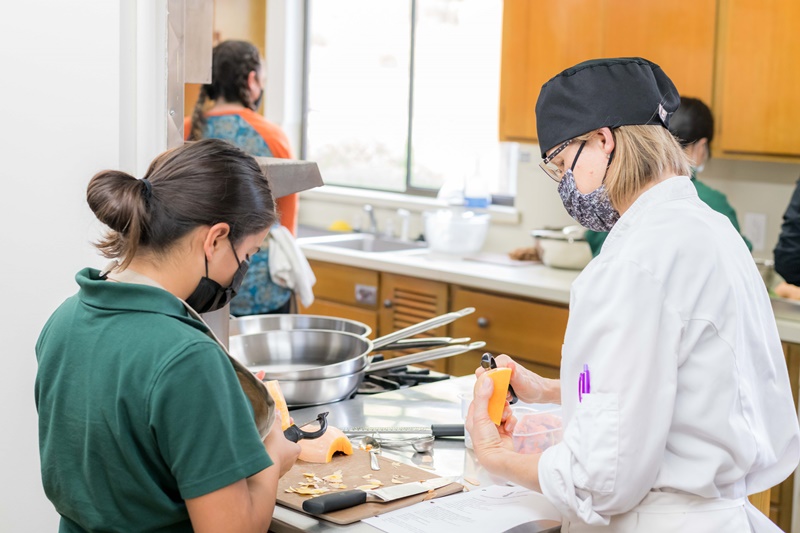
In the kitchen, students met regularly with local chefs to develop comfort preparing fresh easy recipes. We began with kitchen safety and knife training and introduced students to simple preparations such as sauteing, steaming, roasting, and making a simple vinaigrette. Each technique was paired with recipes that highlighted local foods grown in Solano. As the seasons changed, so did the recipes. Many students said their favorite part was working with the knives and learning the different ways you can cut and chop and how what lends best to different preparations. It was very inspiring to see how students blossomed throughout the course, gaining more confidence in themselves and their abilities in the kitchen. Their openness to trying new things was an inspiration.
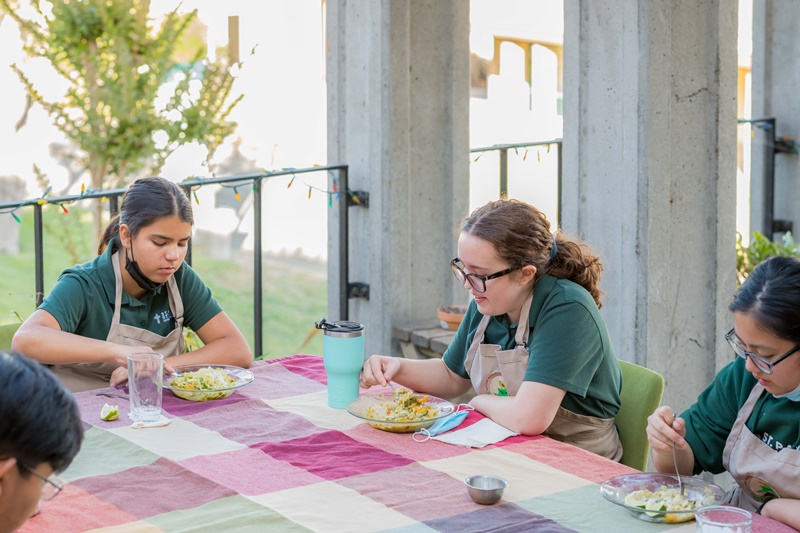
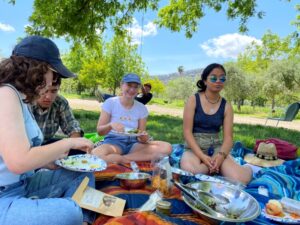
At the close of each class, we dressed the tables with fabric and flowers and shared the meal they had just prepared, experiencing how everyone had the same ingredients but each group’s final dish tasted a little bit different as inevitably one group cooked the onions a little longer or someone was feeling extra spicy and added more pepper flakes. Even the shyest of students opened up around the table when our discussion turned to the food system at large. We spoke of the economic, ecological and community health benefits of supporting local farmers and shared maps of farm stands and CSAs available in their neighborhood. These conversations set the stage for our farm visits, where students picked strawberries in the field, hung out with chickens and lambs, and ate a farm fresh lunch outside with produce harvested right before their eyes. They had the opportunity to see firsthand the challenges and rewards of being a small scale responsible farmer in Solano County. One student even said “This is the best field trip of my life!” right before we encountered three large snakes on our path to the bus! The youth are as brave as they are inspiring!
In these classes, we focused on creating a future of health and wealth in our communities and for our planet. In addition to cultivating comfort in the kitchen for high schoolers, we aim to strengthen relationships between farmers and their communities and foster an authentic, lasting appreciation for fresh local food. By the final cooking session, students were ready to step up to plan the menu and cook for their friends and family members. They stood tall in their responsibility; providing for their community. It is our hope to expand this program to continue to instill this understanding of local, seasonal food in Solano youth, with the possibility of supporting a healthy meal service to bolster our local food economy and our collective immune system.
We are currently pursuing funding to continue working with youth in the kitchen and on the farm. Please contact lauren@sustainablesolano.org if you’d like to connect about future partnership opportunities.
 From gathering ingredients from local farmers, to taking inventory of all the cooking supplies necessary to make the class run smoothly, I was eager to share my passion for cooking and supporting local food with hungry young minds. Seven classes were booked for the first session. Each meeting would focus on a culinary skill such as roasting, sauteing, stock making, etc. and an educational intent like seasonality, healthy eating habits, and farming practices. Our first class introduced the regional map of Solano County, showing where things grow and how fortunate we are to be surrounded by such abundance. The students then got to cooking, learning new knife skills and becoming comfortable in the kitchen. As we sat down to enjoy our first meal together, I asked, “What’s your favorite meal?” Their answers blew me away. Not a continent was missed; this group named dishes from Syria, China, Peru, just to name a few. Things I had never even heard of were being described; their connection to food was evident, so my goal of connecting the importance of eating locally sourced, healthy food seemed to work into conversations organically.