Feral Garden

Feral Garden

Food Forest Keepers: Grace and Konner

Self-sufficiency, community, and permaculture go hand in hand. With climate change, increasing grocery prices, and the shrinking green spaces we have open to us, a focus on community building and protection can be built by looking at our environment and planting with intention beyond looks. When we were selected for this program, we were beyond elated! While I had just finished my schooling for permaculture and horticulture, getting experienced designers and systems implemented in my space that I could only dream of was soul-filling. This installation was inspired by the cozy wild look of a cottage garden, incorporating water harvesting, natives, and food. While Feral Garden is still small, she has already begun to support loads of wildlife, insects, fungi, and my family. Soon I hope to have enough to provide for my neighborhood in a tiny free farm stand.

I hope that my space will not only provide food and beauty to my area but also serve as an inspiration that our yards could be so much more!

Site Details

Installation Date:

March 2024

Size:

2,425 square feet (1500 sq ft backyard, 925 sq ft front yard)

Sun Exposure:

6-8 hours

Soil:

Clay

Number of Swales:

2

Secondary Water:

Lawn Conversion

Rainwater

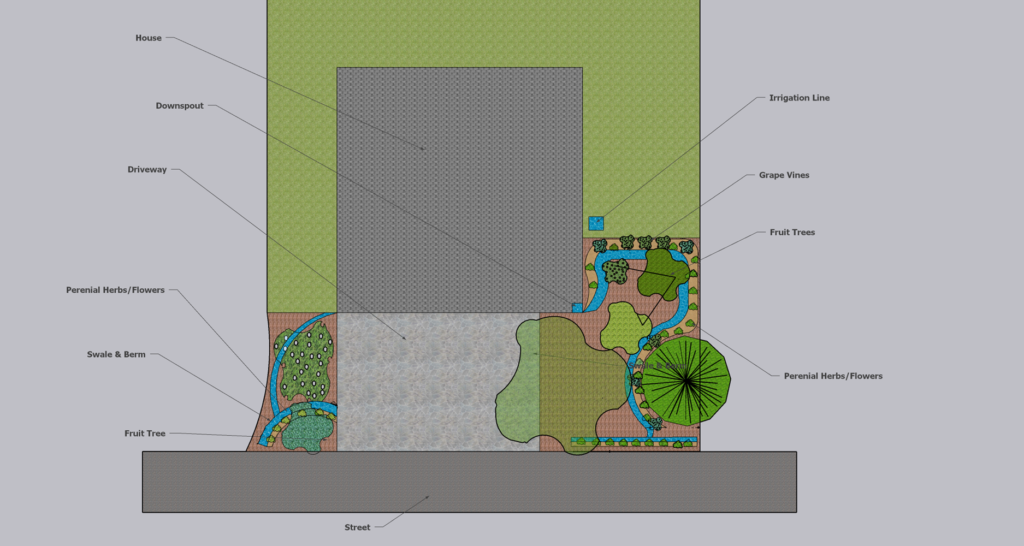
Roof water diverted to swales

Total annual water impact:

81,877 gallons

Design:
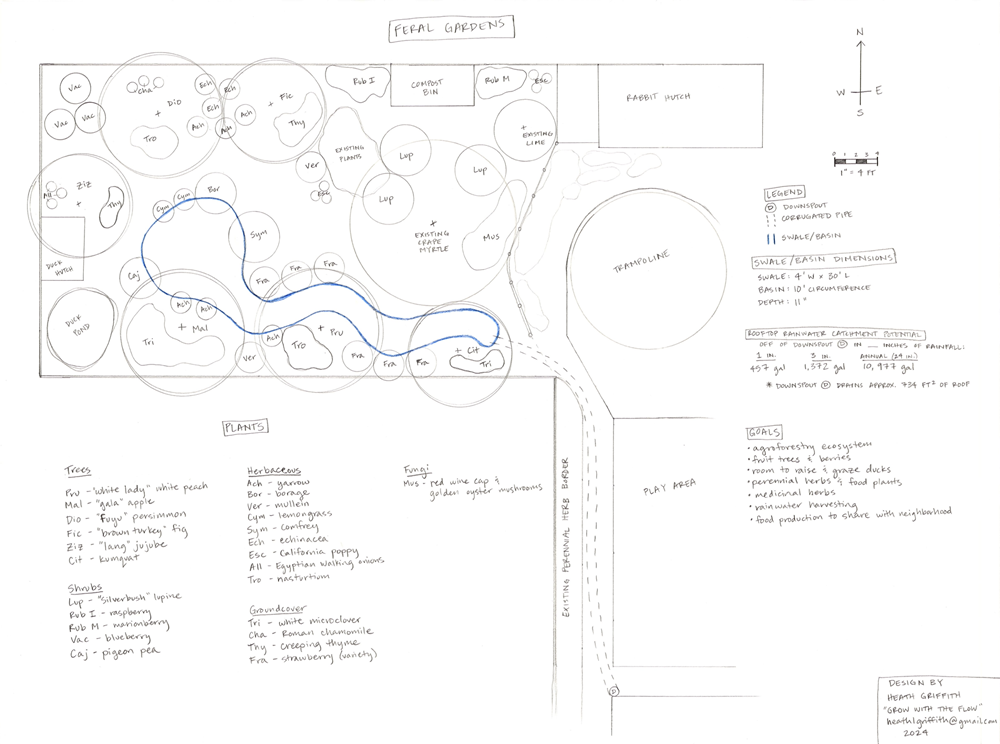
Designer: Heath Griffith


Plant List:


Babcock White Peach, Brown Turkey Fig, Fuyu Persimmon, Gala Apple, Kumquat, Jujube Li

Blueberry, Marionberry, Raspberry/Shortcake, Rose, Rosemary, Sage, Salvia greggi

Borage, California Buckwheat, Comfrey, Echinacea, Mullein, Nasturtium, Yarrow

Calendula, Creeping Thyme, Nasturtium, Strawberry

Egyptian Walking Onion

Coastal Live Oak, Emerald Carpet Manzanita, Dark Star Ceanothus, California Buckwheat, Golden Current

Installation

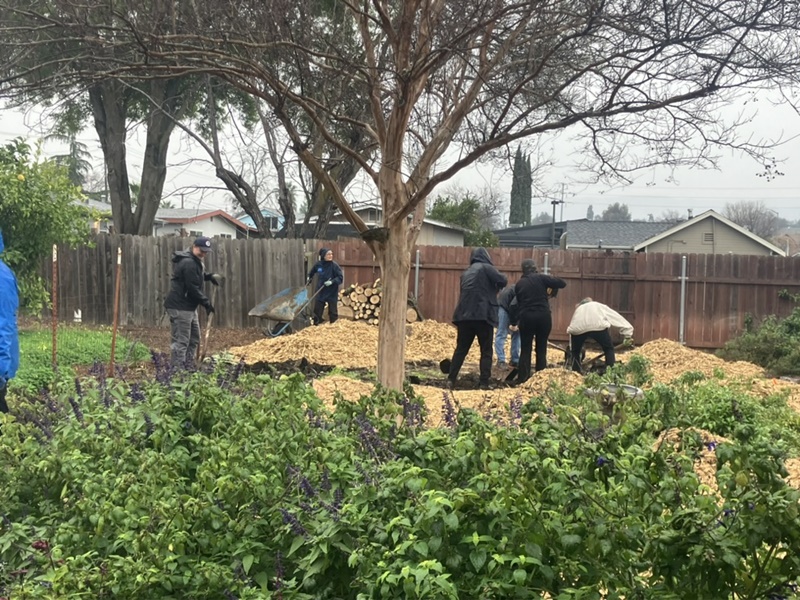
This was an incredible experience! I was amazed by the number of volunteers and friends participating in Feral Garden. On our first day we had a crazy rain storm but that didn’t stop the fun, community, and joy. I was blown away by the amount of work done in a single day and the amount of attention and intention put into every step of the process. I love stepping out into my yard and being greeted by the memory of passion and love put into this space. Thank you everyone for planting these seeds of community.

Vision for the Future

At Feral Garden, we will grow with the flow of our ever-changing world and hope to inspire change. I hope to see neighborhoods filled with trees, flowers, and fruit; where there’s a stand in front of every house with all that we have cultivated being shared and given to anyone passing by. A town where we care for our community and love the people we inhabit this earth with. Because at the end of the day were all human, and we all live here, so let’s take care of each other and our planet.
 

Orchid Lily

Orchid Lily

Food Forest Keepers: Mike & Deborah

I grew up in the Allegheny Mountains in Somerset County, Pennsylvania. It was a plateau, which had great farmland and wildlife. It was “The Roof Garden of the World.” In fact, the first nations agreed they wouldn’t fight over it or stake any claims but rather share it. There was enough game in the lush forests, plenty of fish in the clear mountain streams, and wild berries and fruit and nuts for all.

By the time I grew up this was all pretty much gone. Lake Erie was dead. The rocks along the creeks and streams were stained orange from industrial chemicals. As a small child I used to love when I got a ride past a mine. The ditches near them carried away fluorescent green and orange effluent. With hard-fought legislative efforts and the will of the people, the game and fish have returned. It’s wonderful what Mother Nature can do if we nurture nature rather than assault it.

As an adult I am an avid recycler even though all the bugs have not been worked out of that process. I always vote for “green” measures on the ballot. I have a keen interest in housing, which uses green systems. I dream that one day inner city as well as country living is “off grid” for all.

When my neighbor Winston turned his yard into a food forest with the guidance of Sustainable Solano, I had to know more. To my delight we have been selected to do the same!

Site Details

Installation Date:

November 2021

Size:

875 square feet

Sun Exposure:

8 hours

Soil:

Clay

Number of Swales:

1

Secondary Water:

Lawn Conversion

Rainwater

Roof water diverted to swales

Total annual water impact:

59,143 gallons

Design:

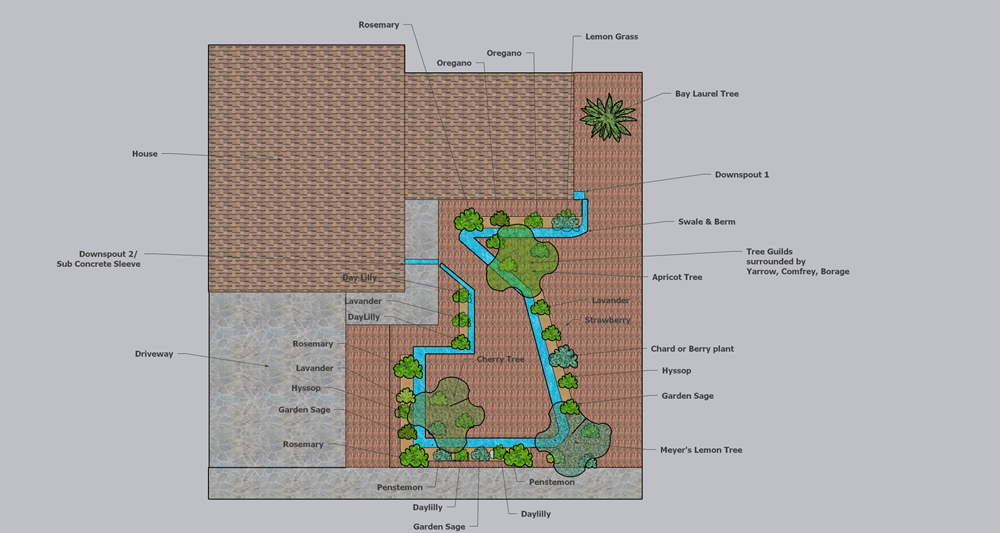
Designer: Scott Dodson


Plant List:


Apricot, Bay Laurel, Cherry, Lemon (Meyer)

Lavender, Oregano, Rosemary, Sage, Thornless Blackberry

Agastache, Borage, Comfrey, Lemongrass, Penstemon, Yarrow

Catmint, Strawberries

Daylily, Narcissus

Installation:

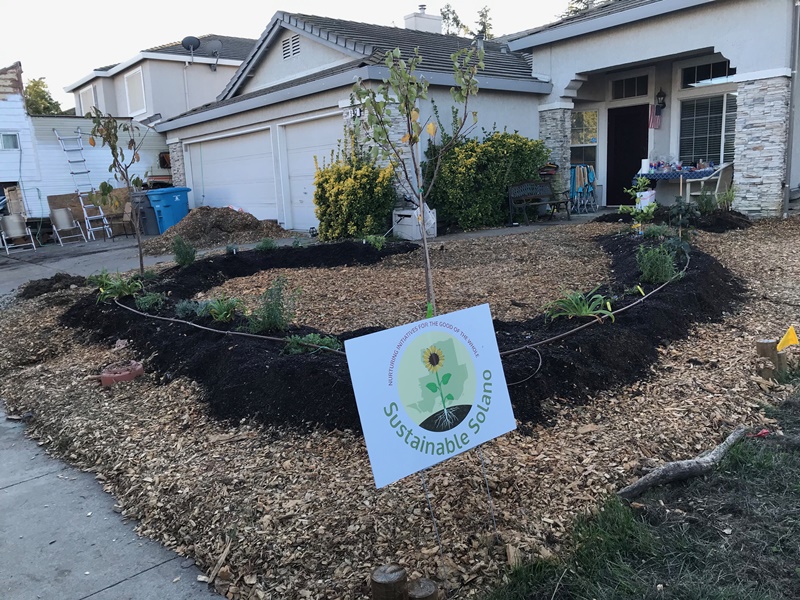
Deborah and I couldn’t be more impressed by Sustainable Solano and Scott and the group of wonderful volunteers! Many hands do make light work. The installation went so smoothly and everyone was so enthusiastic that often it seemed more like a party than work. We are delighted with our food farm and are sure it will look less and less like a farm and more like a garden as it grows in. The way you worked with us on the design opened our eyes to things we hadn’t even hoped we could have. We are shopping for an appropriate sculpture or whatnot for the center of the garden and we have found mailorder outdoor orchids that are groundcover, and purple! Thank you, thank you. We have so much to be thankful for!

Vision for the Future:

As a youngster we had a great big “truck patch.” It was a food garden. And it was customary to share your surplus with neighbors and friends. In our community, August and September were “canning” months where the food was canned and stored for winter, often with friendly help. We had berries too. And it was also common for the kids in the area to go into the woods for berries, as long as it was OK with the landowner. They’d bring home pails full. Deborah had a similar childhood.

We call our food forest garden Orchid Lily, our favorite flowers. We’ve already put our garden bench and lawn chairs in the garden and are on the lookout for a sculpture for the middle of it. We’re discussing what plants we can add after checking with Nicole and Scott, of course. We’re planning a pergola in front of the porch and are so excited to see our garden plants settling in and growing! Next is a couple of vegetable gardens in the backyard.

Orchid Lily Slideshow

Orchid Lily

Our Shepherd’s Heart

Our Shepherd’s Heart

Food Forest Keeper: Winston & Joe

Bio written by their daughter, Chantoll

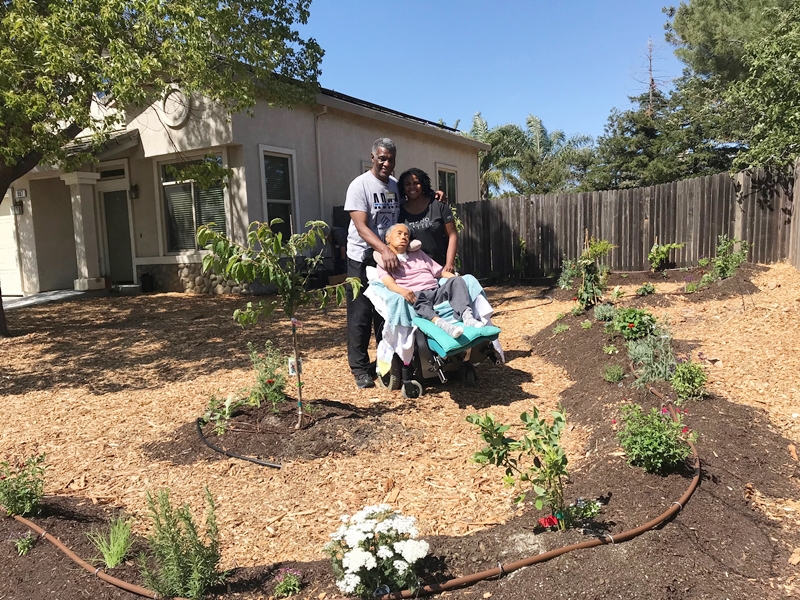
Winston was born and raised on a farm in Jamaica. Being raised on a farm, my father has a deep understanding of the value that the land can bring forth, not only to bless his family but all the surrounding families in Jamaica. Often his mother would take from the land and cook amazing dishes to share with those who were in need. This love and dedication to the land was passed down to my father and all the recipes were passed down to my sisters and I. My father currently lives in Vacaville on a double lot, he can fit three good size pools in his yard if he chose to. In fact all the neighboring houses have done so. My father has refused and has always wanted a small farm in his backyard and to share with the community what the land yields.

Now, you’re probably wondering why my father has not done this himself? My mother had an aneurysm in the back of her brain stem about 20 years ago. This left her completely paralyzed and she is now a quadriplegic.  She cannot talk or take care of even basic bodily functions. My father’s love for her is so deep that he cares for her every day and has even found a way to communicate with her. My parents have been married for 44 years and they still act like newlyweds. My mother needs 24-hour care, my father has help from my sister and I, but it’s not enough. His dream is to have a community garden. We are so very excited and feel truly blessed to have Sustainable Solano and the community help make this dream into a reality.

Site Details

Installation Date:

May 2021

Size:

1,150 square feet

Sun Exposure:

6 hours

Soil:

Clay

Number of Swales:

2

Secondary Water:

Rainwater

Roof water diverted to swales

Total annual water impact:

34,408 gallons

Design:

Designer: Scott Dodson


Plant List:


Asian Pear (Shinseiki), Cherry, Orange (Washington Navel), Pomegranate (Wonderful)

Blackberry (Superlicious), Blueberry, Lantana (Bandana Rose), Lavender Munstead, Raspberry (Shortcake), Rose, Rosemary, Sage, Salvia greggi

Alyssum, Aloe, Borage, Chives, Comfrey, Mint, Thyme, Tree Collards, Yarrow

Calendula, Creeping Thyme, Nasturtium, Oregano, Strawberry

Grape (Flame, Thompson)

Installation:

My family and I want to express our heartfelt gratitude to all those that came out and helped install Our Shepherd’s Heart food forest in my parents’ front yard! We so enjoyed having the community come together, cultivating not only plants but new relationships. We all learned a lot about creating a food forest from Sustainable Solano and shared a delicious lunch provided courtesy of Rasta Mama’s Kitchen.

Vision for the Future:

Our Shepherd’s Heart garden is an extension of Joe’s love for her community. Before she fell ill, Joe used to feed the neighborhood kids. All the kids in the neighborhood knew if they were having problems at home that Joe’s house was a safe place to go. She would love them, feed them, and attend to their saddend hearts. This garden is an extension of her love for her community and for all the kids who are now grown up. Even though she can’t physically create beautiful meals with her hands anymore she hopes that this garden will still feed her extended family, her community.

Our Shepherd’s Heart Slideshow

Our Shepherd's Heart

Blooming Beneficial Biome

Blooming Beneficial Biome

Food Forest Keeper: Kimber

I had my first garden at 10 years old. A mile from our house was an abandoned horse pasture. I made many trips with our wheelbarrow to commandeer the nutrient-rich amendment. Yes, it was a mile each way but I was seen every fall and spring making multiple trips. It was a labor of love. Over my lifetime, I have had numerous small gardens, mostly ornamental while I focused on raising my children and building a career. I needed time interacting with nature and I always longed for more. Sustainable Solano accelerated the fruition of this lifelong dream.

After my children moved out, I started volunteering on farms for fun, sense of community, and connection. After a day at Meridian Jacob sheep farm, I would come home energized, looking for what else I could do. I also started attending Fiber Shed events and tours at Be Love Farm. I attended several Sustainable Solano workshops, watched YouTube videos and online courses on permaculture. I volunteered to head my Rotary Clubs gleaning program to purchase produce with grant money from local farmers and rounding up volunteers to pick produce from backyards to donate to nonprofit agencies in Solano County.

I believe in urban food forests because they provide locally sourced, more nutrient-dense food, and abundance to share. I believe a lack of diversity in the microbiome is causing so many gut issues in Americans today. Driven by this conviction, I began my front yard remodel from decorative landscape to food by tearing out rosemary, shrubs, grasses, and had truckloads of wood chips delivered. I dug a swale and a berm. It was about this time I was selected by Sustainable Solano for their demonstration food forest makeover.

Site Details

Installation Date:

October 2020

Size:

1,570 square feet

Sun Exposure:

6-8 hours

Soil:

Clay

Number of Swales:

3

Secondary Water:

Rainwater

Roof water diverted to swales

Total annual water impact:

36,796 gallons

Design: 

Designer: Derek Downey

Plant List:


Dwarf Avocado, Fuyu Persimmon, 3 in 1 Dwarf Pluot

Blueberry (Jubilee, Northland, Patriot), Culinary Sage, Lavender Lemon Bottlebrush, Pink Jerusalem Sage, Pineapple Guava, Purple Sage, Salvia, Tutti Frutti Butterfly Bush, Winifred Gilman Cleveland Sage

Asparagas, Artichoke, California Fuschia, Comfrey, Daylily, Gaura, Lupine, Hummingbird Sage, Salvia, Yarrow

Catmint, Okinawa Spinach, Oregano, Thyme

Egyptian Walking Onion

Thornless Blackberry (Prime Ark Freedom) and Kiwi

Installation:

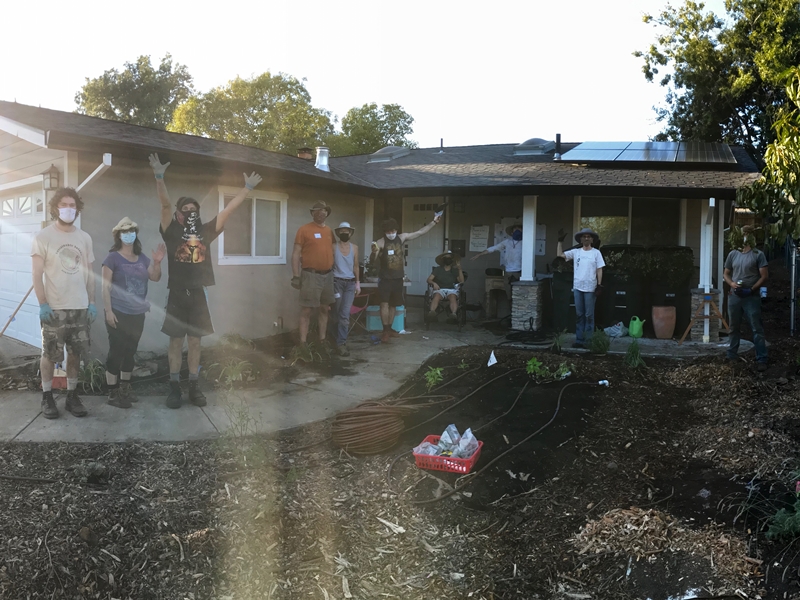
I worked with Derek Downey, the permaculture designer, and Sustainable Solano’s Nicole Newell to come up with a plan and to choose the produce I most wanted to grow. We had to follow safety measures during the installation because of COVID-19. We did so by maintaining a safe distance from one another and limiting how many people could be on the project at any one time. Still we got it installed in two days. Everyone was so helpful and willing to pitch in; giving their best. We were pretty spent by the end of the second day, so Nicole called in reinforcements in the final hours.

Vision for the Future:

I asked my kids what I should name my garden. I had two in mind. One name was generic and fun, the other was riskier.

This is what my son said: “I like Blooming Beneficial Biome. I think you got this far doing what your gut and God lead you to and it’s worked. You still put in your application even though you knew it would probably be rejected, but it still worked out. I think the Blooming Beneficial Biome will elicit conversations. … I think there’s more reward in the beneficial biome, it’s the type of risk you’ve been taking this whole time.”

He is right. I did this project not only to feed myself but to also share the knowledge and produce so others will want to do the same.

Blooming Beneficial Biome Slideshow

Blooming Beneficial Biome

Mangia! (Let’s Eat!)

Mangia! (Let’s Eat!)

Food Forest Keeper: Carla and Duane

Duane and I had this grand idea to re-landscape the backyard. Then we figured if we were going to install plants they might as well be plants that would feed us. As I did research on what I might want to bring into the yard, I learned of Sustainable Solano and their workshops on creating food forests. I attended as many workshops as I could to learn how to build a food forest that would be as productive as possible with as little work as possible to maintain. The idea of permaculture and working with nature to establish systems for the landscape to support itself was a revelation.

Our first hurdle would be to remove all the landscape rock around the perimeter of the backyard. Well, if we had to move all that rock, we might as well find a way to use all that rock. More online research brought me to the idea of gabion wall raised planter beds. Once we started down the ‘repurposing’ path, it was difficult to un-see the potential of ‘junk.’ Both our back and front yards make use of much repurposed ‘junk’ including headboards (vertical growing supports), cast iron tub (edible plants pond), trampoline frame (kiwi vine support), redwood stumps (seating and aesthetics), old fence boards (many building projects), pallets (compost bin), sink (worm bin), buckets (wicking pots), and IBC totes (rainwater catchment).

When I learned of the Solano Sustainable Backyards program, I could hardly wait for Sustainable Solano to begin installations in Vacaville so we could apply to become Food Forest Keepers. The backyard was well underway in its transformation, but we wanted to convert the front yard to make food more readily available for our neighbors. Also, our backyard is not conducive to roof/rainwater swales, but the front yard is. We were delighted when we were selected for this front yard project!

Site Details

Installation Date:

February 2019

Size:

500 square feet

Sun Exposure:

6-8 hours

Soil:

Clay

Number of Swales:

2

Secondary Water:

Lawn conversion

Rainwater

Roof water diverted to swales

Total annual water impact:

47,802 gallons

Design:

Designer: Kathleen Huffman


Plant List:


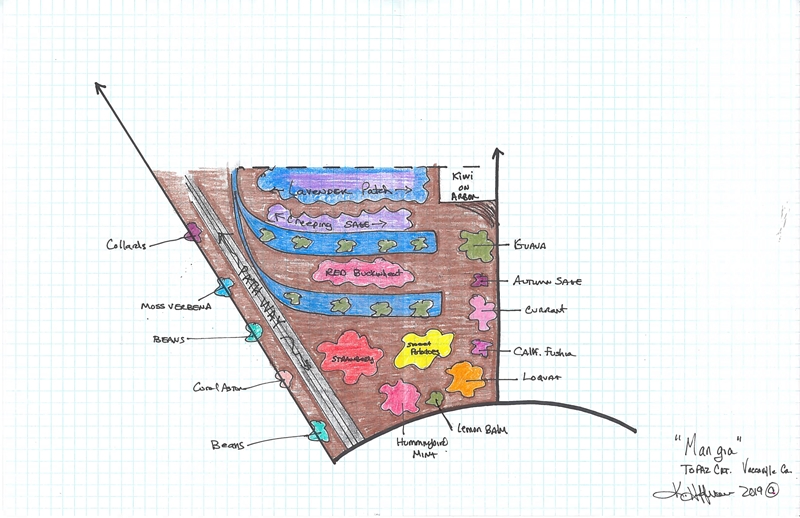
Kiwi, Loquat, Lemon guava, Artichoke, Blueberry, Aronia, Scarlet runner bean, Strawberries, Blackberry, Elderberry, Cherry berries, French sorrel, Red-veined sorrel, Chard, Red Malabar, spinach, Tree collards, Dandelion, Yacon, Amaranth

Tomatoes, Cucumbers, Beans, Peppers, Garlic, Red onion, Red zinger hibiscus, Nasturtium, Three sisters garden of corn, beans, and squash, Bottle Gourd

Lemon balm, Chamomile, Feverfew, Motherwort, Clary sage, Culinary sage, Purple sage, Oregano, Marjoram, Dittany of Crete, Lemon thyme, Garlic chives, Chives, Basil, Thai basil, Purple basil, Parsley, Celery, Winter savory, Rosemary, Fennel, Lemongrass

Agastache, Salvia – Bee’s Bliss, Salvia – Mesa Azure, Salvia – Greggy, Buckwheat, Golden feather chrysanthemum, Black sage, Lavender: Goodwin Creek (crafting, not cooking), Hidcote (fresh, dried, culinary), Elizabeth (fresh, dried, culinary), Grosso (fresh, dried, oil), Phenomenal (fresh, dried, culinary), French (landscaping), California fushcia, California aster, Calendula, Firecracker Plant, Blue pincushion plant, Purple pincushion plant, 4 o’clocks, Bee plant, Ajuga, Mugwort, Coleus barbatus, Mullein, Lambs ear, Globe amaranth, Statice, Creeping thyme, Shasta daisy, Iris

Installation:

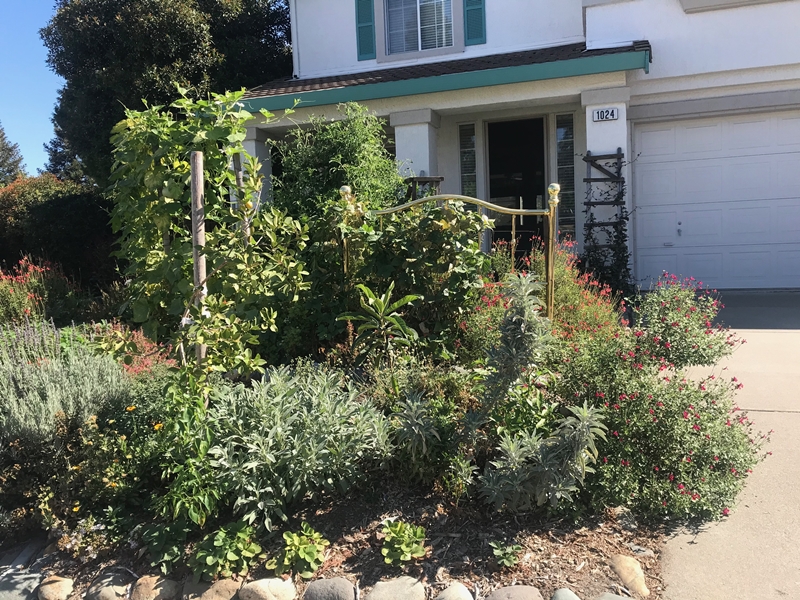
Installation was a cool misty February morning. We were delighted with the community who came to learn and help with the installation. After a tour of the backyard and a class on permaculture systems by Kathleen Huffman, we set to work digging the swales. Many hands make light work and in no time the swales were dug, plumbed, and back filled with woodchips. A little lunch to sustain us and then we installed the drip system and planted. So many pollinator attractants and edible plants! After just a few months of growth, Duane commented that he was surprised how much color there is in the front yard. Watch a video from the installation here.

Mangia before the transformation and lawn conversion

Vision for the Future:

The idea is to make the front yard food forest available to the neighborhood to harvest as they like. The most gratifying part is seeing the neighbor children harvesting strawberries from the yard. We also revel in the comments from our neighbors like, “Oh, that’s what that is?!” or “You can use that for tea?!” Our vision for the future is that more and more neighbors and community members will harvest from the front yard and be inspired to plant edibles in their own yards. We delight in offering spontaneous tours of the front and back yards. We have since added an additional element to the backyard — a chicken coop (built with repurposed materials, of course) and three laying hens. More parts to the integrated system — pest control, garden tillers, compost builders and eggs for more food. Mangía! Let’s Eat!