Local Food Reflections from the Sustainable Solano Team

By Sustainable Solano

Building awareness of the benefits of buying local food and building a local food system that supports our farmers and food producers is a key part of the work we do at Sustainable Solano. We have seen the interest in buying directly from producers explode in recent weeks as the pandemic affects supply lines and people are seeking a reliable source of food that reduces their dependence on the grocery store and food shipped across state and international lines. In talking about this growing interest, our team started sharing how we buy locally, which supports the local economy even as we benefit from having a closer relationship with the people behind our food. We wanted to share that with you, our community. None of us does it perfectly, but we support local food in a way that works for each of us.

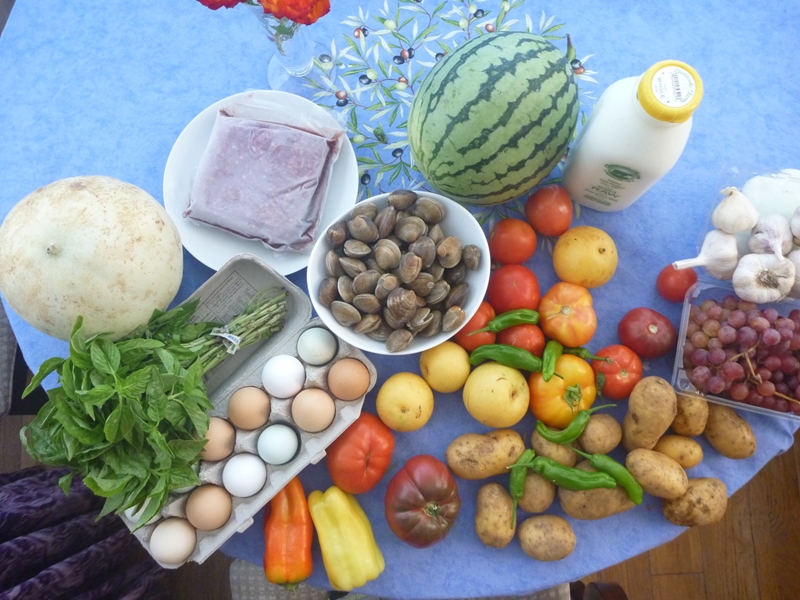
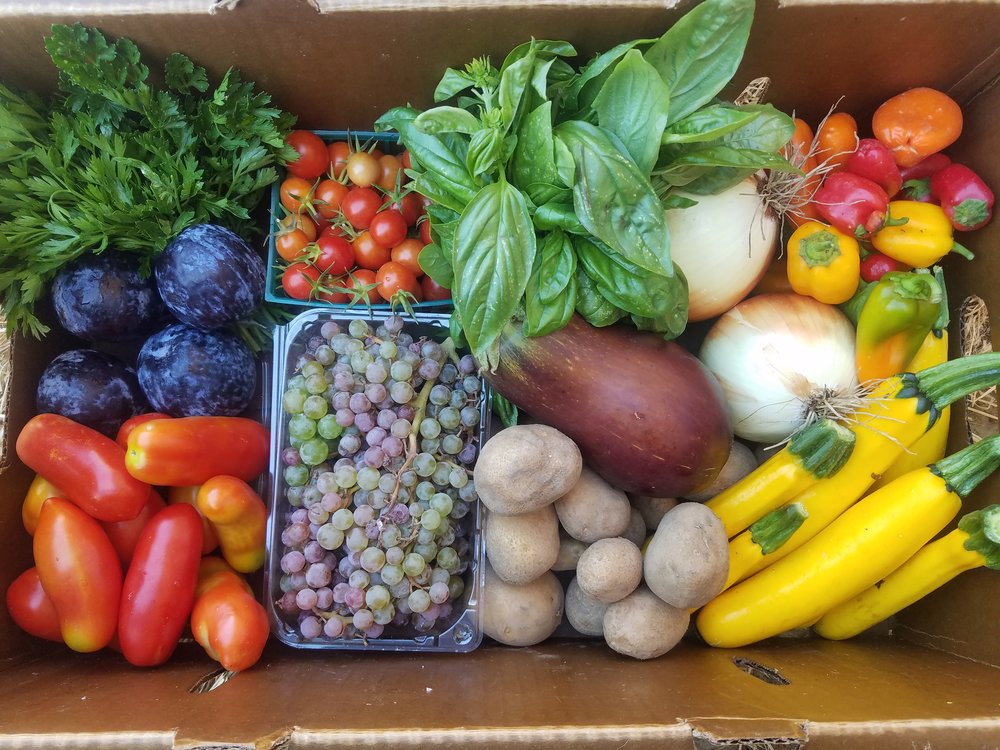
A beautiful selection of CSA contents

Elena Karoulina

Executive Director

I am so grateful to our local farmers, ranchers, fishermen and producers for keeping my family well-fed and healthy. Since we started the “What’s for Dinner?” educational program in Benicia in 2012, our family food supply has been shifting toward truly local. Today, we source more than 80% of our family food from local sources. Our produce comes from Terra Firma Farm in Yolo County. Over the years, we got to know the farmers, visited the farm a few times and developed a wonderful annual rhythm of seasonal bounty: spring comes with sugar peas, asparagus and strawberries, summer is at its best with juicy tomatoes and corn, and later in the season — colorful watermelons (a favorite summer game for my children is to guess a color of our weekly watermelon — red or yellow); we slowly shift toward persimmons and squashes in the fall, and winter announces itself with endless greens and citruses. We are nourished by this seasonal rhythm and never crave an out-of-season item!

To our great surprise, we learned that our fish/seafood and meat supplies are seasonal too. All our fish comes from Real Good Fish, a collective of local fishermen. Every week we know the name of the captain who caught our fish (and the name of the boat!), the method that was used (only sustainable) and the place it was caught. Our meat and eggs come from Tara Firma Farms in Petaluma. Being a strong believer in regenerative agriculture, I am so happy to source from the ranchers who do it right. They are “the grass farmers”! Cows are roaming freely on the green hills, improving the health of the soil and nourishing us.

Our olive oil comes from Sepay Oil Company and occasionally from Soul Food Farm (we are thrilled they re-opened their CSA — their eggs were once named “The Best Eggs of the Bay Area” by San Francisco magazine). You have to try them! If I have a chance, I buy Central Milling flour, and I’m so grateful The Barn & Pantry in Dixon carries it. I pick up a bag every time I am in Dixon! Our family is not big on jams, but if we want some, Lockwood Acres in Vacaville or Cloverleaf in Dixon are our go-to suppliers. Our dairy and other random items comes from a local grocery store. We grow herbs, strawberries (you can never have enough!) and blueberries in our tiny home garden.

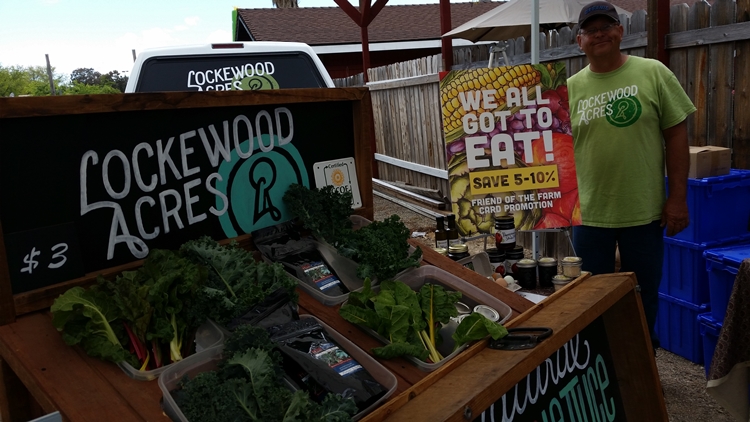
Ben Lyons of Lockewood Acres

Gabriela Estrada

Listening Circles and Solano Gardens Program Manager

Allison and I have been sharing a CSA box from Eatwell Farm for a while now. This arrangement has been great because we get a couple more items in our box. Sharing the box has been amazing since I’ve gotten to try vegetables that I would have never thought to buy in the store like broccoflower, turnips, fennel, green garlic, among others. This has led to Allison often sharing recipes with me, and giving me insight on how to cook some of the items I haven’t tried. Some I’ve loved like turnips, while some I’ve yet to find the right recipe for, such as fennel. In addition to this, I’ve also planted a few seeds in my garden including corn, cucumbers, watermelons, green beans and tomato starts in my backyard, and am in the process of researching plants that would benefit a small orange tree, in order to make my first tree guild. The current times are not ideal, but having the privilege to have a backyard to plant on and a CSA buddy that I can share the cost of a box with (and who guides me with cooking tips) has been a definite plus that keeps me well-balanced!

Another thing that I tend to source locally is honey from The Lazy Barn in Fairfield. While I do this to try to alleviate really bad spring allergies, I often indulge and put in on my teas and sweet treats too. Along with the honey, I also sometimes source raw milk from them (though I don’t do this as often, since I don’t consume a lot of milk products) as there are certain very traditional Mexican dishes where store-bought milk just won’t do. All in all, it’s been a real pleasure (and a tasty one) to support local businesses that do their best to provide the people of Solano County with local food options!


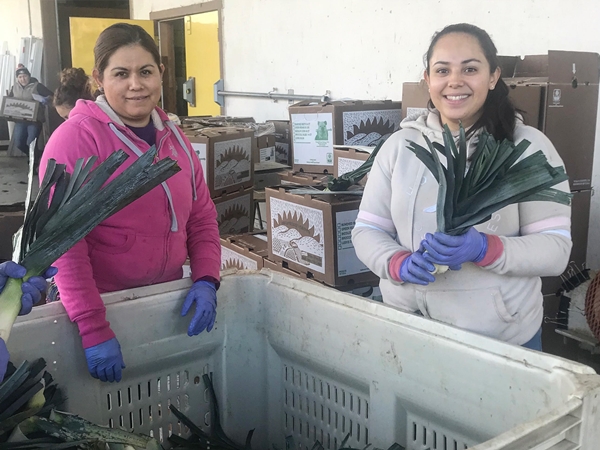
Packing up the CSA boxes at Terra Firma Farm

Stephanie Oelsligle Jordan

Chef and Local Food Program Manager

My relationship with local food goes way back to my childhood in Nebraska, when I watched my grandfather pull endless produce from his backyard garden and pass it on to my grandmother who preserved and canned a lot of it. They were young parents during the Great Depression and had more mouths to feed during World War II; having a cellar full of home-canned goods was a necessity and my grandmother carried on with this practice well into the 1980s and ’90s. Fast forward 40-odd years and here I am: a trained chef raising my own children, trying to teach them where food comes from, how to prepare it, and now — in the current COVID-19 pandemic — how we waste as little as possible, be resourceful with ingredients we have on hand and be patient while waiting for the next grocery order or CSA pickup.

When I was in culinary school in Chicago in 2003, the local food scene was just gaining momentum — farmers markets were popping up in various neighborhoods and fellow chefs were talking about sourcing locally and naming partner farms on their menus. Shortly after moving to California in 2011, I was pleasantly shocked at how the “growing season” never really ends (unlike the Midwest!), and I began looking for how to grow and source local organic food. I signed up for a community garden bed in Benicia and had raised beds installed in our backyard. Needless to say, right now I’m very thankful to be living near rural areas where there are several Community Supported Agriculture (CSA) farms. Around 2012, I subscribed to Terra Firma Farm’s CSA and then joined Tara Firma Farms, Real Good Fish and Eatwell Farm. While I certainly appreciated all this super-fresh food and the farmers who grow it (my dad was a farmer, too), I didn’t fully grasp all the benefits and potential of local food (economic, social, etc.) until becoming involved with Sustainable Solano in 2016. Today, as Sustainable Solano’s Local Food program manager, I’ve delved into the problems and issues behind our current food system, and have been envisioning what a functioning and resilient local food system looks like. While our world is changing every day right now — and there are experts out there who have studied food systems far longer than I have — I can’t help but think that the answer may be similar to what my grandparents had. Meanwhile, special thanks and appreciation to our farmers and gardeners!

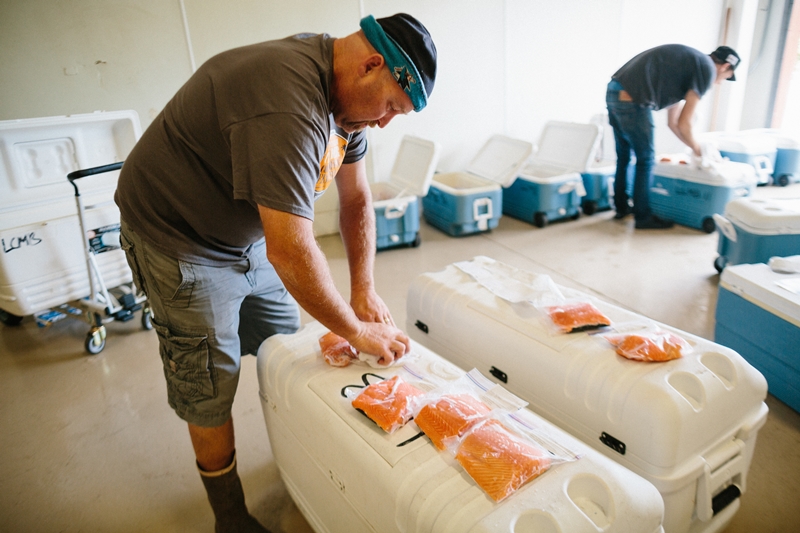
Packing coolers at Real Good Fish

Kassie Munro

Resilient Neighborhoods Program Manager and Farm Coordinator

I have always enjoyed gardening — a word that, to me, conveys an activity more than a product. I love my vegetable gardens, and cooking for loved ones with homegrown ingredients has always been a great joy that I feel grateful to have the luxury of doing. While I have a small yard in a residential neighborhood I know that I am very fortunate to have the space, time and capacity to grow some of my own food, which this year includes eggs with the welcome addition of our three new chickens (Frankie, Charlie and Harry). But it has always felt like that — a luxury, a hobby, a pastime. Self-sufficiency and an understanding of where food comes from is a part of my love for gardening, but I never felt like that was a skill I would need to rely on in my lifetime, until the past few weeks. I am blown away every season by the incredible amount of food that can be grown in a single backyard and even with the meager crops I still have growing at this transitional time in the season, I have been able to harvest a steady amount of fresh, safe, and nutritious greens and eggs for my family and friends. Not only does this help us limit our exposure to shopping in public, sharing my food restores a sense of connection to people I love that I am unable to be with right now. The hours I spend tending, harvesting, washing and packing is perhaps more nourishing for my spirit than the food itself, and while I am preparing now for the next season planting I have a new perspective on the value and importance of what I am doing in my garden.

The backyard chicken crew

Nicole Newell

Sustainable Landscaping Program Manager

During this pandemic I realize the importance of the permaculture principle of redundancy. For every basic need we have, it is important to find multiple ways of meeting that need. So basically we aren’t dependent on one source. I would be feeling more vulnerable now if I was getting my food only from the grocery store.

In April 2019 I made a commitment to purchase a CSA box from Eatwell Farm. Every other week I pick up my fruit/veggie box and half-dozen eggs at the CSA drop-off site in Benicia. At first I was uncomfortable with the transition as I enjoy going to the farmers market to personally pick out produce to make recipes that I feel inspired to make.  The CSA box produce is organic and mostly beautiful. Occasionally veggies come and lets just say, they aren’t the ones I would have selected at the market; either it is a veggie that I don’t like or the quality isn’t “perfect.”  Now I totally embrace the box and my meals are created around what I am growing in my yard and what is in the box. I am learning new recipes and beginning to eat spaghetti squash. Today I am grateful that I have an established relationship with Eatwell Farm and I am now aware of all the challenges that farms have to deal with like unseasonably hot weather that makes the cauliflower begin to flower earlier than expected. Local farms also need a commitment from us. They are planting for the amount of people that are signed up for the CSAs and they rely on that financial commitment.

Making the decision in my life to source ethically and locally when funds allow has provided me the opportunity to build relationships with farmers and others in the community that I care about and want to support. A healthy interdependence has emerged and without realizing it — I have redundancy in many of my sources of food:

  • Eatwell CSA box
  • Eggs from 3 chickens in my yard
  • Growing fruits & veggies
  • Relationships with plant nurseries
  • Seed saver
  • Provisions (this restaurant is providing not only pick-up food, but they are selling flour, eggs and even paper products)
  • I get homemade cheese from a friend
  • Sharing with neighbors
An Eatwell CSA box

Allison Nagel

Workforce Development and Communications Manager

I love buying local food. Yes, in my family we still make grocery runs for staples that we aren’t able to source locally, but more and more there are local options for many of the things we need. And you find that the more you buy locally, whether from a family-owned farm or at a restaurant or retail store that sources from local farmers and producers, the more familiar you become with what is available. Every other week, I split a CSA box with Gabriela, creating an opportunity for us both to divvy up what’s available in a way that works for us. I also tend to add on to the box pretty frequently, so that in addition to the produce that was just growing in the field days ago, I’m also able to get dried beans, sauerkraut, miso and even artisan salts. On the other weeks, my family receives a different CSA. These basically replace a large amount of our grocery shopping, for which I’m so grateful (and the produce is fresher, lasts longer and tastes better). It also means sharing in the harvest, whether a bad or good year, with the farmer — getting to know the farmer and the farm through weekly newsletters and social media posts, having the opportunity for farm visits and truly connecting more with your food. I don’t eat meat, but my husband does and has been more mindful of where he’s buying from, which has led to us purchasing meat from a local farm that operates in humane, regenerative ways. This mindset of buying local has influenced our restaurant purchases as well. We now try to ask where the restaurant sources from and appreciate and support those who are working to support our local farms in various ways. I’m a very haphazard gardener, so while I love the idea of growing my own food, and we have various herbs, edible perennials and annual veggies that we try to grow, I also could never rely on my semi-green thumb to feed my family. That’s why I feel so lucky to live near farms where there is a true passion for healthy, sustainably grown food, and that I can be a part of supporting the network that supports those farmers.

Businesses Partner to Provide Plants

By Harmony Organics

There has never has been a time quite like this where much of what we hold dear has changed and over which we have little control, at least for now. It’s definitely a time for nurturing ourselves and those dear to us. For many, home gardens can be a place where we find tranquility, healing and a place revitalize and reenergize — all things that can help us in unsettling times.

With that in mind, Harmony Organics would like to bring a little sunshine into your homes and gardens. As a local supplier of premium organic soil blends and amendments, we can help nurture your gardens and help them thrive, especially now as we are all spending more time in our homes.

And as a commitment to our motto, “Grow Together,” we have teamed with Biota Gardens Nursery to provide the highest quality seed starts for your spring/summer grows. We are fortunate to have been the soil provider for Biota Gardens the past few years and are excited to give everyone the opportunity purchase their plants locally. We will still have our soil and amendments available so that you can pair our soil with wonderful organic heirloom seed starts.

About the Blog

Harmony Organics, located in Benicia, shares how they are partnering with Biota Gardens Nursery as a distribution site for plants.

Many local nurseries have changed their hours and how they are doing business to remain open during this time. See what your local nursery is doing here and check directly with the nursery for the latest information.

We’re always looking for insight from our locally owned small businesses. Want to share what you’re doing? Contact us at allison@sustainablesolano.org

Biota Gardens offers 1 Quart Organic Starts for $4.50/plant with discounts based on the number of plants purchased. As of the first week in April, they will have available a wide variety of tomatoes, peppers, squash and cucumbers with select varieties of eggplants, melons, herbs and flowers. To meet our customers’ needs, we will be practicing the social distancing mandates that are in place to help minimize the spread the COVID-19 so that everyone remains safe and healthy. All plants that are ordered will be available for pickup at our office/warehouse at 4271 Park Road in Benicia (curbside drop off may be available as well based on location).

Please visit biotagardens.com to view the available plants to help jump start your garden this spring. You will be able to place an order directly with Biota Gardens and make sure to mention Harmony Organics in the Questions/Special Instructions section. If you need assistance ordering plants or need other soil/amendments please call us at 707-747-5051 or email info@harmony-organics.com

During these strange and difficult times, we want us all to be able to find joy in playing in the dirt, seeing our work bloom and eating homegrown veggies and fruits. Labor of love or just garden fun. Remember, gardening is for everyone! Hope everyone is safe and enjoying the fruits of their labor!

Stocking Your Pantry for Uncertain Times

By Lisa Núñez-Hancock, Culinary Arts Instructor

Whether it is fire season, an earthquake, a pandemic, the busy pace of life, or unexpected guests, it is always a good idea to have a well-stocked pantry of healthy, nonperishable items on hand. Eating healthy foods, maintaining a good gut microbiome, getting enough sleep, and minimizing stress are all important to optimum health.

Having nutritious staples in your pantry will steer you in the direction of eating better and staying healthy. Beans, legumes, whole grains, dried pastas, brown rice and rolled oats are all foods with a long shelf life and can be a base for soups, stews, salads and grain bowls. Combined with fresh seasonal vegetables and fruits, eggs and sides of meat, if desired, the variation of nutritious meals you can create with basic staple foods is endless.

In no way am I implying that you should be stockpiling or hoarding food. That is ultimately wasteful and not neighborly. I also recommend practicality and economy when furnishing your pantry. Purchasing local products whenever possible supports local farmers and food crafters, and benefits both the local economy and our immediate communities.

There is a culinary pleasure and satisfaction in throwing open a well-socked cupboard and being able to create a meal on the fly. Of course, there is Google and you could get someone else’s recipes, but there is a lot to be said for being creative, inventive and spontaneous, in life in general, and especially in the kitchen.

Beans and legumes have a good shelf life and are a healthy source of essential vitamins and minerals. They are an important plant-based protein and a good source of fiber. They are easy to prepare and versatile in recipes. Rancho Gordo, a company specializing in heirloom beans and located in Napa, stocks a selection of glamorous beans in a rainbow of colors and flavors. In my pantry right now, I have Marcella white, Midnight black, a beautiful purple bean called Aycote Morado, and a quirky heirloom called Vaquero (I love them — they are spotted black and white and remind me of miniature cows). All beans are wonderful and make delicious one-pot soups and stews.

Grains! If any of you have attended my cooking workshops, you know I am all about the grain bowl, a bit of a fanatic in fact. Ancient grains like quinoa, millet, farro, bulgar and amaranth, to name just a few, are healthy for you, and full of important nutrients, minerals and essential fiber. Although not local, I have been having a long-distance relationship with Bob’s Red Mill for many years and his grains makes me happy and healthy more than I can tell you!

Dried pastas are always good to have on hand, especially if you have children and picky eaters in your home. Combined with a variety of innovative herb and nut pesto sauces or tomato-based sauces that you can make from your garden’s yield or CSA box. Add shelf-stable olives, capers and marinated artichokes to create pasta dishes that are easy and quick to make, and a filling meal for one or a group. Locally produced Baia Pasta in Oakland is a good source.

Which brings me to the subject of canning and preserving. If you are growing your own vegetables, a member of a community garden, get CSA boxes, or frequent your farmers market, you should know how to can and preserve your produce, so as not to waste a bit of nature’s beautiful bounty. Your homemade canned products will be a “lush” addition to your pantry of staples, as well as a source of pleasure when cooking with them. I can’t tell you the satisfaction of cultivating a plant, harvesting it, and “putting it up” (on your pantry shelf or in your “root cellar”). Knowing where your food comes from, how it was prepared and that you created canned tomatoes from your summer crop or your own delicious pickles and jams is truly a heightened experience.

Although not necessarily shelf stable, don’t forget an important realm of crafted foods — probiotics like sauerkraut, pickles and fermented vegetables. They must contain lactobacillus acidophilus, which is essential for good gut health and proper immune functioning.

And especially, don’t forget the spices! Think of your spice drawer as a medicine cabinet. Spices not only make food taste better, they are medicinal, have healing properties that will boost your immune system, add much needed spice to life, and keep you healthy.

A short caveat: I have listed local food sources, but I understand that not everyone can afford these items. The basic staple list can be adapted to fit your budget with an eye to supporting our local food producers when possible.

Suggested Items for Stocking Your Pantry

Below are some items as well as local sources. You can find locally sourced staples at some of these retail shops and restaurants.

Beans

  • Rancho Gordo

Grains

  • Bob’s Red Mill, Community Grains

Pastas

  • Baia Pasta, Community Grains

Rice & Noodles

  • Lotus Foods

Olive Oil

  • Il Fiorello, De Vero, Katz & Company, Soul Food Farm, Sepay Groves

Vinegar

  • Il Fiorello, Sepay Groves, Katz & Company

Local Honey

  • Be Love Farm, E.G. Lewellen’s, (check your CSA box add-ons)

Nuts

  • Nut-N-Other Farms, Sierra Orchard, Cal Yee Farm

Dried Fruit

  • Cal Yee Farm, Frog Hollow Farms

Sauerkraut

  • Salt & Savor

 Pickles

  • The Cultured Pickle Shop

 Tea & Coffee

  • Numi (tea)/ Moschetti, Ritual (coffee)

Jam

  • Erickson Ranch, Bridgeway Farms, Inna, Frog Hollow Farm

Hot Sauces and Salsas

  • The Salsa Chick

Granola

  • Nana Joes, Tom’s ‘Best Ever’, Frog Hollow Farms

Spices

  • Whole Spice, Savory Spice Shop, Lhasa Karnak, Bazaar

Mustard

  • Mendocino Mustard

Canned Fish

  • Katy’s Smokehouse

Basic Baking Ingredients: flour, baking powder, baking soda, yeast

Note: Have a local source for some of these items we should add? Let us know at allison@sustainablesolano.org 

Access Food Resources Here

Discover recipes with seasonal ingredients

Learn more about Community Supported Agriculture (CSAs) — boxes of produce from local farms

Learn what’s in season now

Find out more on our Local Food page

Explore our Community Resilience Resources for more food resources

CSA Farm Spotlight: Be Love Farm

By Sustainable Solano

This is an ongoing series profiling local farms that have Community Supported Agriculture (CSAs) available in Solano County. CSAs create a way for community members to buy a share of the harvest directly from local farmers. Customers pay a set amount and receive a box of seasonal produce or other farm products in return. Such arrangements help farmers receive a greater share of the money paid, bring customers fresh, local produce and promote health, community and the local economy.

Emma Dotta in the fields at Be Love Farm, where she lives and works

Matthew and Terces Engelhart started Be Love Farm more than a decade ago with a dedication to regenerative farming. The family-owned farm is supported by plants and animals working together to grow healthy food in a way that emulates natural systems. Fields that produce annuals one year are then returned to perennial grasses for cows and chickens for at least two years.

Terces said she and Matthew started the farm to provide food for the restaurants they own and themselves, but also to nurture young upcoming farmers and provide a space where their grandchildren could roam freely and learn about food and animals.

The farm produces fruit, vegetables and nuts and a variety of other goods, including wine. Be Love Farm has a farm stand on-site for everything from nuts and produce to pizza, sauces and other value-add products and is now introducing a CSA for pickup at the farm. Packed in baskets, the CSA could include seasonal produce, eggs, olive oil, wine, nuts and bread.

Below is a Q&A with Terces about Be Love Farm:


  • Be Love Farm
  • Vacaville
  • 21 acres
  • Established 2008


When did you start offering a CSA? Why was it important to offer?

This is our first CSA offering. We want to make food available for our local community.

What’s something that makes your farm stand out?

I suppose the diversification. We do everything from wine to nuts and sourdough.

Anything exciting on the horizon? What do you see happening and what do you want to see happen with interest in local food?

We love sharing our farm and what it produces with others. It has been a 12-year project of love to develop our small family farm. Eating local and fresh food is one of the healthiest choices a person can make.

Anything else you’d like to add?

Contact belovefarm@gmail.com for additional information.

Be Love Farm has the CSA available for pickup at the farm. Learn more about signing up through contacting them at belovefarm@gmail.com

Find out more about local CSAs here.

Alliance Members Reflect, Connect to Deepen Local Food System Conversation

By Kassie Munro, Program Manager

Solano County Farmbudsman Sarah Hawkins and Kaiser Vallejo Nutritional Services Manager John Healy, both Alliance members, connect during the February meeting. Kaiser Vallejo is the first healthcare organization in Solano that has started sourcing consistently from small farms in the county. 

The Solano Local Food System Alliance held its first quarterly meeting of 2020 at the beginning of February to continue its collaborative effort to foster a strong local food system within the county.

At the February meeting, Alliance members began by reflecting on insights gathered during the October listening sessions, including the nuanced importance of building community health and community wealth, and the strong interest around developing robust farm-to-school programs.

The meeting included a discussion on climate change and agriculture lead by Wendy Rash and an in-depth review of fees and regulations that farmers face to sell their food at different venues compiled by Jahniah McGill and Priscilla Yeaney. A deeper conversation developed around policy and the actions needed to bring about meaningful change that would help our farmers thrive.

The Alliance received updates from the Sustainable Solano team on the recently awarded CDFA Specialty Crop Block Grant that is supporting the development of a number of key initiatives. Those include farm-to-institutional customer sales, public education on the importance of eating locally and the abundance of produce grown in Solano County, including cooking classes across the county, and the development of the first Bounty of the County event slated for August 29.

You can find more details in the meeting minutes here.

Curious about the Solano Local Food System Alliance? Learn more about the USDA grant that led to the creation of the Alliance and find out more about its work here.

CSA Spotlight: Real Good Fish

By Sustainable Solano

This is an ongoing series profiling local businesses that have Community Supported Agriculture (CSAs) available in Solano County. CSAs create a way for community members to buy directly from local producers. Such arrangements help producers, in this case fishermen, receive a greater share of the money paid, bring customers fresh, local food and promote health, community and the local economy.

Fisherman Khevin Mellegers is one of the local fishermen that works with Real Good Fish

Real Good Fish started as Local Catch Monterey in 2012 with the mission of bringing locally and sustainably sourced seafood to Central California. The company, which started working mostly out of a single van, now delivers to more than 1,600 individuals and families every week, according to Emily Hess of Member Services. The company supports local fishermen who use sustainable catch methods and created the Bay2Tray program to increase awareness and demand for sustainably caught seafood with public school districts, providing local fish for school lunches and fishermen in the classroom visits.

“[We] have grown our mission to not only support local fishermen, but teach the public about the importance of seafood transparency and healthy fishing stocks,” she said.

Below is a Q&A with Emily about Real Good Fish:

  • Real Good Fish
  • Moss Landing
  • Fish from the California Coast
  • Established 2012

When did you start offering a CSA? Why was it important to offer?

We started delivering fish in 2012. Making fresh seafood from local fishermen easily accessible is not only good for the community, but for the planet as a whole as we drive seafood demand away from international imports and combat the challenges of mislabeled seafood and mismanaged fisheries.

Are there special perks for CSA members? Why do people tend to subscribe?

Getting local seafood delivered to your neighborhood is a great perk! With each share that our members receive, they are also getting the fishermen info for exactly where their fish is coming from, as well as recipes and cooking suggestions for that day’s delivery. As a member, they also get to participate in our special sales where we offer not only a greater variety of seafood, but our house-made value-added products such as smoked salmon burgers, dungeness crab ravioli, and much more. People tend to subscribe for the convenience and the quality of fish they receive. Real Good Fish cuts out several middle men that are usually involved in the sea-to-table process with fish from a grocery store. We buy the fish directly off the boat, process it ourselves, and deliver it at peak freshness, giving our members access to the freshest fish around.

What’s something that makes your business stand out?

Along with sourcing from and supporting local fishermen, we also work with our local school districts to get sustainable local seafood onto school lunch menus. We utilize some of the species that are commonly discarded as bycatch, and teach cafeteria staff how to properly store and prepare it to make healthy lunch alternatives, like fish tacos, that are within the school’s budget. This Bay2Tray program also arranges classroom visits with the fishermen we work with to teach kids about the local fishing industry and why it is important to be in touch with your resources and know where your food comes from. We try to extend our local sustainability model to as many aspects of the community as we can!

Anything exciting on the horizon? What do you see happening and what do you want to see happen with interest in local food?

We are always looking for new ways to expand and incorporate other local food programs into our subscriptions! We have recently been working with local farms like Marin Sun Farm, Fogline Farm and Wayne’s Fine Swine to bring our members other sources of local protein, like beef, pork and chicken. All of these other farms are using pasture-raised and organic practices to raise healthy, happy animals to provide the finest meats to their local customer base. We are hoping to expand our range to bring more customers the amazingly high-quality fish and message we provide, and would love to incorporate some of these other proteins into our subscriptions on a more regular basis.

Real Good Fish has Solano County CSA drop sites in Benicia and Fairfield. Learn more about how to sign up here.

Find out more about local CSAs here.