Farm Field Trip Highlights Connections to Food and Well-Being for Interns
By Taylor Collins, Development & Communications Coordinator
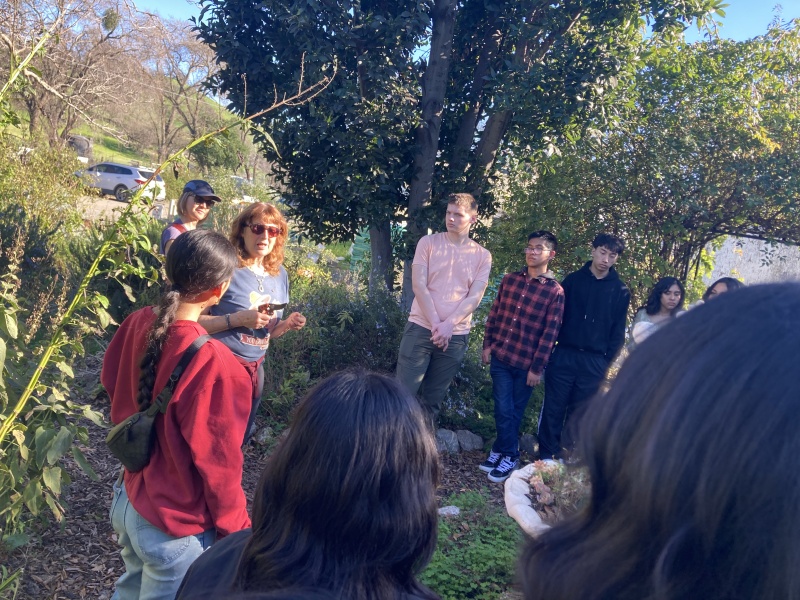
Morningsun Herb Farm’s Rose Loveall leads Youth Wellness Program students from Fairfield High on a tour of the farm
Student interns attending a field trip to Morningsun Herb Farm in March had an opportunity to touch, taste and smell a variety of plants and herbs as part of our Youth Wellness Program. The grounding, multisensory experience of visiting Morningsun provided a unique opportunity to engage with herbs, and invited full-bodied mindfulness, encouraging our students to slow down and be present with their thoughts and each other.
Morningsun Herb Farm is a family-owned farm in Vacaville. The farm grows over 600 species of herbs, succulents and heirloom vegetables. The land is full of trees and wildly growing shrubs. Whimsical metal art and cute sculptures dot the landscape and there are several canopies, greenhouses, and hoop houses surrounding the farm.
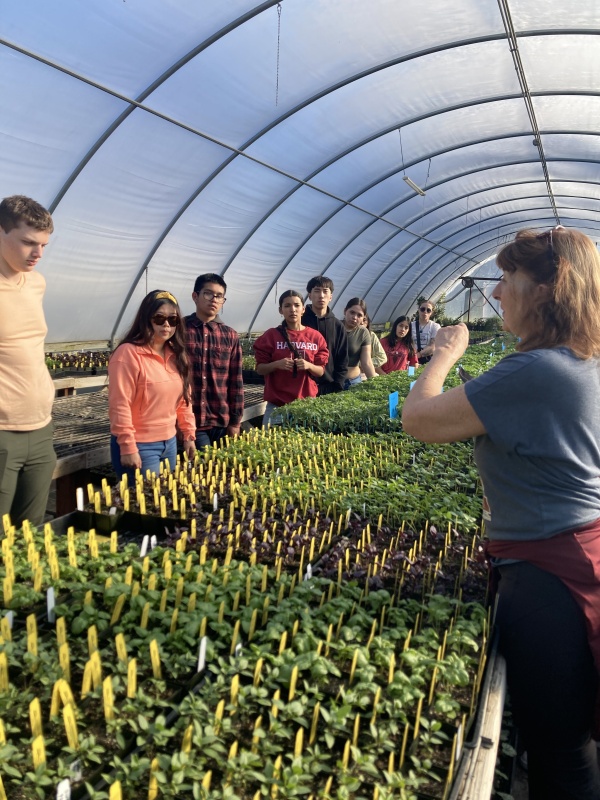
During our field trip, Fairfield High School students in the Youth Wellness Program visited a large hoop house with thousands of small herbs. These herbs were all grown from seeds or propagated from larger plants growing on the property. There was a striking variety of lavender, basil and sage. Rose Loveall, the owner of the farm, picked up a basil plant and spoke to us about the essential oils in the plant that produce its aromas and flavors.
As she passed the basil to a student, she said, “Herbs want to be touched. As you pass them around, feel their texture and take in the scent that is produced from their leaves.”
The group questioned this notion. “How do we know that the herbs want to be touched? Do they grow better when they are handled?”
For those of us who don’t live or work on farms, the origins of the food we eat can feel distant and abstract. We may intellectually understand that the basil we consume was grown from the ground, but this knowledge alone fails to capture the impact of physically experiencing the basil plant – feeling its delicate leaves in our hands, inhaling its aromatic fragrance, and being transported to memories of meals where its flavor enriched our dishes. While we may not know for sure what the basil wants, our sense serves as our bridge to communicate with the more-than-human world.
Plants use fragrance to attract pollinators to aid in their reproductive cycle. As we stood in a room with thousands of growing plants, it would appear that the basil got what it wanted. Breathtaking sights often draw humans to nature, but our less-dominant senses hold deeper lessons for us. Deep listening, taste, smell and touch open us up for a more profound connection to the life that sustains us. Considering the needs of a plant like basil can help break down the hierarchies that separate us from our wider ecosystem and these experiences can help us understand that we are not just observers of nature but in partnership with it.
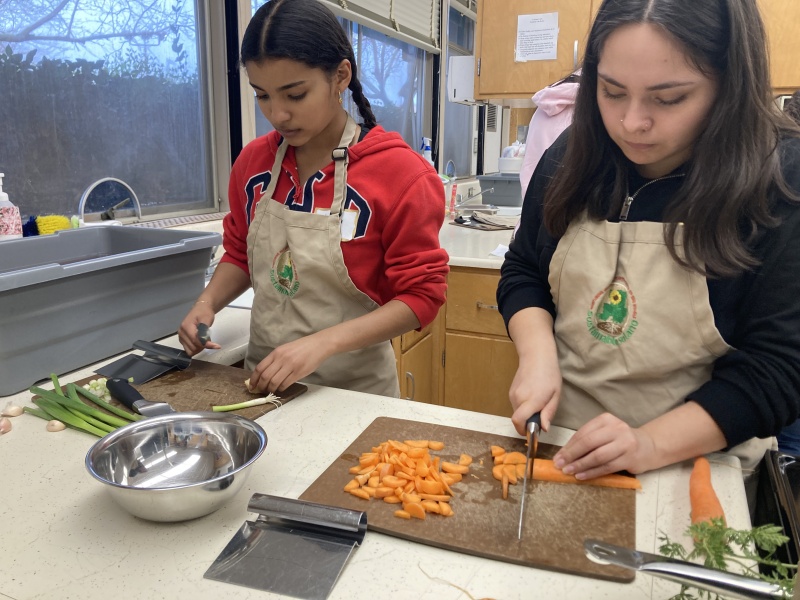
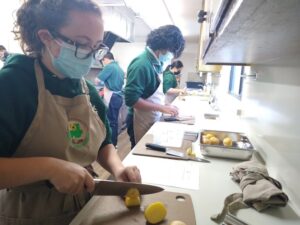
The Youth Wellness Program helps connect all of these dots. As the students engage with plants in the garden, on the farm and in the kitchen, their relationship with them is recontextualized. The program brings together a cohort of 20 high school students for hands-on instruction in practical skills related to gardening and cooking. Each week, in groups of 10, the students build relationships with each other as they learn side by side. Building on a pilot “Healthy Local Food” program offered in partnership with Innovative Health Solutions and Armijo High School during last school year, Sustainable Solano was able to expand the program this year to add more focus on mental health and bring it to more schools. This year, the Youth Wellness Program was offered at Armijo, Fairfield and Vacaville high schools.
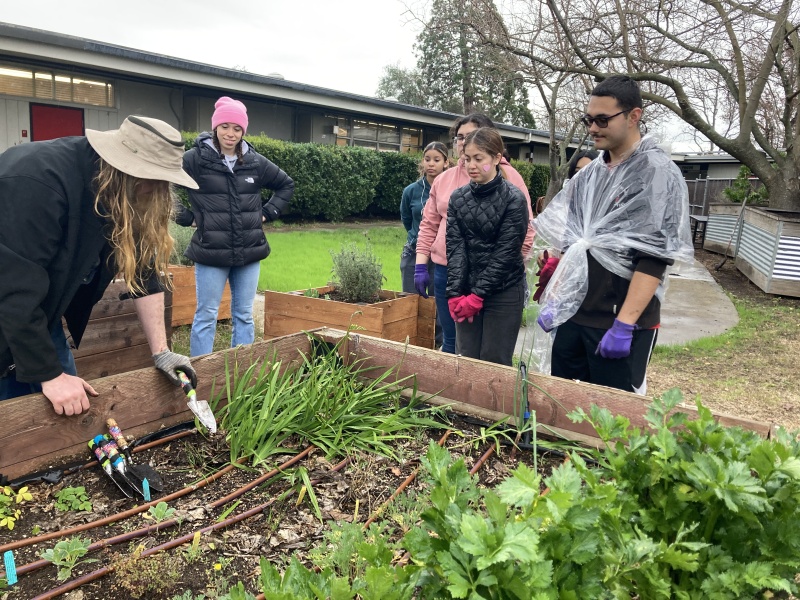
We left the hoophouse and followed Rose through a doorway made of wildly growing vines and squeezed into a small circular courtyard punctuated by a stone fountain in the center. Under the dappled shade of trees, we passed around and tasted several kinds of flowers and stems of lavender, geranium and bergamot. All of these plants are a part of the mint family, Lamiaceae, and have varying notes of menthol and bright, citrus-like flavors.
“Doesn’t taste like a grape, but doesn’t taste bad,” said Johan, a Fairfield High senior, about grape-scented lavender. Jinny, another senior, remarked, “It tastes like sage, or like medicine.”
The berries on a tree caught the eye of one of the students. It was a myrtle berry and a few of us tasted it. The flavor was pungent, peppery, and slightly sweet.
As we touched and tasted the various flowers, berries, and herbs, most of the students listened to Rose with rapt attention as she described each plant. There were a few side conversations but they were all about the flavors and sensations of the farm.
I can admit that my attention span has shortened considerably over the last few years. The pandemic had us all focused on our various screens and led to decreased social connectedness for everyone, especially students.
Morningsun is not far from the high school, but the rhythms of this experience made us feel much more off the grid. The earth felt softer beneath my shoes and the vibrations of the insects and birds moving through the trees was palpable.
This gentle, sensory immersion was a stark difference from the busy, digital-centric routines of our lives. Research suggests that time spent outdoors is linked to renewed attention, lower stress, and a balanced nervous system. Planting a garden is an act of optimism, which is especially important for young people on the precipice of adulthood. The culinary instruction is an opportunity to put new skills into practice, exercise teamwork and trust.
As the trip concluded, the students had the opportunity to interact with the animals and explore the array of plants. Each student selected an herb to plant in their school garden and use in the kitchen. This excursion reinforced the significance of grounding experiences for youth. Reflecting on my own experiences in nature, those moments of clarity and connection with the world remain vivid in my memory. I am eager for our students to embark on more enriching journeys with the land that promote growth, foster connections, and enhance their overall well-being.
The Youth Wellness Program is generously funded by Solano Public Health
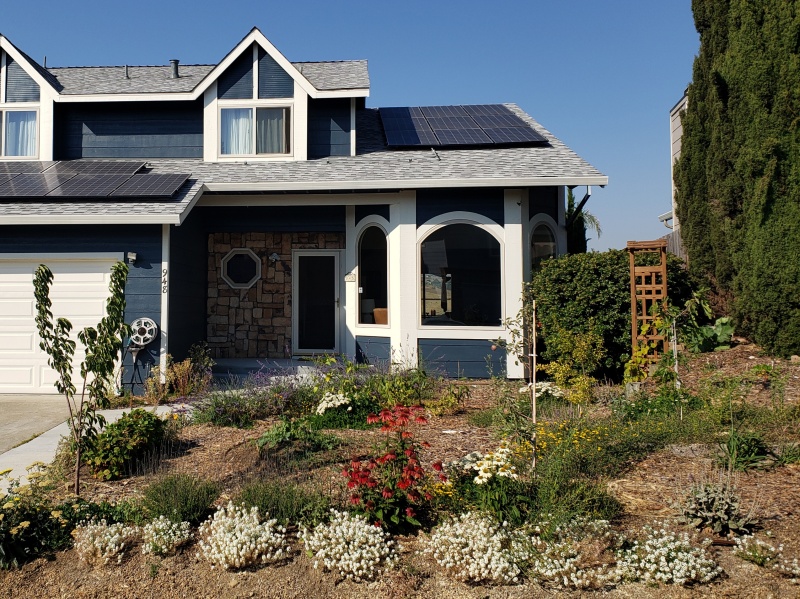
 Mature front yard food forest has mostly fruit trees and native plants that attract pollinators year-round. It has a laundry-to-landscape greywater system.
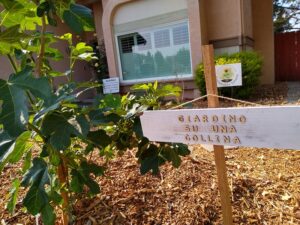 A 4-year-old food forest and pollinator garden installed in 2020 that includes a swale that captures roof water and mediterranean trees and plants mixed with native pollinating and nectar plants to attract bees and butterflies. This site is home to a Monarch Waystation that grows a variety of plants to support Western Monarch Butterflies.
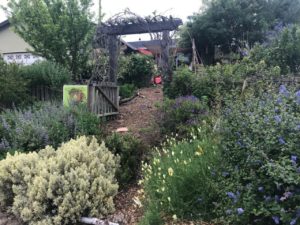 A 9-year-old established food forest with two swales that are dug out and refreshed every 2-3 years, laundry-to-landscape greywater to fruit trees, and chickens. The drip irrigation system was removed four years ago and the garden is thriving! Annual beds are hand-watered once a week during the growing season. Greyhawk Grove is a “high-traffic-survival-of-the-fittest-have-three-young-children garden”. There may be lemonade and baked goods for sale by children, as well as products from the garden to give away (dried calendula, lavender, herbs, eggs, fruit, etc.).
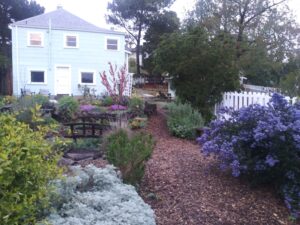 Southern slope food forest focused on pollinators, shrubs and native plants. It also includes fruit trees, perennial and edible plants, swales and a laundry-to-landscape greywater system.
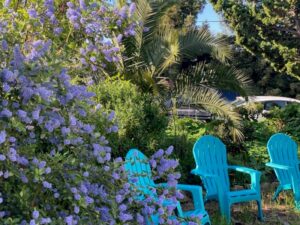 An evolving food forest garden and greywater system installed as part of Sustainable Solano’s 2022-23
 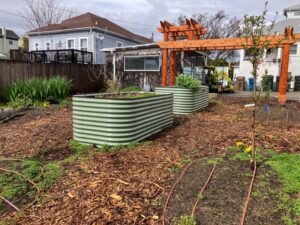 This homeowner attended our tours and was inspired to transform his yard! This garden, designed by Michael Wedgley of
 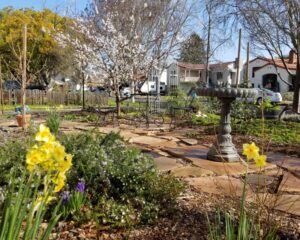 This front yard lawn was replaced in
 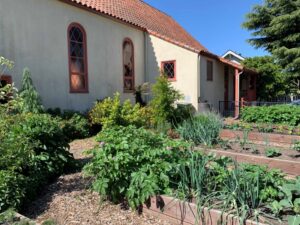 Two separate gardens, one is a peace garden with mostly flowers, cactus and trees and the other is the vegetable garden, called Johnson Ranch. The vegetable garden was revived through the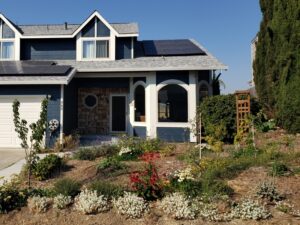
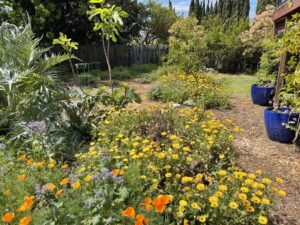 Morningside Botanical Bounty food forest was created as part of the
 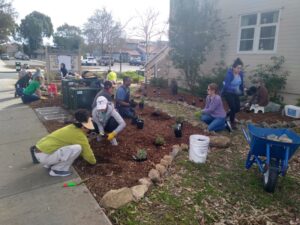 Pollinator food forest garden filled with a variety of California native plants that support the habitat of butterflies, bees, moths, wasps, hummingbirds and so much more. This garden was installed in February 2023 as a collaboration with a variety of organizations including Vallejo People’s Garden, Vallejo Project, Solano Resource Conservation District and Monarch Milkweed Project. Alanna Mirror wrote three songs inspired by the installation, featured in her
 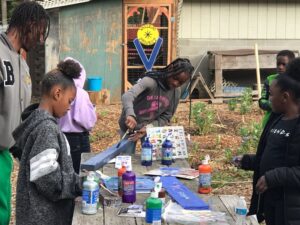 Vallejo Project’s Unity Garden initiative restored an abandoned lot that was once filled with sand and garbage and turned it into a multi-level food forest with internationally influenced farming techniques, a mealworm farm and chickens. This garden is focused on urban agriculture.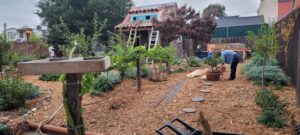
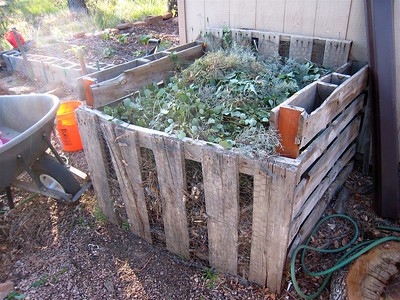 Soil health is a big focus for Sustainable Solano this year. This March through May, we’ll be offering classes for all levels of composting to build healthy soil. This series will consist of three classes, with a beginners composting class in March, an intermediate class in April and an advanced composting class in May. You are invited to attend the class of your choice or join us for all three to build your composting knowledge and connect with the different gardens where each class will be held.
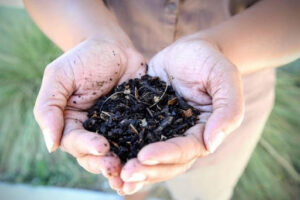 Composting 101 will be followed by Intermediate Compost Skills – An Introduction to Worm Composting, also taught by Lori Caldwell. This class will go over compost mishaps and how to troubleshoot bin repair, pests, etc. The time will also be used to introduce worm composting, discussing the benefits of worms, worm castings, and this compost method that is very friendly for those who want to compost but have less space to work with. The Vallejo Project Unity Garden will be hosting this class, with a worm bin and a three-bin compost system that has been paused due to pest issues and repair needs. This class will be interactive and potentially hands on, as we hope to show examples of bin repairs and give their compost system a bit of TLC.
 We’ve seen creative and innovative ways individuals, organizations and cities have supported such projects. In Berkeley, the Ecology Center runs