Big Gardens in Small Spaces: Adventures in Container Gardening
By Blesilda Ocampo
Blesilda attended the recent workshop on Big Gardens in Small Spaces and volunteered to write a blog about her experience for us. We appreciate her insight! Lori Caldwell will return to lead a workshop on worm composting on Oct. 6 in Benicia. You can register for that workshop here.
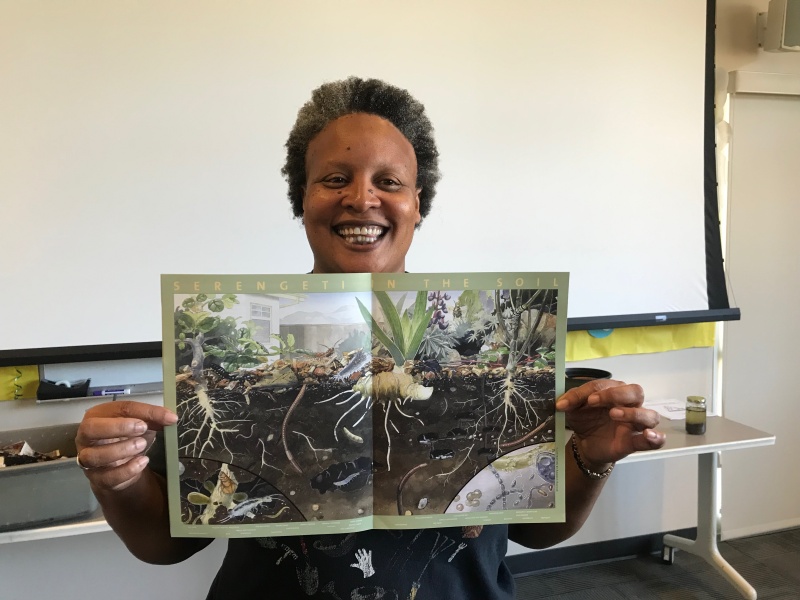
Lori Caldwell
I am a beginner gardener. I had attended one of several online workshops taught by Lori Caldwell through Sustainable Solano last year. She is a consultant, landscaper and educator, aka CompostGal on social media. I enjoyed her presentation and decided to go to an in-person event now that the pandemic restrictions have eased up. She was very informative and great about answering everyone’s questions, which I really appreciated as I had many questions myself.
I attended the free workshop on Saturday, Aug. 27. I drove all the way to the Suisun City public library from Vallejo on my way to a memorial service that afternoon. I was dressed for a memorial service while everyone was in their weekend clothes of leggings or jeans and T-shirts.
There were over 25 participants, many of which were experienced home gardeners and some were new ones, like myself. Adopt a Neighborhood, a volunteer beautification project in Suisun City, and Sustainable Solano collaborated to support people growing food in small spaces. Together, they brought Lori Caldwell back to teach an in-person class on how to grow food in small spaces.
Snacks were provided and lots of handouts filled with information were passed out.
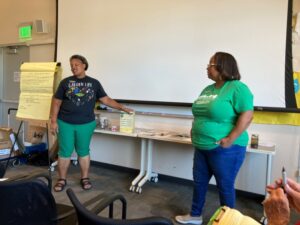 The presentation was incredibly informative. Lori’s warm, friendly and easy-going manner made the class that much more enjoyable. She taught using language that was easy to understand and a format that was easy to follow. Her handwritten outline on the flipchart in front of the class was available for everyone to see.
She talked about the benefits of container gardening, soil nutrition, companion planting, how to deal with pests and, of course, compost. I appreciate the reference guides provided in the handouts for further reading.
I am more informed about what nutrition I can add to my soil. I also learned that lemons and avocados can grow in containers; but dwarf versions will do best.
I attend these kinds of classes to get more information about gardening from an expert and to connect with other gardeners who are struggling or not; some of them seemed seasoned. It’s really great to have a place to go to bring my questions along and to get ideas I can try at home.
Big Gardens in Small Spaces
Unable to attend the in-person workshop, but still interested in learning more about container gardening? Watch this video of an earlier online talk from Lori Caldwell on container gardening.
(You can also find more videos and additional garden resources here)
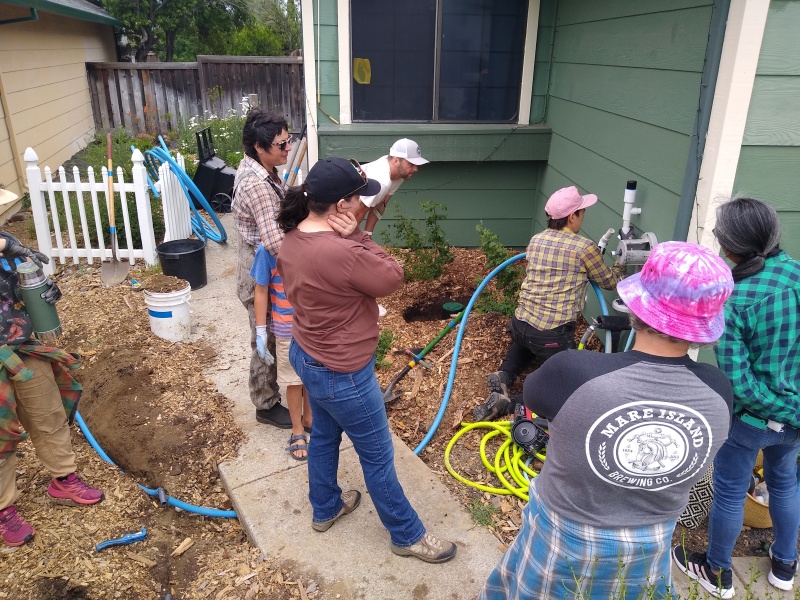
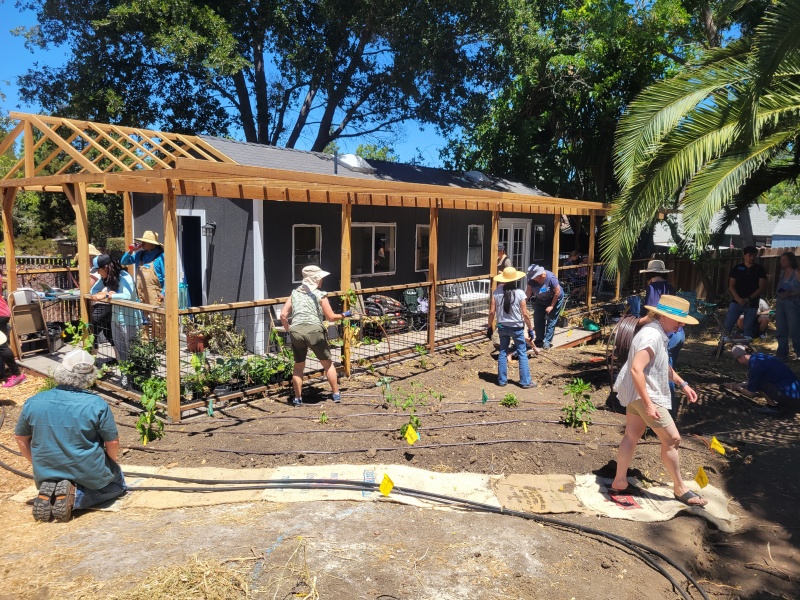
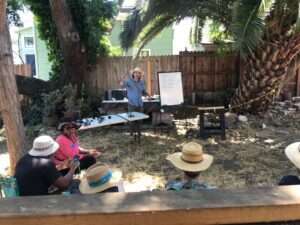 There were familiar faces and new students. The teaching garden was quiet, shady and calm. Instructor Seth Wright of
 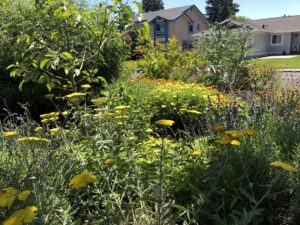 This garden was a front lawn conversion in 2019. It is filled with vegetables, fruits, herbs and more, building healthy soil and harvesting water from the roof.
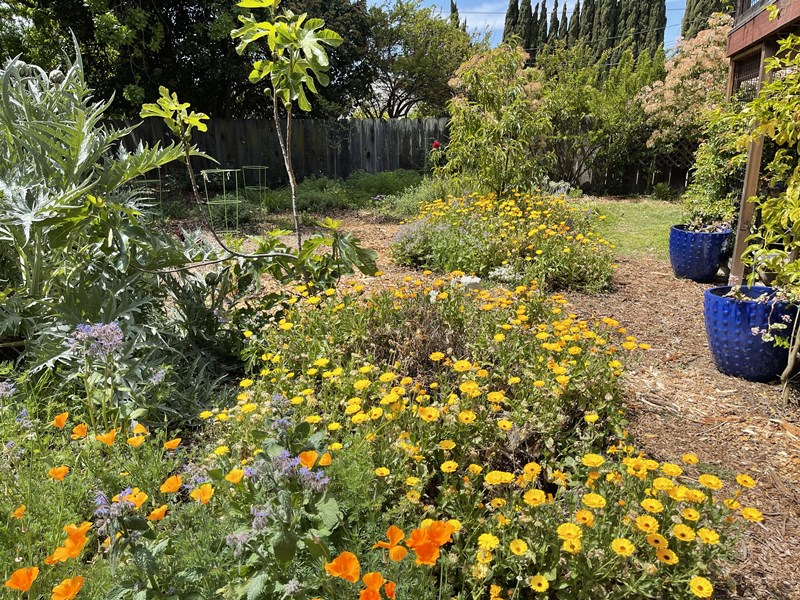
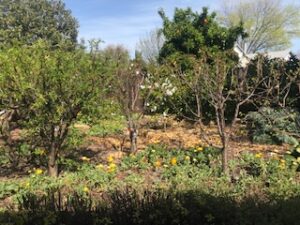 Installed in 2017, this backyard food forest has 21 fruit trees pruned annually to 5 feet, making it easier to access the fruit. The majority of the trees are watered by rain funneled into a swale, while others are watered from the laundry-to-landscape greywater system. An automatic drip system is used during the dry periods. All the fruits are shared with neighbors, friends and family. Additional plantings of salvia and calendula draw in honey bees and hummingbirds.
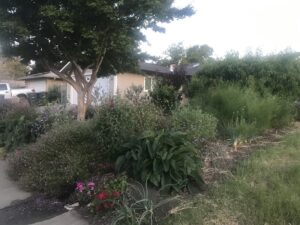 This food forest garden was a front yard lawn conversion and displays what can be accomplished in less than 18 months.
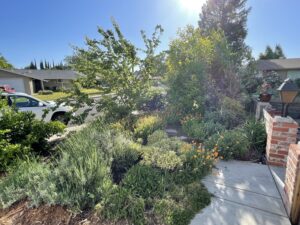 This garden has eight thriving fruit trees in a small front yard, as well as a plethora of herbaceous and shrub plants. The vegetation is watered through a combination of swales that collect rainwater, greywater from the laundry, and (rarely utilized) drip irrigation. The yard has, like any good forest should, taken on a life and energy of its own, constantly changing and morphing year over year, but never failing to provide the residents, neighbors, and several local food banks with fruits and vegetables.
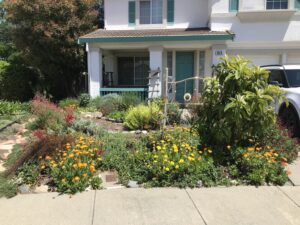 This three-year-old front yard garden welcomes the neighborhood to pick as they please. The yard extends to the backyard with pollinator plants intermixed with edibles, chickens, repurposed items, a native sedge field and so much more. This yard integrates systems to benefit the whole property.
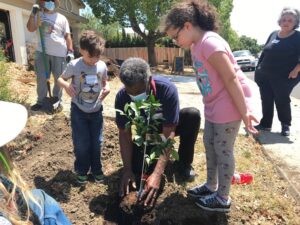 This newly established front yard garden was installed in May 2021 with the focus on growing food and a desire to share with neighbors. A large swale in the front wraps around the yard and supports fruit trees and pollinators.
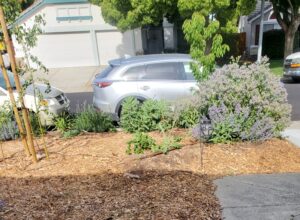 This small, beautiful, low maintenance front yard garden offers easy access to culinary herbs and three fruit tree guilds supported with yarrow, comfrey and borage.