Fellowship Focuses on Environmental Justice, Supports Pollinators in Vacaville
By Patrick Murphy, Program Manager
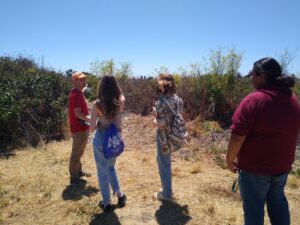
As part of Sustainable Solano’s Environmental Justice Leadership Fellowship, seven students from multiple Solano County cities undertook a research and green infrastructure project in Vacaville. Students focused on the Markham neighborhood, a community grappling with several environmental challenges, and explored possible solutions, including walkability, available green spaces, and usable wildlife habitats.
Students engaged with the local community, spending time within the neighborhood, assessing the severity of each issue and researching possible mitigation approaches.
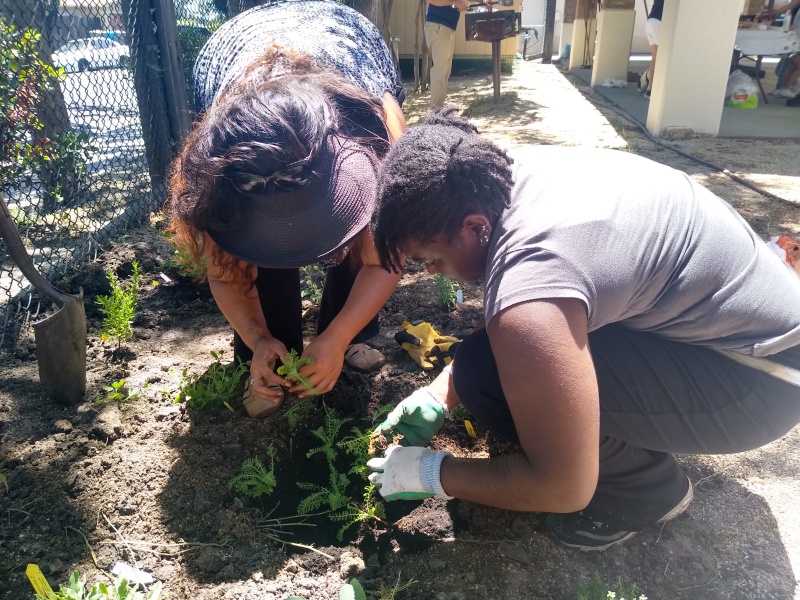
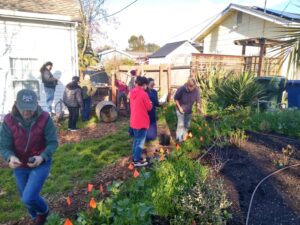
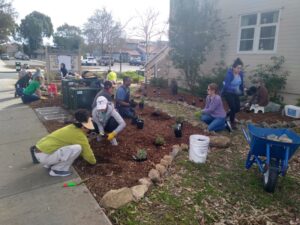
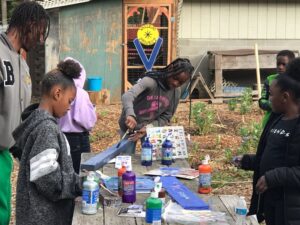
Pollinator garden installation at the Vacaville Boys and Girls Club (above) and student presentations (below)
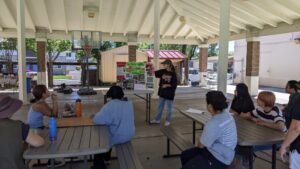 Each student then delivered public presentations at various locations around Vacaville, including the Rocky Hill Trail, the Town Square library, and an Earth Day event in Andrews Park. The culmination of their efforts was the installation of a much-anticipated pollinator garden at the Vacaville Boys and Girls Club, where the students also presented their research findings. Situated right in the heart of the Markham neighborhood, the local community had been seeking a native pollinator garden since 2018.
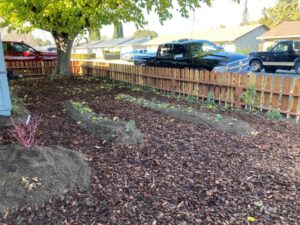
Permaculture Designer Scott Dodson was able to design a compact and attractive native pollinator garden space at the Boys and Girls Club, which was installed by the EJLF students, Boys and Girls Club members and community volunteers during a public installation day hosted by Sustainable Solano. The garden’s design prioritized water conservation while creating an extensive habitat for the region’s pollinators. Additional pollinator plants are being raised in beds owned by Solano Unity Network across the street at the Vacaville People’s Garden. Educational signage was placed throughout the gardens, providing valuable information about the native California pollinator species for residents.
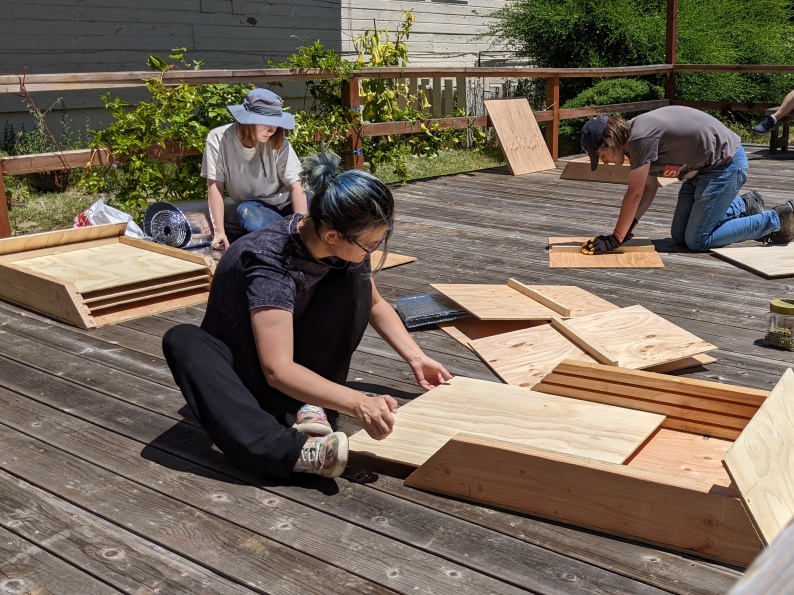
A volunteer from Rio Vista was able to produce five large-capacity bat boxes with student support for the pollinator garden and surrounding Markham community. “Bat boxes” are nesting boxes for bats to raise their young. Bats are known for their pest control capabilities. Each bat consumes vast numbers of insects each night, reducing the need for harmful pesticides and keeping the local ecological niche competitive. They and many pollinators are keystone species, and have a disproportionately large impact on the ecosystem.
Additional bat boxes are available to community members in the Markham area who would like to help strengthen the local bat population. If you live within 3 miles of Holly Lane and are interested in hosting a bat box on your property, please contact us here.
This ambitious project demonstrated the power of collective action in addressing environmental justice and promoting biodiversity. With the installation of these vibrant green spaces, the local community now has the opportunity to interact with and appreciate the importance of coexisting with nature. As the pollinator garden at the Boys and Girls Club continues to flourish, it promises to act as a sign post, promoting environmental consciousness in the Markham neighborhood.
Bat Boxes
Live in the Markham community and want to host a bat box on your property?
Reach us here
Interested in building a bat box for your own property?
Find instructions here
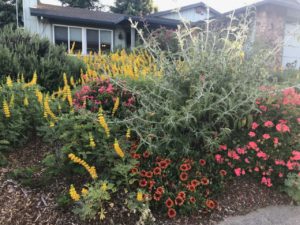 Mature front yard food forest has mostly fruit trees and native plants that attract pollinators year-round. It has a laundry-to-landscape greywater system.
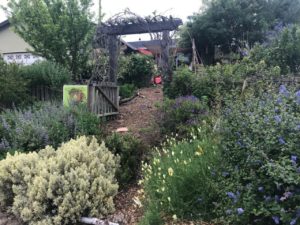 An 8-year-old established food forest with two swales that are dug out and refreshed every 2-3 years, laundry-to-landscape greywater to fruit trees, and chickens. The drip irrigation system was removed three years ago and the garden is thriving! Annual beds are hand-watered once a week during the growing season. Greyhawk Grove is a “high-traffic-survival-of-the-fittest-have-three-young-children garden”. There may be lemonade and baked goods for sale by children, as well as products from the garden to give away (dried calendula, lavender, herbs, eggs, fruit, etc.).
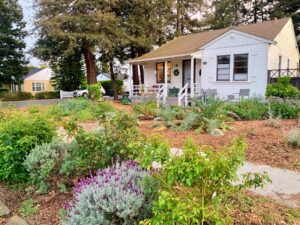 Food forest garden and greywater system installed as part of Sustainable Solano’s 2021
 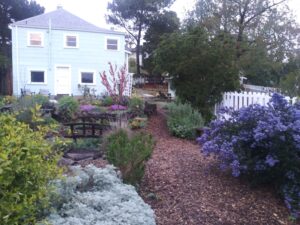 Southern slope food forest focused on pollinators, shrubs and native plants. It also includes fruit trees, perennial and edible plants, swales and a laundry-to-landscape greywater system.
 A new and evolving food forest garden and greywater system installed as part of Sustainable Solano’s 2022-23
 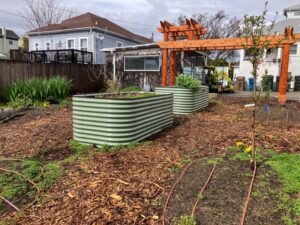 This homeowner attended our tours and was inspired to transform his yard! This brand new garden, designed by Michael Wedgley, is a unique opportunity to tour a stunning and sustainable backyard that showcases the beauty and abundance of permaculture. This eco-conscious backyard features a rainwater catchment system that can harvest up to 3,500 gallons per year, helping to restore the on-site water table, and providing an abundant source of water for this permaculture food forest.
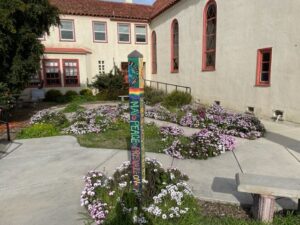 Two separate gardens, one is a peace garden with mostly flowers, cactus and trees and the other is the vegetable garden, called Johnson Ranch. The vegetable garden was revived through the
 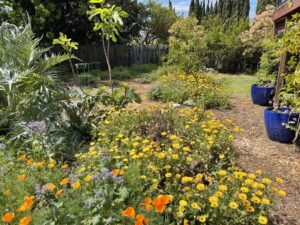 Morningside Botanical Bounty food forest was created as part of the
  Pollinator food forest garden filled with a variety of California native plants that support the habitat of butterflies, bees, moths, wasps, hummingbirds and so much more. This garden was just installed in February 2023 as a collaboration with a variety of organizations including Vallejo People’s Garden, Vallejo Project, Solano Resource Conservation District and Monarch Milkweed Project. Alanna Mirror wrote three songs inspired by the installation, featured in her
  Vallejo Project’s Unity Garden initiative restored an abandoned lot that was once filled with sand and garbage and turned it into a multi-level food forest with internationally influenced farming techniques and 10 chickens. This garden is focused on urban agriculture.
 The past few years have been challenging in so many ways for most of us. Sustainable Solano’s strength and resilience under the leadership of Executive Director Elena Karoulina in the face of these challenges is remarkable. Marilyn Bardet, outgoing Board of Directors president, has played no small part in supporting Elena, the team, and the board through demanding times. Marilyn will be a hard act to follow. Fortunately, she will remain a board member, and I am confident that I can rely on her future support and nurturing mentorship.
 True to our mission of “Nurturing Initiatives for the Good of the Whole,” SuSol continues to grow and expand countywide programs to support and sustain the Solano County community. Like any organization, the team experienced both change and growth in 2022. We welcomed