Compost Happens 101

By Lori Caldwell, CompostGal

Lori Caldwell covered all the basics of successful home composting during her recent talk. In this blog, she takes the opportunity to answer some of the most common questions and some of your specific questionsYou can watch Lori’s talk in the video here and read her responses below.

Find the handouts from Lori’s talk and more soil resources here.

Connect with Lori:

Lori Caldwell

compostgal@hotmail.com

Facebook & Instagram @compostgal

Thank you so much for your attendance and participation at our last webinar about the wonders of making and using compost! As promised, here are some answers to some of your questions. I’ll be throwing in some links, etc. as well. Composting is a wonderful addition to any garden!

Can we compost weeds?

As a new rule, I’ve stopped putting weeds in my compost pile. My concern is that the seeds, stems, roots of the weed would not be killed off by the lower than needed temperatures in my compost pile.

Can you include small flooring samples?

This is one of the items on the Do Not compost list. Wood products that contain glues, waxes, resins, etc. will do harm in the bin and most likely never break down.

Are maggots bad in compost? My compost has hundreds of them. What should I do?

Maggots are not welcome in a compost pile. If maggots are seen in the pile, most likely there’s something in your pile that shouldn’t be. Items such as cooked food or meat will attract the maggot fly. Remove the item from your pile, water and aerate. Top this pile with a thick layer of browns (leaves or chipped wood).

Do you have suggestions for getting rid of beer brewing grains?

Absolutely! These will be a great addition to a compost pile. Just a heads up: They will have a lot of nitrogen and if added fresh, also hold a lot of water. You’ll need to aerate often and help absorb the moisture by adding those browns! You can also expect your pile to get hot as well! Lucky!!!
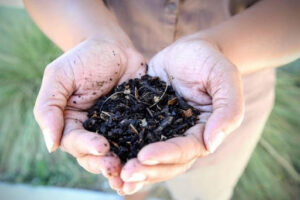
Are there special worms to get? I heard there’s worm that are not earthworms.

So, if you are talking about worm composting, yes! The red wriggler (Eisenia fetida) is the specific worm used in vermicomposting. They are the type of worm you’d see on a hike, under the leaf litter. If we are talking about basic composting, then the purchase of worms is totally unnecessary. When you place your compost pile on top of the soil, then you have a direct line to the “wormverse.” They will come and go in your pile in great numbers, enriching your compost with their castings.

Can I just bury the kitchen scraps next to the fruit tree root as compost?

Pit/trench composting as it’s usually called is a much slower way of composting in place. Digging a hole/trench at least 6-12 inches deep and burying your scraps can work, but since there’s no aeration or addition of water it breaks down much slower than basic composting. You still must make sure there’s a balance of browns and greens. Personally, I wouldn’t recommend pit trenching too close to existing plants. If the balance isn’t right, then the materials break down without the aid of oxygen (aka anaerobic). Anaerobic conditions can be problematic for adjacent plants.

Should newspapers be shredded?

When you include newspapers in your pile, hand shredding is the way to go. You want thicker pieces to help absorb excess moisture. Just be mindful when you add newspaper to the pile that it can mat quickly. More aeration will help with that.

Will the heat in the bin kill any diseased plants?

If you can get your bin to temperatures above 130 degrees and if you can maintain those temps for about three days, then yes. Getting temps that high will require some extra work on your part:

  1. Creating a pile 3’x3’x3’ or larger
  2. Utilizing high nitrogen feedstocks such as grass clippings from untreated lawns and/or fresh chicken manure

What should I do with my compost bin during cold winter months?

Winter climates doesn’t mean that composting must stop! The goal is going to be trying to keep temperatures high as possible and to keep it from getting too wet. In preparation for the snows, you should try to increase the size of your pile (3’x3’x3’ or larger). Some composters like to surround their piles with bales of straw too. I’d consider covering the pile with a tarp to keep it from getting too wet and even an old blanket or rug to help insulate from the top. Keep maintaining it as usual.
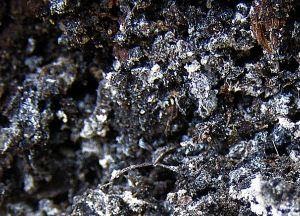
I have mushrooms growing on top of my compost pile

Completely normal!! Fungus is part of the process, so a welcome sight. Sometimes you’ll see white, cobwebby matter in the bin. Again, totally normal! Actinomycetes is present. It’s what gives compost a sweet, earthy smell. Sometimes, items germinate in your pile too. Potatoes and tomatoes are the usual suspects.

I spoke briefly about the Marin Carbon Farming Project during the talk. I’d thought you’d like to read the article. Compost rules always!

Marin Carbon Farming Project

Video: How to use compost

https://youtu.be/G87wRvVCuCg

Video: Planting Seeds with Compost

https://youtu.be/JH4Hp0o1EWg


If you are looking to purchase compost in bulk for your larger projects:

Marketplace | Lawn to Garden

Enjoy the talk? Take this survey to help us determine future sustainable landscaping classes.

The talk was generously funded by Republic Services and the Solano County Water Agency.
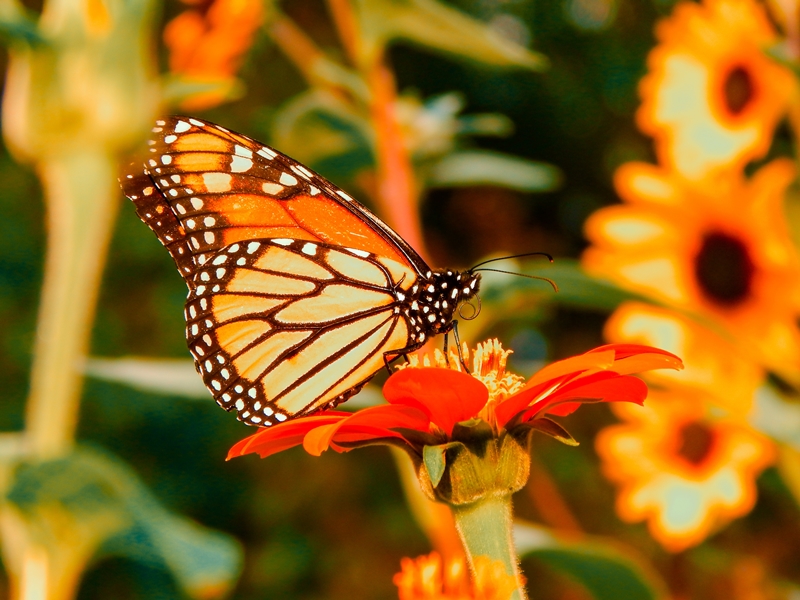
A Call to Action to Save the Monarchs

By Annina Puccio and Ann Whittemore, co-founders and co-directors of the Monarch Milkweed Project

Annina Puccio and Ann Whittemore started the Monarch Milkweed Project out of Benicia, CA, to increase the supply of milkweed available to Western Monarch butterflies as they make their way along their migratory path. Join the Monarch Milkweed Project and Sustainable Solano on Sept. 17 for an informative talk on Monarch butterflies, their population decline and how you can help! Register here

In all the animal kingdom, Monarch butterflies are unique insects: No other insect in the world migrates such a distance, over four or five generations, to places it has never been before. Did you know that a group of Monarchs is called a “Kaleidoscope of Monarchs?”

Monarchs play a crucial role in regulating our ecosystems and pollinating plants — including the crops we rely on for food. Indeed, one out of every three bites of food we eat is thanks to pollinators like the Monarch butterfly. Without pollinators, our entire food web could unravel.

After two years of record-setting lows of 30,000 and less Western Monarch butterflies (2018/19), this past year (2020) fewer than 2,000 of these orange-and-black beauties were counted in their winter groves.

The most recent population count shows a heartbreaking decline of 99.9% for Monarchs, who are dying off due to pesticides and habitat loss. Last year the U.S. Fish and Wildlife Service agreed Monarchs need protection, but our government hasn’t acted yet and is saying that Monarchs won’t be put on the endangered list until 2024. That will be too late.

If we want future generations to live in a world that still has Monarchs, we have to act now.

In March and June of this year, the MONARCH Act (S.809 Monarch Action, Recovery, and Conservation of Habitat Act of 2021) and S.806 The Monarch and Pollinator Highway (MPH) Act were introduced in the Senate, but have not yet been voted on. They would provide millions of dollars a year to protect and save the Western Monarch butterfly. The MONARCH Act and the MPH Act both need to be brought to the Senate floor for a full Senate vote.

We urge you to contact Senators Diane Feinstein and Alex Padilla and ask them to make the MONARCH Act and The Monarch and Pollinator Highway Act a priority!

We also ask that you contact our Representative in the House, Mike Thompson, and ask that the Western Monarch be protected now! The two bills have also been introduced in the House: The Monarch and Pollinator Highway Act and The MONARCH Act (House Bill USHB.1983). Congressman Thompson is a co-sponsor of these bills. Call Congressman Thompson and thank him for his support, and ask that these bills be brought to the House floor for a vote.

Also contact the U.S. Fish and Wildlife Service, and Secretary of the Interior Deb Haaland and urge them to put the Western Monarch on the Endangered Species list now and provide funds and protections to save these insects!

Contact information

    • Senator Diane Feinstein: (202) 224-3841
    • Senator Alex Padilla: (202) 224-3553
    • Congressman Mike Thompson: (202) 225-3311
    • Secretary of the Interior Deb Haaland: (202) 208-3100
    • U.S. Fish and Wildlife Service: Lori Marshall – Office of Public Affairs (703) 358-2541

Please also encourage your friends and all who love the Western Monarch Butterfly to call these numbers. The more of us who call, the more likely they will take swift action.

SUGGESTED SCRIPT for Senators and Representative:

“I am calling from the San Francisco Bay Area in (your local city) as a constituent and am concerned about the Western Monarch butterfly. I thank you for co-sponsoring the two Monarch Acts that are working their way through Congress. The Western Monarch count in 2020 was less than 2,000 butterflies, and this butterfly should be put on the Endangered Species List NOW and protected. If pollinators like butterflies and bees go extinct this will severely affect our crops and our food supply not to mention that these beautiful butterflies will be missed by all. Please help bring the MONARCH Action, Recovery, and Conservation of Habitat Act of 2021 and the Monarch and Pollinator Highway Act to a floor vote NOW. This is urgent and cannot wait. Thank you for your time.”

SUGGESTED SCRIPT for U.S. Fish and Wildlife Service and for Secretary Deb Haaland’s office:

“I am calling from the San Francisco Bay Area in (your local city) as a concerned citizen and am concerned about the Western Monarch butterfly. The Western Monarch count in 2020 was less than 2,000 butterflies, and this butterfly should be put on the Endangered Species List NOW and protected. If pollinators like butterflies and bees go extinct this will severely affect our crops and our food supply not to mention that these beautiful butterflies will be missed by all. Please do not wait but use your authority to save these insects now. This is urgent and cannot wait. Thank you for your time.”

Learn more about the Monarch Milkweed Project here

The Sustainable Rose Garden

By Katie Rivera, permaculturist and educator

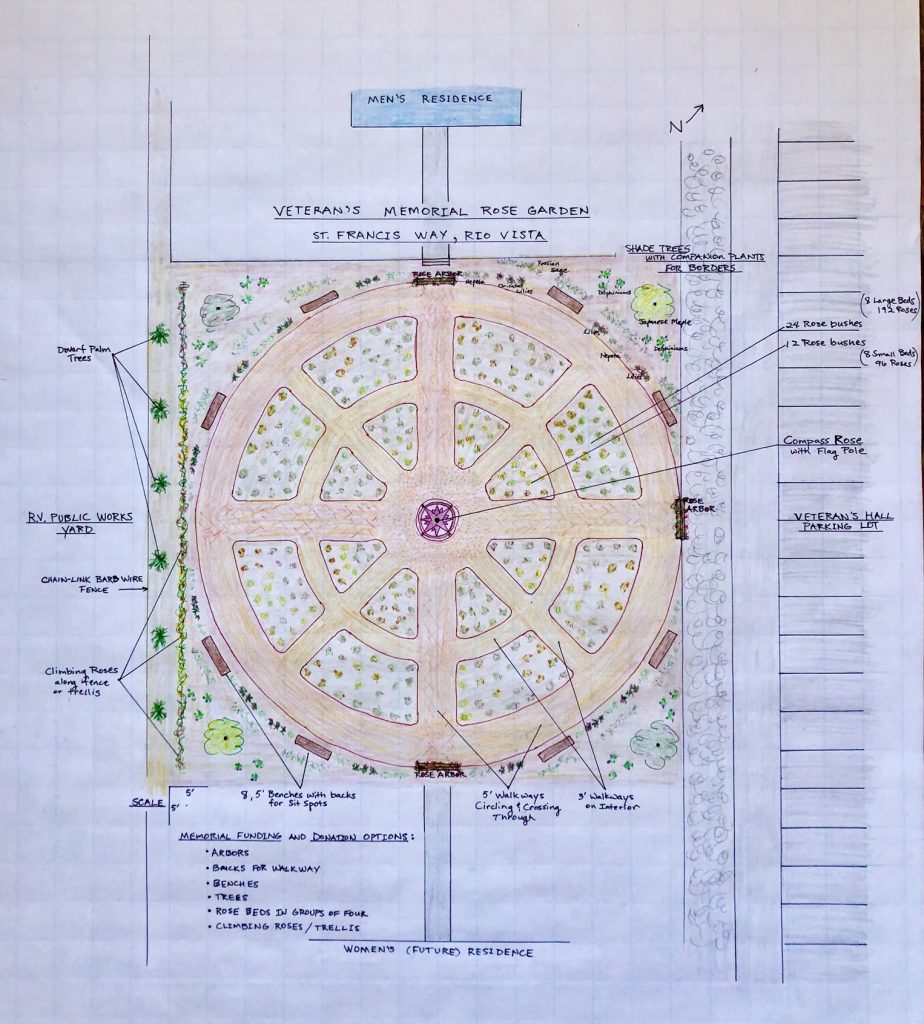
Katie Rivera, a recent Permaculture Design Certificate recipient and part of the team who designed the Rio Vista Veterans Residence demonstration food forest garden, shares this blog with us about how to grow beautiful roses sustainably. Katie will talk about her research and design process for a rose garden proposed for the Rio Vista Veterans Residence in a Zoom talk on sustainable rose gardening July 27 (Register here!). Join her for interesting facts about growing disease resistant, low maintenance roses and specific ideas and suggestions from the Veterans Memorial Rose Garden design.

Katie Rivera at Cordelia Community Park

I love roses! There is no other flower that can be a shrub, tree, or vine and give you as many choices of colors and fragrances than a rose. Wouldn’t it be nice to grow your own roses and have them thrive? Over the last couple of decades, researchers, rose cultivators and hybridizers have been working hard to get away from using harmful pesticides on their roses. Trials are being done all over the world to identify roses that are disease resistant, use less water, and require minimal care. Thankfully, these experts are sharing their findings with us! This is a great time to grow beautiful roses with just a bit of know-how and very little maintenance.

Rose Development In History

Let’s start with a little history about roses and their names.

Roses have been grown, survived and proven themselves over millions of years on their own without any kind of maintenance or intervention. “Species” roses are the oldest with only five petals. Any existing rose can be crossed with any other rose to come up with a new hybrid rose. A rose hybridized before 1867 is considered a “heritage” rose. Any rose after that date is called a “modern” rose. And roses grown post-2000 are designated “new millennial” roses. Roses that share a common flower form are considered to be in the same class.

The rose is America’s national flower. Did you know that? Well, I learned something new! In 1986, Congress designated the rose as the National Floral Emblem of the United States. Believe it or not, our first president, George Washington, was a rose breeder! The rose ‘Mary Washington’ was bred and named after George’s mother and is still grown today.

So growing roses should be easy peasy, right? Well, yes, if you grow the right rose in the right location with the right conditions. Getting all these components just ‘right’ is what sustainable gardening is all about.

Sustainable Gardening Best Practices

So what is Sustainable Gardening?

According to John Starnes in Probiotic Rose Growing, the healthiest and most stable ecologies in the natural world are complex, multi-tiered ones, with predator and prey creating sustainable balances. Why would our rose gardens be any different or deserve less?

  • Observation and taking note of what works and what does not is what sustainable gardening encompasses. We must be aware of what is going on in the garden and try to simulate nature in all its wonderful glory.
  • There are many components to watch and take note of in the garden, starting with the soil, water, sun, heat, cold, wind. The list will be specific to your unique site. Then the conscientious gardener must make informed plant decisions using the most organic solutions possible. Where there’s a will to do it ‘right,’ there’s a way!
  • Amending the soil might be the first step, but you won’t know until checking the planting area for pH levels (6-6.5 is ideal for roses) and available nutrients.
  • In regards to insect predators, the goal is to use an approach called Integrated Pest Management (IPM) to manage pests rather than eliminate them, while at the same time exerting minimal impact on the environment.
  • Roses thrive with mulch. It slowly breaks down and continuously feeds the soil. In addition, mulch helps retain moisture and blocks weeds. It’s a must!
  • Combining roses with annuals, grasses, perennials, shrubs and vines is a great way to create color combinations, make more interesting and creative borders, and attract beneficial insects into the garden. Beauty and benefits? What’s not to like?

Companion Plants for Roses

Trumpet , Oriental and Orienpet Lilies
Delphiniums
Perovskia atriplicifolia (Russian Sage)
Centaurea montana (Mountain Bluet)
Salvia ‘Blue Hills’
Veronica spicata ‘Royal Candles’
Veronica ‘Sunny Border Blue’
Heuchera ‘Palace Purple’
Polemonium sps.
Purple Pasqueflower
Platycondon ‘Sentimental’
Nepeta ‘Blue Carpet’
Vining Clematis of all kinds, especially ‘Betty Corning’ and Bush Clematis

*This list comes from William Radler’s Favorite Perennials to Grow as Companions to Roses

Soil Basics

Sustainable gardening requires that we develop a healthy respect for the soil as a living organism. Soil is the base we depend on to build our gardens. We must start there before we can begin to grow anything. A good soil is alive with micro- and macro- organisms devouring each other!

Research shows that roses with healthy populations of mycorrhizae are more vigorous, with increased drought- and disease-resistance and the ability to take up more nutrients and water. Myco means fungus. Rhiza means root. So the term refers to the symbiotic relationship between the two. (See resource list for lacto serum and ‘Poop Soup’ recipes.)

Nearly all water and nutrients taken up by roses come from the soil. Therefore, we must try to understand the nature of our native soil and then manage it to provide our roses with what they need.
Soil scientists have determined that the ideal soil texture for growing roses is 60% sand, 20% silt, and 20% clay. These elements are inorganic matter. The composition of good garden soil or humus contains 45% of this inorganic matter, 5% organic matter, 25% water, and 25% air.

The easiest way to improve the water and nutrient retention in your soil is to increase the amount of organic matter. As a rule, the greater the variety of organic material used, the greater the variety of potential nutrient release for future plant use.

Water Basics

Humus can hold up to 20 times its weight in water! One square foot of this quality soil can contain up to 40 gallons of water. Think of it like a sponge (only much better). So it makes sense in terms of water conservation and efficiency to improve the soil so it can retain more water for plants.

Drip irrigation, which only provides water to the plants or areas that need it, can substantially cut back on your usage and help limit the growth of unwanted weeds.

Using synthetic fertilizers actually dries out the soil and causes you to use more water just to keep the plants alive and growing. Besides destroying the health of the soil, pesticides and chemical fertilizers contaminate streams, kill microbial life, leach into waterways, and build up harmful ecological deposits.

Planting Roses the Right Way

A rose that is happy in its conditions, with plenty of sunshine and healthy soil, is going to be naturally healthy and disease resistant in your garden eliminating any need for harsh chemicals (P. Kukielski).

Sounds pretty simple, right? Of course right! This is all you need to do! Yes, you do have a role to play. You can’t plant it and forget it. Make sure you don’t leave any of these important steps out:

Pick the right rose, plant it properly, and care for it well (you won’t need chemicals).

Know that roses thrive in sun, good soil, drainage, and they need air, more water the first year, and regular mulching.

Basic planting steps:

  1. Amend the soil in the planting bed.
  2. Dig a hole slightly larger and deeper than the root ball or bare roots of the rose.
  3. Add compost to the dirt removed from the planting hole at a ratio of ⅓ compost to ⅔ soil.
  4. Prepare the hole and plant the rose:
    • Container rose – backfill hole with compost soil to the bottom of the pot then place plant in the hole and fill in around the root ball. Tamp in well. Soil should be even with natural soil level.
    • Bare root rose – create a small mound in the hole and spread the roots over the mound, then backfill with soil compost mixture. Tamp in well. The soil should be even with the natural bed level.
  5. Water well.
  6. Top with 3-inch mulch layer.
Katie’s design proposal for a Veterans Memorial Rose Garden

Identifying Sustainable Roses

The best tool I found on picking disease-resistant (not disease free), sustainable roses was Peter E. Kukilski’s book, Roses Without Chemicals. In this book he lists 150 roses, rates them for disease resistance, flowering and fragrance. And with each of these roses, he also suggests companion plants to accent the unique color and growth of the rose. Peter includes lists of roses by region and climate and has fabulous color pictures throughout.

I would also suggest visiting rose gardens, talking to local rose growers, and asking nursery owners which roses do best in your area.

Following are some resource links and lists on the topic of sustainable rose growing.

May you enjoy years of growing and sharing your very own sustainable roses!

Recipes to Inoculate Your Roses

LAB Serum (also known as Lacto)

Can be applied to plants and soil — get the recipe here

Poop Soup

    • Fill a 5 gallon bucket with 4 gallons of well water or city water aged 2 days.
    • Add 1 gallon of FRESH horse poop, stir daily for 1 week.
    • Then add 2 cups Calf Manna, 1 cup compost starter, 2 cups good garden soil or fresh compost, 2 tablets of Primal Defense (available at health food stores or online)
    • 2 cups of sugar.
    • Stir, let brew for 1 day, then sprinkle lightly all over your rose garden, both the plants and the soil.

Websites

Our Water Our World: Roses
ourwaterourworld.org/roses/

Rose Solutions
rosesolutions.net/sus_roses.html

American Rose Trials for Sustainability
americanrosetrialsforsustainability.org

Earth-Kind Rose Trials
aggie-horticulture.tamu.edu/earthkindroses/

Help Me Find Roses
helpmefind.com/roses

The New Millennial Rose Garden
millennialrosegarden.com

Paul Zimmerman Roses Forum
paulzimmermanroses.com

Peter Beales Roses Forum
classicroses.co.uk/forum

Veterans’ Serenity Garden Takes Partnership & Persistence

By Nicole Newell, Sustainable Landscaping Program Manager

In the beginning it was magic, so many synchronistic moments. In January we began our first Permaculture Design Certificate course (PDC) in Solano County. That same month, Habitat for Humanity reached out to partner with us to design and lead a demonstration food forest installation at the newly built veterans home in Rio Vista. The students attending the PDC had to select a design project and three of the students were interested in the possibility of designing a garden for the veterans.

Partnership

The Rio Vista Veterans Residence was built by Solano Napa Habitat for Humanity in Rio Vista and is a permanent home for six formerly homeless veterans. Nancy, the architect for Habitat for Humanity, attended a private demonstration food forest tour in Benicia last year along with four other architects. She saw the potential in the Rio Vista yard and reached out to us to see if we would be interested in partnering.  Mark Baides, Habitat for Humanity’s project manager during the construction of the Rio Vista Veterans Residence, also joined that meeting. We had previously worked with him on the Dixon Veterans Home. Through this initial meeting, the Rio Vista Veterans Residence was identified as a design project site. Further collaboration unfolded over a few months and a partnership was formed with Solano Napa Habitat for Humanity and Berkeley Food & Housing Project (BFHP), the organization that manages and provides support services to the home.

Permaculture Design Team

PDC students John Davenport, Katie Rivera and Susan Worden selected the site as their design project and became a design team. Katie and Susan are both Rio Vista residents; John and Katie are both veterans. John is the owner of Cali Ground Troops and became the lead contractor for the project. We all felt the magic and took this project on without hesitation. At the time, none of us were aware of the level of commitment and work that it would take to see the PDC project manifest into reality!

Design

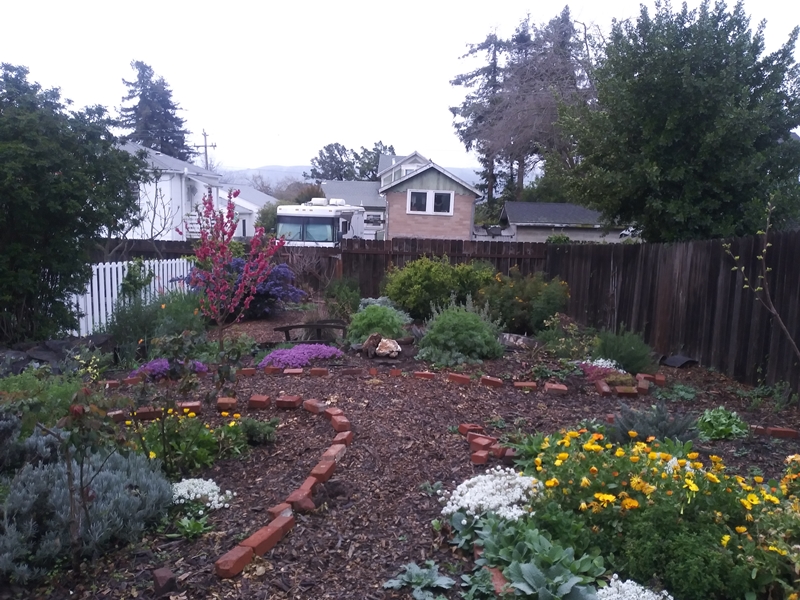
The design team worked diligently and put thoughtful energy into a design that included the residents’ input. During a design interview, one of the veterans named the garden “Serenity.” The design includes a space in the backyard for outdoor gatherings so they can barbecue together; plants selected to increase biodiversity and provide food; a hedge that will provide privacy and attract pollinators and an area in the back for growing annual vegetables. The hope is that the garden becomes a place to heal.

Getting Creative with Funds

Typically, our demonstration food forest sites are 1,200-2,000 square feet and take three public, educational workshops to install. This site was 5,800 square feet and it took five public workdays in addition to many other visits to prepare the site and work in smaller groups. We definitely had to get creative to stretch our funds! We worked closely with Mark from Habitat for Humanity to make it happen. Mark wears two hats, he is project manager for Solano Napa Habitat for Humanity and he also works for the Home Depot Foundation. Habitat for Humanity graciously gave us access to tools that were already on-site and helped with their expertise in irrigation. The Home Depot Foundation donated funds to help support the cost of irrigation and for part of the contractor fees. We worked as a team to find enough funds to complete the project.

Slideshow

Serenity (Rio Vista Veterans Residence)

Windy Rio Vista

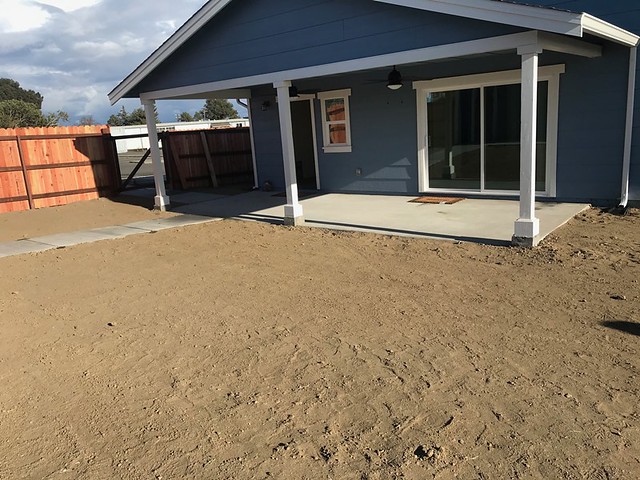
During the installation we were made aware that spring is Rio Vista’s windy season. Every installation day was filled with so much wind that it felt like our thoughts were being taken out of our heads and thrown around in the air and brought back as jumbled fragments. The site was basically sand. The “sandy soil” was in desperate need of organic matter so we brought in 40 yards of compost and horse manure. We attempted to dig the compost in on a windy day in April and quickly realized that machinery was necessary. We reached out to the designer of our first seven demonstration food forest gardens, David Mudge. He has an excavator named Sunflower. David and Sunflower spent a very long day in mid-April mixing in the organic material. The thought was to bring in enough organic material to turn this sand into a foundation that could successfully grow thriving trees and plants.

Volunteers

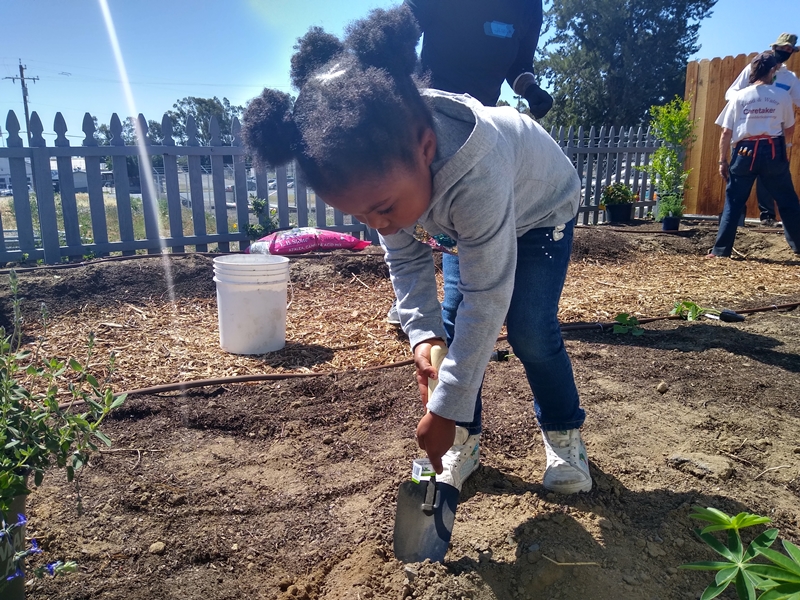
During the five public installation days, 52 people from the community came to learn about permaculture, support the veterans home, and to help install the demonstration food forest garden. Susan, Katie, Kevin, Nikita, Jaxon and Maxfield were loyal volunteers that were committed and diligently showed up during this challenging installation. To honor and support this project, Senior Airman KeShay Solomon from Travis Air Force Base reached out to her squad and four members volunteered time to help us plant the garden. Read more about that day in this Daily Republic article.

Future

Reggie and Cara from BFHP worked with us to coordinate days and helped to install the garden. BFHP will be hiring one of the designers, Katie, to guide the residents in maintaining and caring for the newly emerging plant life so they all continue to thrive.

Personal Gratitude

Gratitude for the many sweet community members that volunteered their time and the simplicity of the Serenity Prayer kept me centered during the installation.

God, grant me the Serenity to accept the things I cannot change; Courage to change the things I can; and the Wisdom to know the difference.

This project and the Solano Sustainable Backyards Program are generously funded by the Solano County Water Agency and in partnership with the organizations mentioned above.

Get Back in the Garden: 2021 Garden Tour Reimagined!

By Nicole Newell, Sustainable Landscaping Program Manager

Time in any garden is well spent, and we invite you to spend time in a local garden on April 24 for our Annual Demonstration Food Forest Garden tour in Benicia and Vallejo.

We have reimagined the tour this year to safely open for private in-person, self-guided tours. In the past, our demonstration food forest tours have been a festive community event where many gather to tour. Last year, COVID precautions moved the event entirely online, but it was important for us to find a way this year to get people into the gardens. To do that, we invite you to choose an individual garden to tour for a 30-minute interval per household/family bubble. All participants will be asked to follow COVID safety rules, including wearing masks and staying at least 6 feet apart. You can select a garden and register here.

These diverse demonstration food forest gardens are on private and public sites and were installed by the community through educational workshops. They demonstrate how capturing secondary water, such as rainwater and laundry-to-landscape greywater, combined with healthy soil and waterwise drip irrigation can yield lush, food-producing gardens!

These gardens are so much more than examples of ecological features; they are a place to heal after a difficult day, a spot to watch seeds emerge, a place to grow food and pass on the excess, a place to gather to celebrate and to grieve, and a place where strangers become new friends. Each of these gardens has a name and a story and beautiful Food Forest Keepers.

A Food Forest Keeper is a caretaker of a demonstration food forest. Each year they agree to tour their food forest and to be an example on how to use space to create habitat, grow food and to educate and inspire others to do the same.

This is a rare opportunity to privately explore one garden within the safety of your family/friend bubble and to ask our Food Forest Keepers questions. Each garden is a unique experience: some are compact front yards, others are on a slope, some share space with animals and small children, some are allowed to grow without restriction, while others are more manicured. We hope you select a garden that interests you most and that you are inspired with ideas on how to work permaculture design principles into your own garden!

In 2022, we hope to go back to the tour being a community event where many can gather and we are looking for input from you. What would you like to see in the Demonstration Food Forest Tour in 2022? Please take this short survey.

The tour and Solano Sustainable Backyards program is made possible through the generous support of the Solano County Water Agency. The Resilient Neighborhoods program has been generously funded by the Pacific Gas & Electric Corporation Foundation.

Join CompostGal’s Lori Caldwell for Gardening 101

By Lori Caldwell, CompostGal

Lori Caldwell of CompostGal has given talks for Sustainable Solano on container gardening, perennial edibles and much more! Her next talk will be a Gardening 101 class on March 19.

Dear Fellow Gardeners or Gardeners-yet-to-Bloom,

If you’ve never gardened before or just need a refresher prior to next season, then please join us on March 19 for Gardening 101. I’ll be discussing the process from soil to fruit, touching on the terminology and all the tips and tricks I’ve used over the years. While it’s still “winter,” it’s time to start planning for your spring and summer gardens!

The idea of being a successful gardener to some may seem like a daunting enterprise. Maybe you think it’s too expensive or that you possess a “brown thumb?” Seeds or starts? In-ground or containers? Hand-watering? Drip irrigation?
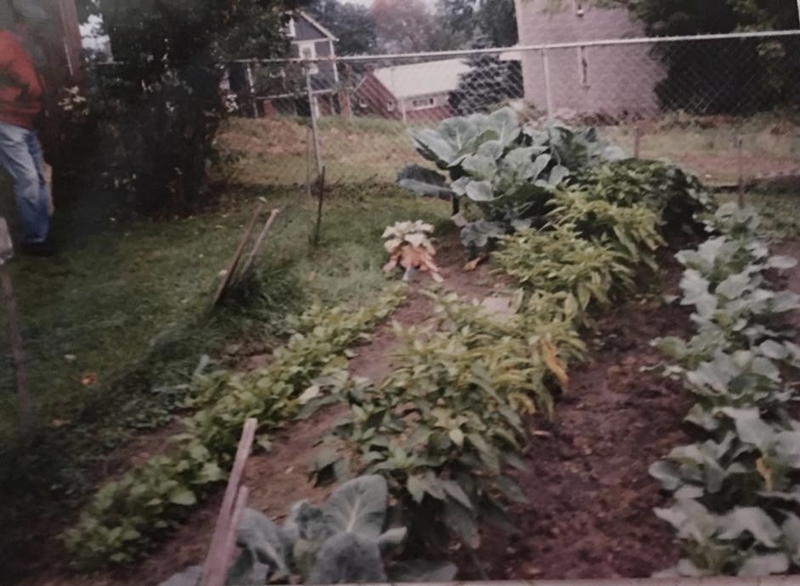
Gardening is not perfect, but it is fun and rewarding. You will kill plants! There will be bugs, good and bad ones (more good than bad, promise). However, when the year is good, it’s really good! It is worth the journey for sure! Come along with me!

See you in the garden,
Lori Caldwell aka CompostGal

About me:

Gardening has always been part of my life. From houseplants to fruit trees, my family always had something growing. Seeing them tend to their plants gave me the idea that those plants had value. I remember the smell and feel of freshly turned earth, the scent of chemical fertilizers (yikes) and being small and looking up at towering tomato plants.

Grandpa’s garden (Pittsburgh, PA) circa 1970s

I’ve been happily teaching sustainable gardening classes since 2007. Some of my other fun jobs are gardening maintanance and garden consultations. If you need help, please feel free to contact me!

Find videos and handouts from Lori’s past talks and more plant resources here.
Want to connect with Lori? Find her information on our Sustainable Landscaping Professionals List!

The Solano Sustainable Backyards program and the talk are generously funded by the Solano County Water Agency.